

If you’ve ripped a drive that sailed long or cranked a topspin roll that dumped into the net, you have met poor pickleball rotational control. Your hips, core, and shoulders must rotate correctly. That rotation gives you nasty spin serves, heavy roll volleys, and laser‑guided third‑shot drives that stay in and low.
This guide shows on‑court rotational drills, off‑court strength and mobility work, and joint‑supporting nutrition. It serves American Picklers who feel musculoskeletal twinges after long rec sessions, drills, and tournaments.
Why pickleball rotational control is the “hidden gear” in your game
Pickleball uses many rotational moves. Each move depends on clear, quick links between body parts:
• You wind up for a topspin drive.
• You brush the ball to create a heavy roll or dipping passing shot.
• You carve slice returns that skid off the kitchen line.
• You reset in the transition zone with compact, controlled counters.
When your rotation is dialed in, you gain power with less arm strain. You generate spin from your core and hips, not just your wrist. You hit a more consistent contact point and you reduce strain on smaller joints like your elbow and shoulder.
When it is not dialed in, you tend to “arm” the ball. You use your shoulder or elbow to muscle the shots. That method can bring nagging discomfort over time—especially when you play many matches every week.
Foundation first: posture and ready position for better rotation
Before you add spin drills, you must clean up your base. Stand with good posture in your ready stance.
Key checkpoints in your ready stance:
• Feet stay just wider than shoulder‑width.
• Toes turn out slightly to allow hip rotation.
• Knees stay soft, not locked.
• Your chest stands tall while shoulders relax.
• Your paddle stays out in front, around chest height.
This stacked posture lets your hips and upper back rotate freely. It helps you avoid jamming your low back or yanking your shoulders with every shot.
On‑court pickleball rotational control drills
Use these drills during your warm‑up or in a dedicated session. Keep the focus on smooth, controlled rotation instead of only swinging hard.
1. Shadow swing rotation drill (no ball)
Purpose: You groove clean rotational mechanics without worry over contact.
- Stand on the baseline in your ready position.
- Imagine you receive a waist‑high ball to your forehand.
- Load your back hip with a slight turn. Let your weight shift to the back leg.
- Rotate with your hips, then your core, then your shoulders. Finish with your paddle up front.
- Freeze your finish for a second. Check that your chest faces the target, your weight sits on the front leg, and your paddle stays high and in front.
- Repeat 10–15 times per side for both forehand and backhand.
Keep these focus cues in mind:
– “Turn the hips first, the paddle last.”
– “Finish tall, do not lose balance.”
2. Cone line rotational footwork drill
Purpose: You sync your footwork with rotation for drives and roll volleys.
- Place 3–4 cones or balls in a diagonal line from the sideline toward the middle of the court.
- Stand at the first cone, in your ready position.
- When a partner calls “Go” and points to a target (crosscourt or down‑the‑line), act fast.
- Step into the shot, then rotate your hips and torso. Finish facing your target.
- Shuffle to the next cone and repeat.
Do 2–3 passes on both forehand and backhand sides.
Focus on:
– “Move, plant, rotate, then swing.”
– “Take short, quick steps—do not lunge.”
3. Rotational topspin drive drill
Purpose: You add controlled spin and pop without an over‑swing.
- Stand at the baseline as your partner or coach stands across from you.
- The partner feeds medium‑height balls to your forehand.
- Load your back hip and rotate through as you brush up on the ball. Finish over your opposite shoulder.
- Aim deep crosscourt with enough topspin to dip inside the baseline.
To adjust difficulty:
• Start at 50–60% power, focusing on spin and control.
• Increase to game‑level pace while keeping the ball in.
Keep these focus cues:
– “Brush up; do not chop down.”
– “Rotate around a quiet head.”
Repeat on the backhand side as well.
4. Kitchen roll volley rotational drill
Purpose: You use micro‑rotation to earn control on roll volleys and NVZ counters.
- Stand with your partner at the kitchen line.
- Your partner hits firm, waist‑high balls to your forehand and backhand.
- Use a short, compact roll volley: a tiny hip turn plus torso rotation while brushing up slightly.
- Keep the movement small; avoid big backswings.
The goal is to keep the ball low over the net with topspin so that it lands near your partner’s feet.
Focus on:
– “Short back, short through.”
– “Rotate from the core, not the elbow.”
This drill helps Picklers who battle forearm or elbow discomfort from over‑using their arm on volleys.
5. Third‑shot drop to roll transition drill
Purpose: You blend soft touch with rotational power when moving from defense to offense.
- Start at the baseline with your partner at the kitchen line.
- Hit a third‑shot drop and move forward.
- As you close in, your partner feeds a slightly higher ball during the transition.
- Use controlled rotation to hit a roll volley or topspin drive and then recover to the kitchen.
Repeat 10–15 reps per side.
This drill mimics game patterns. You learn to rotate softly on the drop and more aggressively on the attack, all without losing balance or control.
Off‑court training: building rotational strength and stability
To play often without feeling wrecked, you must strengthen the muscles that drive and control rotation. Strengthen your hips, glutes, and core for better results.
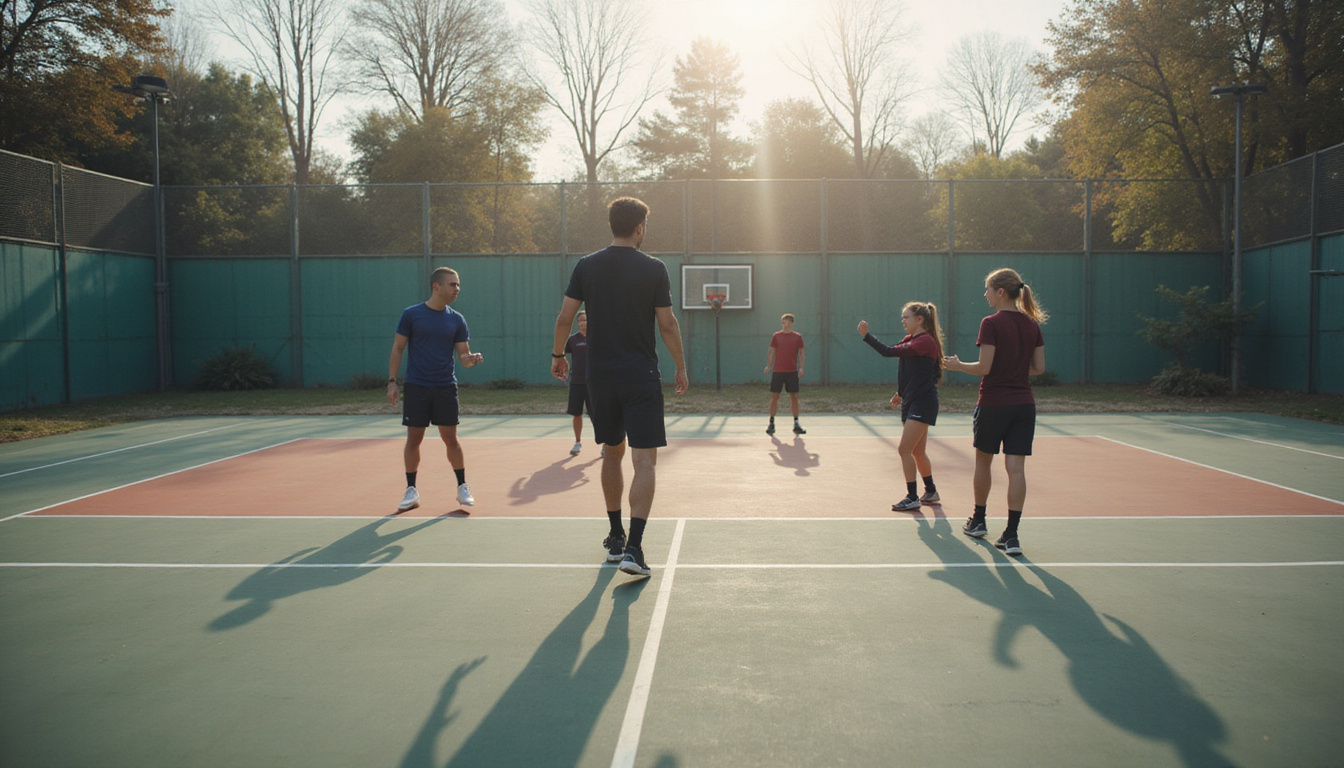
Core and hip exercises for Picklers:
Try these 2–3 times each week:
• The Pallof press (anti‑rotation) builds core stability. It keeps your spine happy while your hips and shoulders rotate.
• The side plank with reach‑through trains lateral strength and controlled rotation.
• Rotational medicine ball throws (with a light ball) mimic the load‑and‑fire pattern of drives and serves.
• Split‑stance cable or band rotations reinforce the push from your legs and hips, not a yank from your arms.
• Hip hinge patterns (such as Romanian deadlifts or light good mornings) support hip power and protect your low back.
Keep every movement pain‑free. If any motion bothers a joint, shorten the range, reduce the load, or skip that exercise and consult a knowledgeable clinician.
Mobility: keeping your rotation smooth, not forced
Stiff hips, a tight thoracic spine, and locked‑up shoulders cut your pickleball rotational control. They push extra stress on smaller joints.
Useful mobility moves include:
• 90/90 hip rotations
• Open books (thoracic spine rotations)
• Cat‑cow with shoulder reach
• Sleeper stretch (a gentle stretch for shoulder rotation)
Work these moves into your warm‑up or cool‑down routine, especially before heavy drill days or tournaments. For more on how physical activity and mobility support joint health, see guidance from the CDC (source: https://www.cdc.gov/arthritis/basics/physical-activity-overview.html).
Supporting your joints and muscles from the inside: nutrition and supplementation
When you add more spin drills, harder drives, and longer drilling blocks, your joints, tendons, and muscles work hard. Many serious Picklers focus on:
• Protein intake for muscle repair.
• Hydration and electrolytes during rec play or tournaments.
• Balanced micronutrients to support normal tissue function.
Some players also choose nutrition‑based supplements that support healthy joints and muscles as part of overall wellness.
Regenerix Gold: a joint‑ and muscle‑support option for dedicated Picklers
For American Pickleball players who boost their rotational game, Regenerix Gold is a supplement designed to support healthy joints and muscles. This help lets you drill and compete with confidence.
Key points about Regenerix Gold for Picklers:
• It uses a nutrition‑focused formula, not a drug or painkiller.
• Doctors and physical therapists have recommended it as part of a plan to maintain healthy joints and muscles.
• People have used it for over a decade. Users internationally praise its help in staying mobile and active.
• It fits naturally into a routine that uses smart training, proper warm‑ups, strength work, and good recovery habits.
Remember, supplements do not diagnose, treat, cure, or prevent any disease. If you are under medical care, taking medication, pregnant, or unsure if it is right for you, speak with your healthcare provider before starting something new.
Regenerix Gold
How to integrate rotational drills, training, and nutrition into your week
Here is a simple template for your schedule, based on your fitness level:
-
2–3 days per week: On‑court rotational drills
• 5–10 minutes: Shadow swing and cone line drills
• 15–20 minutes: Topspin drives and roll volley drills
• 10 minutes: Third‑shot drop to roll transition drill -
2 days per week: Strength and mobility
• 20–30 minutes: Core and hip strength (Pallof press, side planks, hip hinges)
• 10–15 minutes: Mobility work (hips, thoracic spine, shoulders) -
Daily: Recovery and nutrition
• Hydrate throughout the day
• Eat enough protein and whole foods
• Consider using Regenerix Gold as part of your daily routine if your healthcare provider agrees
FAQ: pickleball rotational control and related topics
Q1: How do I improve rotational control in pickleball without overloading my shoulder?
A1: Focus on drills that get your hips and core to lead the motion. Shadow swings, cone footwork drills, and roll volley drills teach you a movement pattern where your lower body starts the action and your paddle follows.
Q2: What muscles are most important for pickleball rotation control and stability?
A2: The most important muscles are your glutes, hip rotators, deep core muscles, and mid‑back. Strong and coordinated muscles here let your shoulders and elbows work less, especially during heavy topspin drives, roll volleys, and big serves.
Q3: Can supplements help with rotational power and joint comfort for Pickleball?
A3: Supplements cannot replace good form or training. Some players use nutrition‑based supplements to support normal joint and muscle function as they increase rotational work. Regenerix Gold is one such option. Always check with your healthcare provider to see if it is right for you.
Your next step: become the player others hate to drill with
Many players keep banging balls and wonder why they cannot hit that heavy, dipping drive or wicked roll volley without feeling beat up afterward. You now have a clear roadmap:
• Smart, progressive rotational control drills
• Supporting strength and mobility training
• A nutrition strategy that can include a joint‑ and muscle‑support supplement like Regenerix Gold (if your clinician approves)
If you are serious about being the player who shows up for league nights, weekend tournaments, and early‑morning drilling sessions without joint and muscle worries, consider getting a bottle of Regenerix Gold. It shows you are a savvy, long‑term athlete who cares about protecting your body and your wallet from costly time off and medical care.
Work hard on your rotation. Fuel your body well. Enjoy more spin, power, and control—while others still swing only with their arm.
https://youtu.be/mGrH5UWFxUs?si=X9bScbG6dvejGkZf
Health Note
Always consult a licensed medical doctor for your health issues.
Special Discount
If you prefer preventive nutrition to minimize expensive knee surgery and potentially addictive pharmaceuticals, Regenerix Gold is your savvy solution.
You qualify for a special discount.
Simply use the link below and a discount will automatically be applied during checkout.
Get Regenerix Gold => HERE


