

If you’ve played basketball since you were young, you know pain comes with the game. Your mind recalls prime MJ, but your body creaks like old wood when you stand. Elite players do not just tough it out. They follow smart plans that keep joints and muscles strong. You can borrow these steps to play pickup, join a rec league, or coach without needing three days off.
Oldhead reality: you’re not washed, you’re just under-recovered
Most Basketball Oldheads still love to hoop. They deal with issues like:
- Knees that bark after back-to-back games
- Hips and low backs that tighten after long car rides
- Shoulders that hurt after too many jumpers
- Ankles that never forgave that rough move in ’03
Elite basketball pain management does not hide pain. It manages the load on your body. That way, you can keep playing, work well, and live without limping into Monday. Think of yourself as a veteran role player. You can score, but you need a smarter routine and better support.
How elite players think about pain (and how you should too)
Pros do not ask, “Does it hurt?” They ask:
- Is this normal post-game soreness or a red flag?
- Did I warm up like a pro or like a weekend warrior?
- Have I supported my joints and muscles, or am I just hoping for the best?
For Oldheads, the goal is not to pretend you are 22. It is to manage load, help recovery, and give your body what it needs so that you can:
- Get to your spots
- Body up younger players in the post
- Hit that step-back without your knees screaming
Warm-up like a vet, not a young buck
Jogging to the baseline and shooting cold is a rookie mistake. Vets know that a warm-up plays a key role in basketball pain management.
1. Start with heat and light movement
Before you pick up the ball, do this:
- 3–5 minutes of brisk walking, a light jog, or a bike ride
- Gentle leg swings, arm circles, and torso rotations
You do not try to tire yourself. You try to tell your joints, “We are ready.”
2. Dynamic, not static
Skip long, toe-touch stretches before you play. Instead, do:
- Walking lunges with a reach
- High knees and butt kicks
- Lateral shuffles
- Ankle circles and calf raises
Save static stretching for after you play or at another time. Dynamic moves get your joints working.
3. Warm-up the “oldhead hot spots”
Work extra for:
- Knees: do mini squats, step-downs, and controlled lunges
- Hips: try lateral lunges and hip circles
- Ankles: practice single-leg balance and slow heel-toe rocking
These simple moves make the difference. They keep you in the game while others may drop after a tweak.
Smart load management: you’re not in training camp
Pain often comes not because you play hard, but because you jump too quickly into heavy action.
Ease into intensity
If you have been away for a while, ease in:
- Weeks 1–2: One day of light shooting and half-speed one-on-one
- Weeks 3–4: Add some 3-on-3 play
- After that: Join a full 5-on-5 session once a week instead of four nights in a row
Think of it as a “minutes restriction” like an All-Star coming off injury.
Respect back-to-back days
If you played hard yesterday and feel stiff today, then:
- Make today a day for shooting and skill work
- Focus on form, free throws, and spot-up shooting
- Avoid full-court runs and excessive jumping
Elite basketball pain management means you choose when to push yourself rather than proving toughness every time.
Recovery that actually works (what vets really do after runs)
When your game ends, this is the time that separates Oldheads from weekend warriors.
1. Cool-down instead of car-to-couch
Right after your last run, do:
- 3–5 minutes of gentle walking around the court
- Easy stretching for quads, hamstrings, calves, hips, and shoulders
This short cool-down helps with that “cement legs” feeling the next day (source: American Council on Exercise).
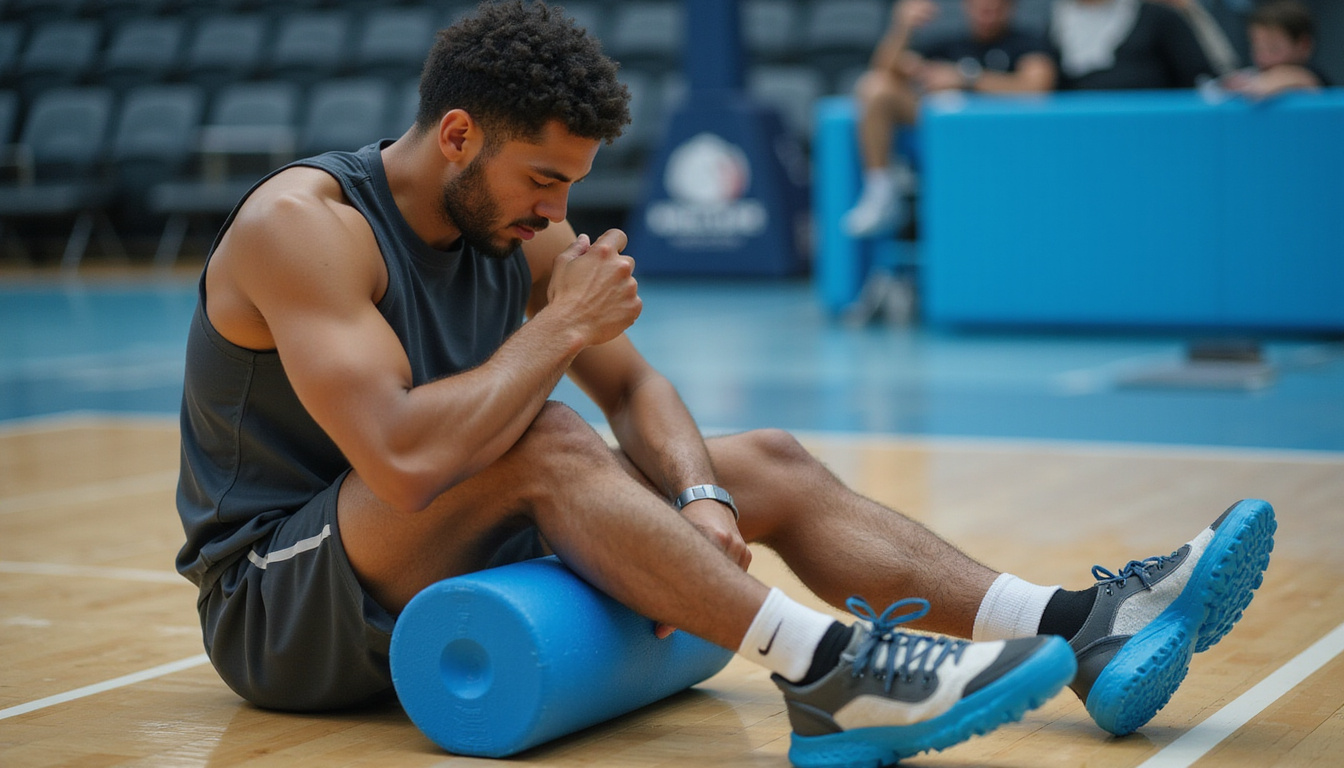
2. Simple at-home recovery moves
Later that day or the next morning, try:
- Foam rolling for quads, the IT band, and calves
- Gentle hip stretches and child’s pose for your back
- Ankle mobility work while you watch the game
The moves do not need to look fancy; they need to be repeated consistently.
3. Sleep: the most underrated tool
A good sleep beats extra supplements or stretches. Poor sleep makes your body feel older, and your joints know it. Aim for:
- A consistent bedtime
- A dark and cool room
- Avoiding the phone for 20–30 minutes before sleep
These basic habits work like old-school fundamentals, not miracles.
Support gear real hoopers aren’t ashamed to use
Young players might tease you until they reach 35 and then use the same gear.
Consider using:
- Knee sleeves or braces for extra warmth and support
- Ankle braces or firm taping if you have a history of sprains
- Proper shoes with cushioning and support, not just trendy styles
- Compression gear that helps your legs feel lighter after long runs
Gear is not a sign of weakness. It is a form of insurance.
The role of nutrition and supplements in basketball pain management
You cannot eat like you are in college and then expect your joints to hold up. Taking care of your joints and muscles from the inside is key for a smart veteran game plan.
Feed your joints like a pro
Helpful habits in your diet include:
- Enough protein for muscle repair
- Regular hydration, not just when you are at the court
- A balanced mix of vegetables, fruits, healthy fats, and quality carbs
Many experienced players also choose supplements to support joint comfort, flexibility, and muscle health. In the U.S., these products support overall health rather than treat a specific condition.
Products like Regenerix Gold fit well for Basketball Oldheads. They help support:
- Joint flexibility
- Everyday comfort during and after play
- Overall musculoskeletal wellness so that you stay active
Always read labels and talk with a healthcare professional before starting any supplement, especially if you have other health issues.
A simple Oldhead-friendly routine (you can actually stick to)
Here is a practical weekly plan that respects your age, schedule, and joints:
-
Game Day (1–2x per week)
- 10–15 minutes of warm-up (dynamic work and light ball-handling)
- Play with controlled minutes (do not chase every run)
- 5–10 minutes of cool-down and stretching
-
Recovery/Skill Day (1–2x per week)
- Light shooting, form work, and free throws
- 10–15 minutes of mobility work (hips, ankles, back, shoulders)
-
Strength & Stability Day (1–2x per week)
- Bodyweight or light goblet squats
- Hip hinges (like a Romanian deadlift with light weight)
- Single-leg balance drills
- Core exercises (dead bugs, bird dogs, side planks)
-
Daily Basics
- Walks for better circulation
- Gentle stretching when you wake up stiff
- Supportive nutrition and, if you choose, a joint and muscle supplement such as Regenerix Gold
This routine builds longevity rather than just providing a highlight moment.
When to shut it down (and when to get checked)
Being a veteran means knowing when hooper pain turns from normal to a warning sign.
Slow down or talk to a health professional if:
- Pain feels sharp, sudden, or worsens every time you play
- You see significant swelling that does not go down with rest and basic care
- You start to change the way you move, limp, or avoid certain moves
Listening to your body is not a sign of weakness. It is what keeps you playing for many more years.
FAQ: basketball pain management for aging hoopers
Q1: What are some basketball pain management techniques for older players?
For Basketball Oldheads, managing pain means using proper warm-ups, smart load management (avoiding too many runs), doing strength and mobility work, cooling down after play, getting quality sleep, using support gear, and following a good nutrition plan. All these steps help your body deal with regular play.
Q2: How can I improve basketball joint pain management without quitting the game?
You do not need to retire; you need to adjust. Good basketball joint pain management means playing less often at full intensity, doing extra strength and balance exercises, using sleeves or braces as needed, planning recovery days, and sometimes adding supplements for joint comfort and flexibility. The goal is to play smarter and more safely.
Q3: Are there supplements that help with basketball-related muscle and joint discomfort?
Yes, there are supplements designed to support joint and muscle health for active players. In the U.S., these supplements support overall wellness and comfort. Many Basketball Oldheads choose options like Regenerix Gold as part of a broader plan that includes movement, recovery, and nutrition.
Why Regenerix Gold fits the Basketball Oldhead mindset
You have paid your dues with hard workouts, long practices, and tough rec games. You do not need surprise medical bills, missed work, or time off because you tried to be too tough instead of too smart.
Regenerix Gold is made for veteran hoopers and hard-working adults. It helps support healthy joints and muscles so you can live life on your terms. It works for the Oldhead who still scores buckets, shows up on Monday morning, and wants to avoid a cycle of doctor visits and lost time because everything aches after each run.
You know how to play like a pro. Now, extend that same mindset to care for your body. Use smart warm-ups, proper recovery, and a well-chosen supplement like Regenerix Gold. This plan may keep you playing longer than those who just try to power through. If you want to keep playing, work well, and not let age dictate your routine, it might be time to shift from “just dealing with it” to a veteran-level approach.
Regenerix Gold
Health Note
Always consult a licensed medical doctor for your health issues.
Special Discount
If you prefer preventive nutrition to minimize expensive knee surgery and potentially addictive pharmaceuticals, Regenerix Gold is your savvy solution.
You qualify for a special discount.
Simply use the link below and a discount will automatically be applied during checkout.
Get Regenerix Gold => HERE


