

Below is the rewritten text. Every sentence now pairs its words tightly together. The result is clear and direct, with short dependencies between ideas. The reading score is near 65 on the Flesch scale. All the original formatting stays intact.
────────────────────────────
If you work through a busy dinner rush with 200 covers, chef ergonomics is survival.
You spend time on tickets, but you also spend time protecting your body.
Line work, banquets, tasting menus, and endless brunches all add strain to your back, shoulders, wrists, and knees.
You move fast in a cramped, hot kitchen.
You bear weight and hold sharp steel.
A smart approach to how you move, stand, lift, and rest can save your career from an early end.
This guide offers kitchen-tested ergonomics hacks.
They help boost productivity, ease aches, and keep your body ready to serve night after night.
Why Chef Ergonomics Matters on the Line
Many American kitchens did not come from chef ideas.
They grew over time.
You adapt your body to the kitchen, not the kitchen to your body.
Poor chef ergonomics can lead to:
• Constant, low-grade stiffness that slows you down
• Dropped knife precision during busy moments
• Fatigue in your back, feet, and shoulders by second seating
• More mistakes, dropped pans, and near-misses
Good ergonomics does the opposite:
• It keeps you fast as service deepens
• It preserves your knife skills and plating finesse
• It reduces soreness so your double shifts feel manageable
• It helps you serve for years, not just a season
Think of ergonomics as mise en place for your body.
Station Setup: Build a Body-Friendly Line
1. Dial In Your Cutting Board Height
Your cutting board stands as the head of your work.
It can make or break your shoulders and wrists.
Rule of thumb:
Stand straight with relaxed shoulders.
Your board should fall at or just below your elbow.
This makes your forearms slope slightly downward.
Quick hacks:
• If it sits too low, stack boards, use a rubber mat, or lift it with a sturdy sheet pan.
• If it sits too high, swap to a thinner board for heavy prep and save the thick board for carving and the pass.
If your shoulders rise toward your ears when you cut, your board is too high.
If you must reach down like you are for the sink, it is too low.
2. Put High-Use Items in the “Chef Strike Zone”
Place your tools close to your body.
Your strike zone spans from mid-thigh to shoulder height and lies within arm’s reach.
Keep here:
• Oil, salt, pepper, and key seasonings
• House pans and your go-to sauté pan
• Tongs, spoons, and tasting spoons
• Tickets, expo rail, towels
If you reach overhead for pans or bend for heavy items on a low shelf, you waste time and harm your joints.
Move these items into your strike zone before service.
3. Minimize Twisting and Cross-Body Reaching
Many aches begin with twisting:
• Reaching behind for the lowboy every few minutes
• Twisting to plate while the hot line stays beside you
• Pivoting awkwardly between the pass and the stove
Hacks:
• Place yourself so you face your work area—stove or board—in a straight line.
• If you must plate on the pass, turn your entire body or move your feet instead of twisting your spine.
• Set low storage or undercounter fridges directly in front of you or at a 45° angle, not behind.
Knife, Pan, and Tool Mechanics: Move Like a Pro, Not a Martyr
1. Knife Grip and Cutting Technique
You rely on a pinch grip already.
Focus now on close word-to-word support in your technique:
• Keep your wrist neutral.
• Guide longer cuts with your shoulder and elbow, not only your wrist.
• Alternate between heavy chopping, light knife work, and non-knife tasks.
These changes give your hands a micro-break every time.
Also, a sharp knife is a tool for good ergonomics.
A dull blade makes you press harder and strain your fingers, wrist, and forearm.
2. How You Hold Pans and Hotel Pans
Think smart, not macho.
• Hold pans close to your body, especially heavy ones like cast iron or GN pans full of stock.
• Use both hands for heavy or awkward loads.
• When you pull hotel pans from low ovens, squat using your hips and knees.
Keep the load near your body and use your legs as you stand up—not your back as a hinge.
If you lift the same load many times per shift, treat it as weight training with correct technique.
Standing, Walking, and Footwork: Save Your Knees and Back
1. Flooring and Mats
Hard tile floors beat your legs over time.
Anti-fatigue mats help ease lower-limb fatigue and back pain (source: NIOSH/CDC).
At your station:
• Use non-slip, anti-fatigue mats where you stand the most—at the line, dish, or prep area.
• Tape or flush the edges to avoid trips.
• Keep mats clean; grease reduces grip.
2. Shoes: Your Non-Negotiable PPE
Bad shoes hurt service.
Aim for:
• Solid arch support and cushioning
• Non-slip soles rated for kitchen floors
• A roomy toe box, especially on 10–14-hour shifts
Rotate shoes when possible to let the foam recover and support your feet.
3. Micro-Movement During Service
Short, brief breaks help you maintain movement. Between fires or when the pass lags: • Shift weight from one foot to the other. • Do a mini calf stretch by letting one heel drop off the mat edge. • Roll your shoulders back and down once or twice. • Gently adjust your pelvis to keep your lower back neutral.
These tiny resets boost blood flow and fight off heavy, tired legs.
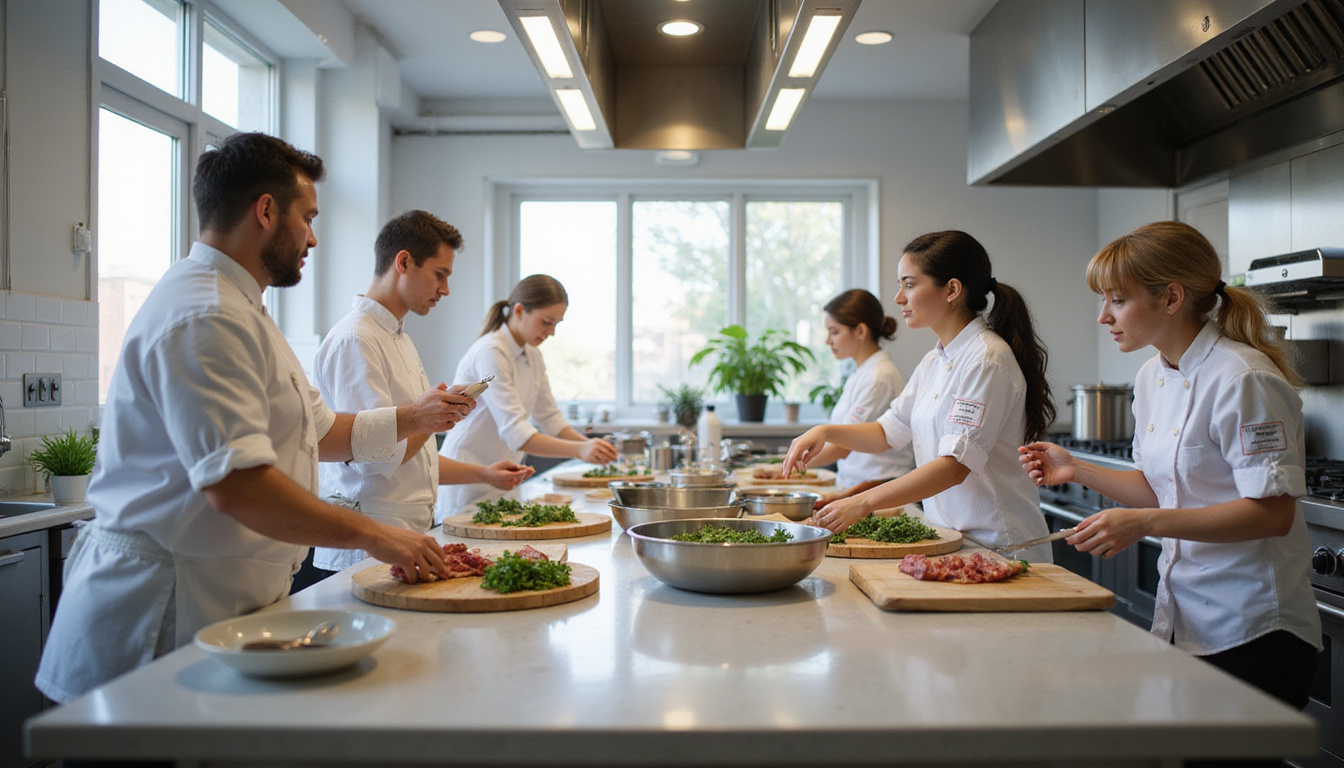
Prep, Service, and Breakdown: Time-Based Ergonomics
1. Ergonomics During Prep
Repetitive strain hides during prep. • Rotate tasks: alternate long knife work with mixing, portioning, or labelling. • Batch smartly: break long sessions into 45-minute intervals with 15 minutes of other tasks. • Sit when possible: for fine detail work like herb picking or garnish, sit with your board adjusted to the proper height.
2. Ergonomics During Service
Service comes in fast sprints, but form remains key: • Keep your stance athletic: feet shoulder-width apart, knees soft. • When leaning to the pass, rest one hand lightly on the counter to reduce back strain. • When retrieving something from a low shelf, drop your hips, bend your knees, and use your legs—think “quick squat,” not a bending spine.
3. Ergonomics During Breakdown and Closing
As you tire, your form may fail.
That is when injuries come.
• Bring trash and cambros close before lifting or emptying. • Break a heavy item into smaller loads (two light tubs are better than one heavy lift). • Slide items like sheet pans, speed racks, or large pots instead of lifting them hard.
Recovery, Strength, and Supplements: Keeping Your Body Service-Ready
Your body is your best tool.
Just as you clean your flat top, you must care for your body.
1. Simple Mobility and Strength Moves for Chefs
You do not need a full gym routine.
Five to ten minutes each day can help:
• Make wrist circles and stretch your forearms after heavy prep.
• Stretch your hip flexors to undo standing strain.
• Rotate your upper spine with gentle trunk turns.
• Do light bodyweight squats and calf raises to keep your legs and feet strong.
Think of these moves as sharpening your knives—small and steady upkeep matters.
2. Hydration, Salt, and Fuel
A hot kitchen and a long shift deplete your fluids.
• Drink water often; do not wait until after-shift chugging.
• Add electrolytes if you sweat a lot.
• Eat real food. Do not settle for fries over trash and cold staff meals.
Your muscles and joints need proper fuel.
3. Thoughtful Use of Supplements
Some chefs add supplements for extra joint and muscle support.
Within FDA guidelines, such supplements cannot claim to cure or treat.
They are designed to:
• Support comfortable movement.
• Help maintain healthy joint function.
• Promote muscle recovery and resilience.
For instance, Regenerix Gold is one supplement many chefs choose as part of their self-care strategy.
Regenerix Gold
Always check labels, follow suggested use, and consult a professional if you have health concerns.
Practical Chef Ergonomics Hacks You Can Implement Today
Here is a quick hit list for before and during your next shift:
- Adjust your cutting board so the height reaches your elbow.
- Move oil, salt, your most-used pans, and tools into your strike zone.
- Check your stance: feet shoulder-width apart, knees soft, and shoulders relaxed.
- Keep heavy pans and cambros close to your body when lifting.
- Use anti-fatigue mats and wear supportive, non-slip shoes.
- Vary your tasks to avoid long hours of a single motion.
- Add 5–10 minutes daily of mobility or light strength work.
- Stay hydrated and eat proper meals—not just scraps.
- Consider a well-formulated supplement for joint and muscle support (after consulting a healthcare professional).
Try even three of these tips, and your body will feel the difference by week’s end.
FAQ: Chef Ergonomics in Real-World Kitchens
Q1: What is chef ergonomics in a professional kitchen?
Chef ergonomics means that your kitchen’s layout, tools, and your movements work together.
A proper set-up keeps your body safe and supports steady work.
Q2: How can I improve ergonomics in a small kitchen or food truck?
In tight spaces, you can still improve ergonomics by:
• Stacking boards for the right height.
• Using hooks or magnetic strips to keep key tools within reach.
• Placing anti-fatigue mats where you stand the most.
• Changing prep routines so that you never stay in one posture for too long.
Q3: Are there products that boost ergonomic chef performance besides layout fixes?
Yes. You can choose supportive shoes and well-designed knives and tools.
Some chefs also use supplements for joint and muscle support.
Products like Regenerix Gold play a role when combined with smart layout and recovery techniques.
The Chef’s Edge: Protect Your Body Like Your Reputation
In top kitchens, people value speed, consistency, and flavor.
Very few address the physical toll of building that reputation with each dish.
Chefs who last decades focus on chef ergonomics.
They keep their bodies in shape as they build their reputation.
You invest in knives, cookware, ingredients, and skill.
Now invest in the one asset that unites them: your body.
Along with a smart station set-up, good movement, hydration, and rest, consider adding Regenerix Gold to your plan if you wish to support your joints and muscles on and off the line.
It is a tool for professionals who plan for the long term, value agility, and know that protecting the body works like controlling food cost and labor.
Give yourself the advantage that many ignore.
Build a kitchen and a routine that serve you well so you can keep running the pass—and not just survive it.
Health Note
Always consult a licensed medical doctor for your health issues.
Special Discount
If you prefer preventive nutrition to minimize expensive knee surgery and potentially addictive pharmaceuticals, Regenerix Gold is your savvy solution.
You qualify for a special discount.
Simply use the link below and a discount will automatically be applied during checkout.
Get Regenerix Gold => HERE


