

If fishing knee pain creeps in each time you launch the boat, kneel on the deck, or hike into a quiet honey hole, you are not alone.
Many American fishermen and anglers bear knee soreness, stiffness, and twinges so they can keep casting.
That “getting older” thought can shorten seasons, limit your reach, and turn long days on the water into painful marathons.
The good news is this: with smart strategies, you protect your knees, ease discomfort, and fish harder for longer.
Why fishing beats up your knees more than you think
Some non-anglers say fishing means “standing around with a rod.”
You know that is not true.
A serious angler faces these actions:
- Standing for hours on a gently rocking deck or platform
- Making small adjustments to keep balance while using a trolling motor
- Bending deeply to grab fish, work the livewell, or reach a tackle box
- Climbing in and out of the boat or up and down riverbanks
- Walking long on uneven ground, rip-rap, mud, and slippery rocks
Over time, these repeated actions can cause:
- Stiffness when you get out of the truck after a long drive
- Achy knees after a day on the deck
- Sharp twinges when you pivot to set a hook or net a fish
- Swelling or puffiness around the knee after long trips
Do not ignore these small warnings.
Your occasional fishing knee pain may come to stay if you ignore them.
The aim is not to quit fishing.
It is to fish smarter.
1. Fix your fishing stance: small changes, big knee relief
How you plant your feet and balance your weight on the deck matters for your knees.
Common mistakes in your stance on the boat include:
- Locking your knees while you fish
- Standing with feet too close together
- Twisting from the knee instead of your hips when you cast or set the hook
- Leaning too much on one leg while working a trolling motor or electronics
Try this angler stance:
- Keep a small bend in both knees; do not lock them
- Stand with feet at least as wide as your shoulders
- Point your toes roughly in the same way as your cast
- Rotate from your hips and core instead of your knees
Practice this on calm water at first.
The more automatic it becomes, the less your knees will suffer in rough water.
2. Upgrade your deck and dock traction to protect your joints
Each slip, slide, or near-fall sends shock through your knees.
Standing on hard, unpadded surfaces all day also strains your joints.
Simple upgrades include:
- Anti-fatigue deck mats: Add quality marine mats at the bow where you cast. They cushion your steps and ease impact.
- Better traction on high-traffic areas: Steps, platforms, and near livewells can be slippery. Use non-skid tape or pad systems so you remain stable.
- Wade-fishing traction: When you wade in rivers or flats, wear boots with a solid grip. Each stable step saves your knees over time.
More stability means fewer sudden twists and fewer awkward moves that stress your knees.
3. Choose knee-friendly footwear for long days on the water
Old flat sandals or worn-out deck shoes may hurt your knees.
Pick fishing shoes or boots with these features:
- Good arch support
- Cushioning in the midsole
- A heel that is a bit higher than the toe (not flat)
- Enough space in the toe box for natural foot spread
Rotate between two pairs during the season so that the foam can rebound.
If you fish from shore, think about a light hiking/fishing hybrid boot for mixed terrain.
If you already use orthotic inserts at home, use a water-resistant pair for fishing too.
4. Strengthen your “fishing engine”: hips, glutes, and quads
Many anglers hurt their knees because other muscles fail to support them—especially the hips and glutes.
When these large muscles are weak or tight, your knees must work too hard.
You do not need a gym membership or a fancy plan.
Start with simple, low-impact moves.
Get your healthcare provider’s approval if needed.
Try these exercises:
- Chair squats: Sit back to a chair and stand slowly while keeping your knees aligned with your toes.
- Wall sits: Slide down a wall until your knees are slightly bent. Hold for 10–30 seconds.
- Glute bridges: Lie on your back with knees bent, lift your hips, and squeeze your glutes.
- Side-lying leg raises: Lift your leg to build hip strength for stability on uneven banks.
Aim for 2–3 light sessions per week.
A strong engine means you climb ramps and banks with less strain, stay stable on the bow in wind or chop, and set a hook without twisting your knee awkwardly.
5. Warm up before the first cast — not after the first twinge
Many anglers sit in their truck for hours.
Then they step onto the water with cold muscles and tight joints.
This mix often leads to fishing knee pain.
Before grabbing your rod, spend 3–5 minutes to warm up:
- Walk briskly around the parking lot or dock
- Gently bend and straighten your knees a few times
- Do light hip circles and ankle rolls
- March in place on the deck, gradually lifting your knees higher
After a few casts, add a couple of gentle quad and hamstring stretches.
Keep it simple.
A quick warm-up can turn a painful day into a successful one.
6. Use support gear wisely: braces, sleeves, and poles
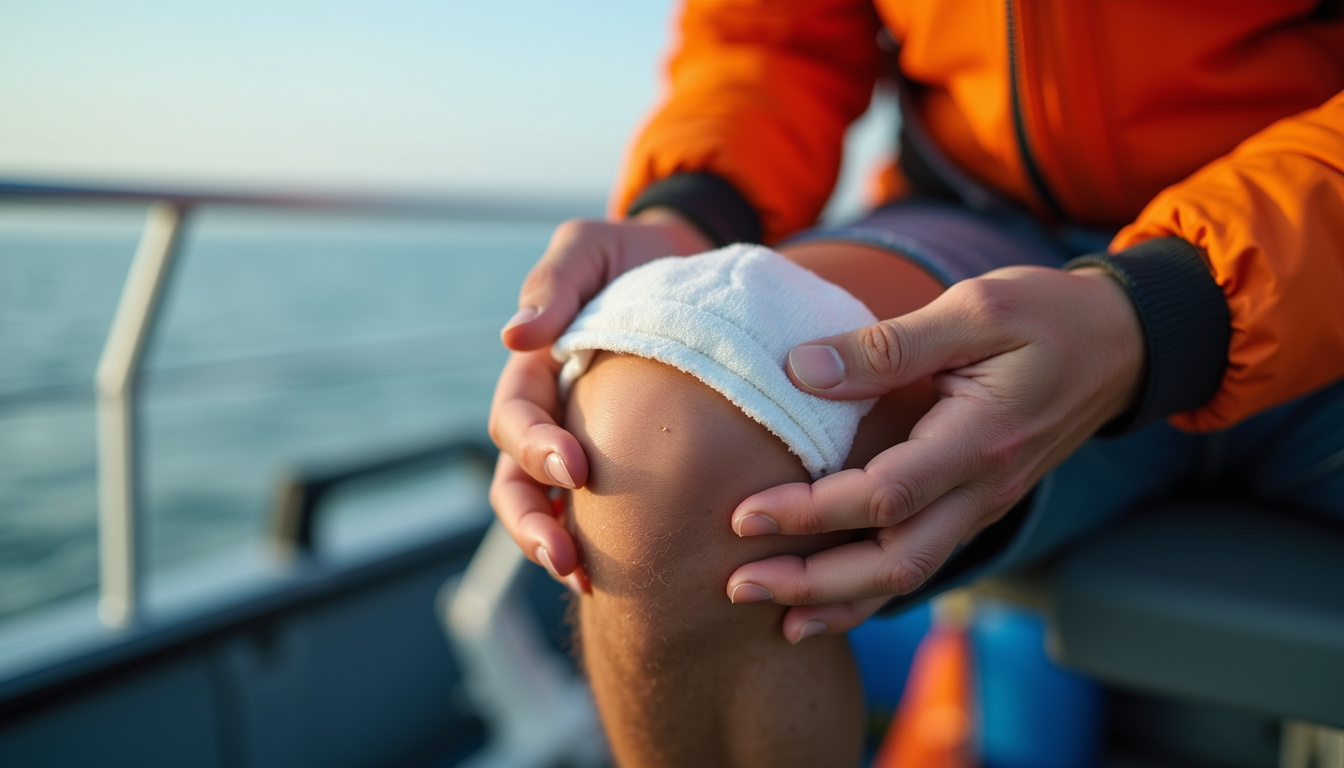
Many anglers find that support gear helps ease knee discomfort and allows longer days on the water.
Consider these options, and discuss them with your healthcare professional:
- Knee sleeves: Light compression keeps your knee warm and aware of its position so you move more carefully.
- Sturdier braces: Some anglers use braces with side supports during tournaments or long trips.
- Trekking poles or a sturdy wading staff: When bank fishing or wading, a pole saves your knees on steep, slick, or rocky spots.
Use support gear as part of a larger plan that includes good movement, strength, and smart planning.
7. Plan your fishing days with your knees in mind
You already plan around wind, tides, and temperature.
Now plan for your joints.
On the boat, try these tips to lower knee stress:
- Alternate between standing and sitting on a butt seat or leaning post
- Change positions every 20–30 minutes: move from the bow to mid-boat or shift your foot forward
- Keep favorite tackle and tools close by to avoid deep knee bends
- Use nets or grips instead of leaning over the gunnel with one locked knee
When fishing from the bank or wading:
- Take short rest stops during long hikes
- Choose routes with better footing over risky shortcuts
- Use ramps, docks, or easy entry points when you can, even if it means extra walking
A little planning turns “barely made it back” days into days when you feel you could go longer.
8. Support your knees from the inside: nutrition and supplements
Your knees are living tissue.
They react to how you fuel your body.
A balanced diet with quality protein, healthy fats, and a rainbow of fruits and vegetables helps your joints.
Many anglers add joint and muscle supplements to their routine.
Supplements cannot treat or cure disease, but some studies show certain ingredients may help in:
- Supporting joint comfort
- Keeping cartilage healthy
- Maintaining normal muscle function and recovery
Some formulas combine collagen, botanicals, vitamins, and minerals for overall joint and muscle health (source: National Institutes of Health, Office of Dietary Supplements).
If you deal with regular knee pain or general discomfort after long days on the water, consider discussing a joint supplement such as Regenerix Gold with your healthcare provider.
Always:
- Read labels carefully
- Follow use directions
- Talk with a professional before starting any new supplement
Used with smart training, movement, and gear choices, a quality joint and muscle supplement can be another tool in your tackle box for staying strong and active.
Regenerix Gold
Quick checklist: make your next trip easier on your knees
Use this list as a pre-trip and on-the-water reminder:
-
Before the trip
- Pack supportive footwear
- Bring any knee sleeve or brace you use
- Do 3–5 minutes of light warm-up before you launch
-
On the water
- Keep a small bend in your knees; do not lock them
- Shift stance and foot position regularly
- Alternate between standing and using a seat or leaning post
- Watch your footing on wet decks, docks, and banks
-
After the trip
- Gently stretch your hips, quads, and hamstrings
- Use simple home methods (like cool or warm packs) if advised
- Note what hurt your knees so you can change your routine next time
Treat knee comfort as part of your fishing system.
This care gives you more days on the water without paying later for damage.
FAQ: Fishing knee pain and joint support
Q1: Why do my knees hurt after a long day of fishing?
A1: Your knees hurt because you stand for long hours on hard or unstable surfaces, twist when you cast or set the hook, and bend deeply during your work.
Weak or tight muscles in the hips, thighs, and calves force your knees to absorb extra stress.
Review your stance, footwear, strength, and warm-up habits for help.
Q2: What can I do during a fishing trip to reduce knee joint pain?
A2: During a trip, switch your stance often, keep your knees slightly bent, sit or lean when you can, and keep your gear close.
Supportive shoes and good traction are helpful on wet decks or rocky banks.
Some anglers also use knee sleeves or braces with guidance from a healthcare professional.
Q3: Are joint supplements helpful for anglers with fishing knee pain?
A3: Joint and muscle supplements do not treat or cure disease, but many active people use them to support joint health.
A supplement like Regenerix Gold is made to help with joint and muscle support.
Always discuss any supplement with your healthcare provider to see if it fits your plan.
Fish longer, hurt less: why smart anglers think ahead
For many seasoned fishermen and anglers, quitting is not an option.
Your identity, peace of mind, and sometimes your paycheck depend on time on the water.
Ignoring knee pain and “just grinding through it” can mean more doctor visits, missed work, shorter trips, and lost tournaments when your body can no longer keep pace with your skills.
Anglers who fish season after season plan ahead.
They adjust their stance, invest in better gear, strengthen their “fishing engine,” and find smart ways to support their joints and muscles from the inside out.
If you see yourself as an angler who plans ahead and protects your edge, consider adding joint and muscle support to your kit.
Regenerix Gold is made for fishermen who want strong knees, hips, and muscles.
It works for long runs, rough water, and long days on the boat.
Take care of your body as you do your rods, reels, electronics, and boats.
A little extra strategy now can save you expensive care later.
Health Note
Always consult a licensed medical doctor for your health issues.
Special Discount
If you prefer preventive nutrition to minimize expensive knee surgery and potentially addictive pharmaceuticals, Regenerix Gold is your savvy solution.
You qualify for a special discount.
Simply use the link below and a discount will automatically be applied during checkout.
Get Regenerix Gold => HERE


