

If you live life behind the wheel, your body is your key asset.
You drive long hours in the captain’s chair.
You bounce over rough, busted pavement.
You back up in blind spots and wait in the cold.
Each action adds up.
A simple foam roller becomes one of the best truck tools when you use it as the pros do.
It eases discomfort and helps you bounce back faster between runs.
Below are practical, road-tested foam roller moves.
They serve American truckers who feel tight, achy, or stiff from long hauls.
They also show how a smart supplement like Regenerix Gold can support healthy joints and muscles during your rolling sessions.
Why Every Trucker Should Care About Recovery
You know the job well:
- 10–11 hours drive every day.
- The same seat and the same posture.
- Few chances to stretch or move.
This locked position stresses your back, hips, shoulders, and neck.
You might feel:
- Stiff when you step out of the seat.
- Tight hips and hamstrings when you stand.
- A sore low back after unloading or sliding tandems.
- Achy shoulders from using mirrors, cranking dollies, or tarping.
Foam rolling works like a mini self-massage.
It releases muscle tension from long hours of sitting and bouncing.
It boosts circulation so you feel less locked up.
It preps your body before driving or unloading.
It speeds up recovery after a long shift or heavy work.
You do not need a fancy gym.
A basic foam roller, a few square feet of space in your sleeper or truck stop, and a few minutes are enough.
Choosing the Right Foam roller for Life on the Road
For truckers, a foam roller must be tough, compact, and easy to store in the cab.
Look for these features:
- Length: Choose 12–18 inches. This size fits better in a sleeper than the large 36" rollers.
- Density: Pick a medium‑firm roller: soft enough for comfort, yet firm enough to work.
-
Surface: Use a smooth roller or one with light ridges.
Deep spikes may hurt, especially if you are new to rolling.
Keep your roller close at hand – under the bunk, in a side box (inside a bag), or strapped behind the seat.
Foam roller Moves Pros Use – Trucker Edition
These moves target the muscles that work hardest behind the wheel.
Aim for 30–60 seconds on each area.
Do it 1–2 times a day when you find a moment.
Breathe slowly and never roll directly on bones or joints.
1. Low Back “Unload” (Thoracic Roll)
Your low back screams from long sitting.
Rolling directly on the lumbar spine is not ideal.
Instead, roll on the mid- to upper-back to help the whole chain.
How to do it:
- Sit on the floor.
- Place the foam roller across your back below your shoulder blades.
- Bend your knees and keep your feet flat.
- Cross your arms over your chest or gently support your head.
- Lift your hips slightly.
- Roll up and down from your mid-back to upper-back.
- Brace your core lightly and avoid the lower spine.
Why truckers love it:
It helps ease the hunched position at the wheel.
It makes it easier to sit up straight and breathe deeper during long drives.
2. Glutes and Piriformis – The “Driver’s Seat Release”
Long hours in the driver’s seat make your glutes and deep hip muscles feel hard as cement.
How to do it:
- Sit on the foam roller so it rests under your right butt cheek.
- Cross your right ankle over your left knee in a figure‑4 position.
- Lean slightly to your right side.
- Slowly roll small circles to find tight spots.
- Then switch sides.
It feels like a deep, targeted massage where you feel wallet-pocket tightness from sitting too long.
3. Hip Flexor and Quad Reset – For Tight Hips After Long Hauls
Tight front-hip muscles can force you to lean forward when you leave the cab.
How to do it (Single-Leg Quad Roll):
- Lie face down with the foam roller under your right thigh.
- Use your forearms on the ground for support.
- Roll from just above the knee to just below the hip bone.
- Gently turn your leg slightly inward and outward to work the full thigh.
- Then switch legs.
Truck-stop tip:
Lay a mat or blanket next to your truck and do this when you are off-duty and parked.
4. Hamstring Release – For Climbing In and Out of the Rig
Hamstrings get tight from long hours of sitting.
This tightness can make steps and climbs feel heavier.
How to do it:
- Sit on the ground with the foam roller under your right hamstring.
- Place your hands behind you for support.
- Roll from just above the back of the knee to just below the glutes.
- Cross your left leg over your right to add pressure if needed.
- Then switch legs.
This move makes your legs feel less rusty when you step out of the cab or walk during inspections.
5. Calf Roll – For Pedal Work and Long Braking
Your calves work hard with throttle, brake, and clutch moves.
They rarely get a rest.
How to do it:
- Sit on the floor with the foam roller under your right calf.
- Lift your hips slightly.
- Roll from just above your ankle to below your knee.
- Rotate your leg slightly in and out to reach every angle.
- For extra pressure, cross your left leg over the right.
- Then switch legs.
If your calves remain tight, they can pull on your knees, hips, and back.
This move helps break that chain.
6. Chest and Front-of-Shoulder Open-Up – For Mirror Work and Wheel Grip
Leaning into the wheel and reaching for mirrors can tighten your chest and shoulders.
How to do it (Side-Lying Chest Roll):
- Lie on your right side.
- Place the foam roller under the front of your right shoulder/chest (avoid the joint).
- Set your right arm at a 45° angle in front of you.
- Gently roll forward and back to massage the chest muscles.
- Then switch sides.
This roll helps you sit taller, improves steering comfort, and eases upper-back strain.
7. IT Band-Friendly Side Thigh Roll – The “Outer Leg Reset”
Your outer thigh often feels tight from balancing and bracing during driving.
Instead of pressing directly on the IT band, work the muscles around it.
How to do it:
- Lie on your side and position the foam roller just in front of the outer thigh.
- Roll slowly to work muscles in front of and behind the IT band.
- When you find a tender spot, stop and breathe for 10–20 seconds.
- Then switch sides.
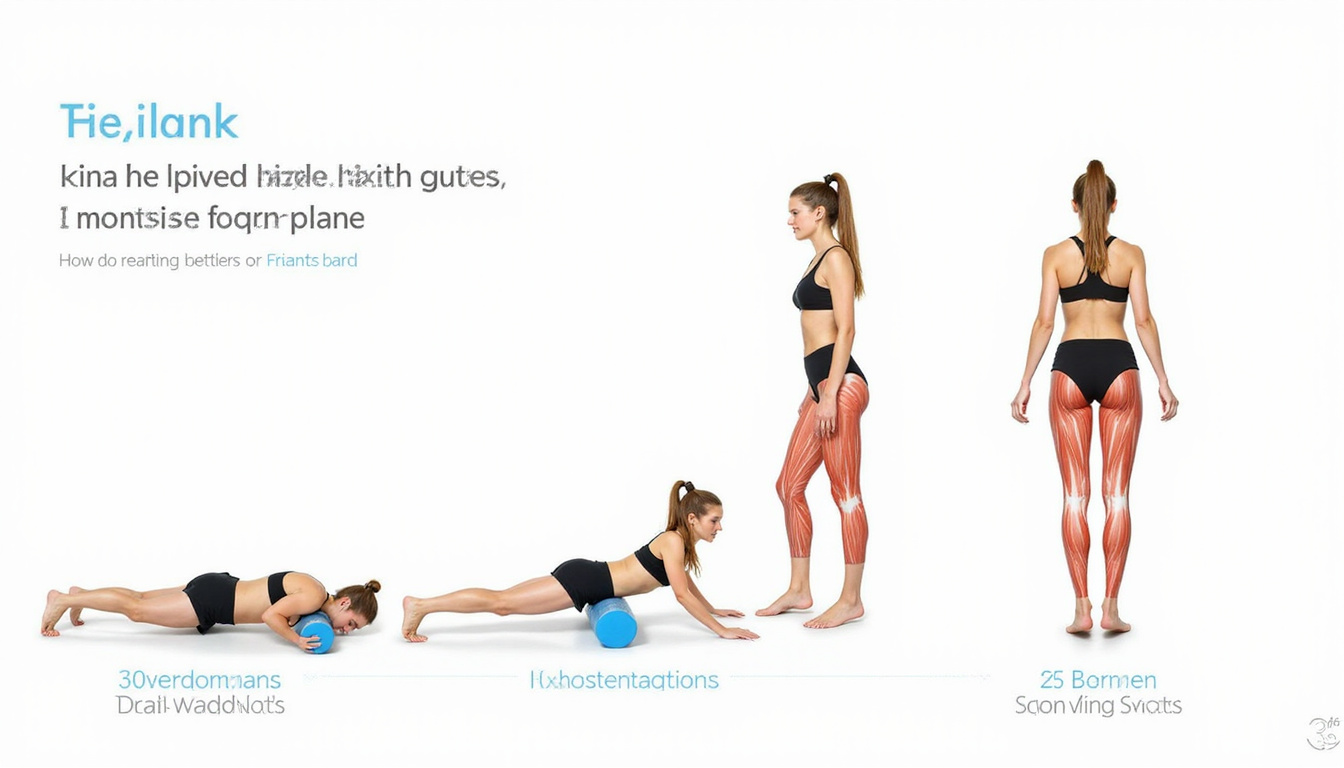
Sample 10-Minute Foam Roller Routine for Truckers
When you are parked and off-duty, use this quick sequence:
- Mid-/Upper-Back Roll – 1 minute
- Right Glute / Piriformis – 1 minute
- Left Glute / Piriformis – 1 minute
- Right Quad – 1 minute
- Left Quad – 1 minute
- Right Hamstring – 1 minute
- Left Hamstring – 1 minute
- Right Calf – 1 minute
- Left Calf – 1 minute
- Chest / Shoulder – 30 seconds each side
That is about one fuel stop’s worth of time for your full tune-up.
Safety Tips for Using a Foam roller on the Road
• Ease into it.
Foam rolling may feel odd at first.
Aim for a feeling of “hurts so good,” not sharp pain.
• Avoid joints and the spine.
Do not roll on your knees, elbows, or the bony areas of your spine.
• Breathe.
Holding breath tightens muscles.
Slow breathing helps them relax.
• Stay hydrated.
Muscles and connective tissue work better when you drink enough water.
• Know when to stop.
If something feels wrong, numb, or sharply painful, stop that area and talk to a health professional.
Remember, foam rolling supports comfort and recovery.
It is not meant to diagnose or treat any medical condition.
Pairing Foam Rolling with Smart Daily Habits
Foam rolling works best when you add it to your overall driver body care plan:
• Micro-movement breaks:
During a 30-minute break, take a short walk and do a few basic stretches.
• Seat setup:
Adjust your seat, steering wheel, and mirrors so you are not reaching or hunching.
• Footwear:
Wear shoes that support your feet when you are off the pedals.
This reduces stress along the chain from your feet to your back.
• Sleep:
Good rest in the sleeper helps your body repair after the long grind.
Many truckers add nutritional support to keep their joints and muscles healthy as they rack up miles.
How Regenerix Gold Can Complement Your Foam roller Routine
Your foam roller works on the outside by easing tension and tight spots from sitting and working.
The inside story is what you put into your body.
Regenerix Gold is a dietary supplement that supports:
• Healthy joint function
• Comfortable, flexible movement
• Muscle recovery and overall performance
It is ideal for truckers who:
• Spend hours in a seat
• Do physical work with loading, unloading, tarping, or chaining
• Want to stay in the game and protect their livelihood
A consistent supplement routine becomes a smart part of a long-term wellness plan.
It works alongside movement, stretching, and rolling.
As with any supplement:
• Read and follow the label instructions.
• Talk with your healthcare provider or pharmacist if you take medications or have any conditions.
• Know that supplements do not diagnose, treat, cure, or prevent any disease.
Think of foam rolling plus a targeted supplement like Regenerix Gold as a “two-lane highway” that keeps your body ready for the miles ahead.
Regenerix Gold
FAQ: Foam roller Questions from the Road
-
Is a foam roller really worth carrying in a truck?
Yes. A foam roller for truckers is a compact and low-cost tool.
It takes less space than a duffel bag.
It makes climbing in and out of the rig, twisting, and long sitting more manageable. -
How often should I use a foam roller if I drive long haul?
You can use a foam roller for back and legs most days.
Stay within your comfort zone.
Many drivers roll for 5–10 minutes before bed in the sleeper or after long stretches on the road. -
Can a foam roller replace stretching or exercise?
A foam roller for muscle recovery is a great tool.
It does not replace movement.
You get the best results when you combine rolling with walking, basic stretches, and an overall activity routine that suits your schedule and condition.
One Last Mile: Why Smart Truckers Invest in Their Bodies
You protect your rig with maintenance, inspections, and good fuel.
Your body deserves the same care.
You cannot trade in your body when the miles add up.
By:
• Keeping a foam roller in the cab.
• Spending 10 minutes a day easing tension and tightness.
• Adding smart lifestyle choices and movement.
• Supporting your joints and muscles inside with a supplement like Regenerix Gold.
You are not just chasing comfort.
You protect your ability to work, earn, and enjoy life off the road.
Medical bills, lost time, and lost loads are expensive.
Pro drivers plan ahead.
Choosing a foam roller and premium support like Regenerix Gold shows you care for your body before it breaks down.
For truckers who want to stay sharp and ready to roll, Regenerix Gold is a smart move.
It separates the pros from the rest of the pack.
For more guidance on joint-friendly habits and physical activity, explore resources from the U.S. Department of Health and Human Services (source: https://health.gov).
Health Note
Always consult a licensed medical doctor for your health issues.
Special Discount
If you prefer preventive nutrition to minimize expensive knee surgery and potentially addictive pharmaceuticals, Regenerix Gold is your savvy solution.
You qualify for a special discount.
Simply use the link below and a discount will automatically be applied during checkout.
Get Regenerix Gold => HERE


