

If you’re staying in Singapore and you want to get stronger and leaner without a gym, isometric exercises help.
These exercises make your muscles work hard while your joints hold a steady position.
Think of holding a plank or a wall sit.
When done correctly, isometrics build strength, protect your joints (especially your knees), and support fat loss along with an active lifestyle and good nutrition.
Below is a practical guide for using isometric exercises at home.
It focuses on those who feel knee stiffness, weakness, or discomfort when walking, climbing stairs, or standing for long periods.
──────────────────────────────
What Are Isometric Exercises?
Isometric exercises make you hold a position under tension; your muscles work while your joints do not move.
Examples include:
• Plank – hold your straight body on forearms and toes.
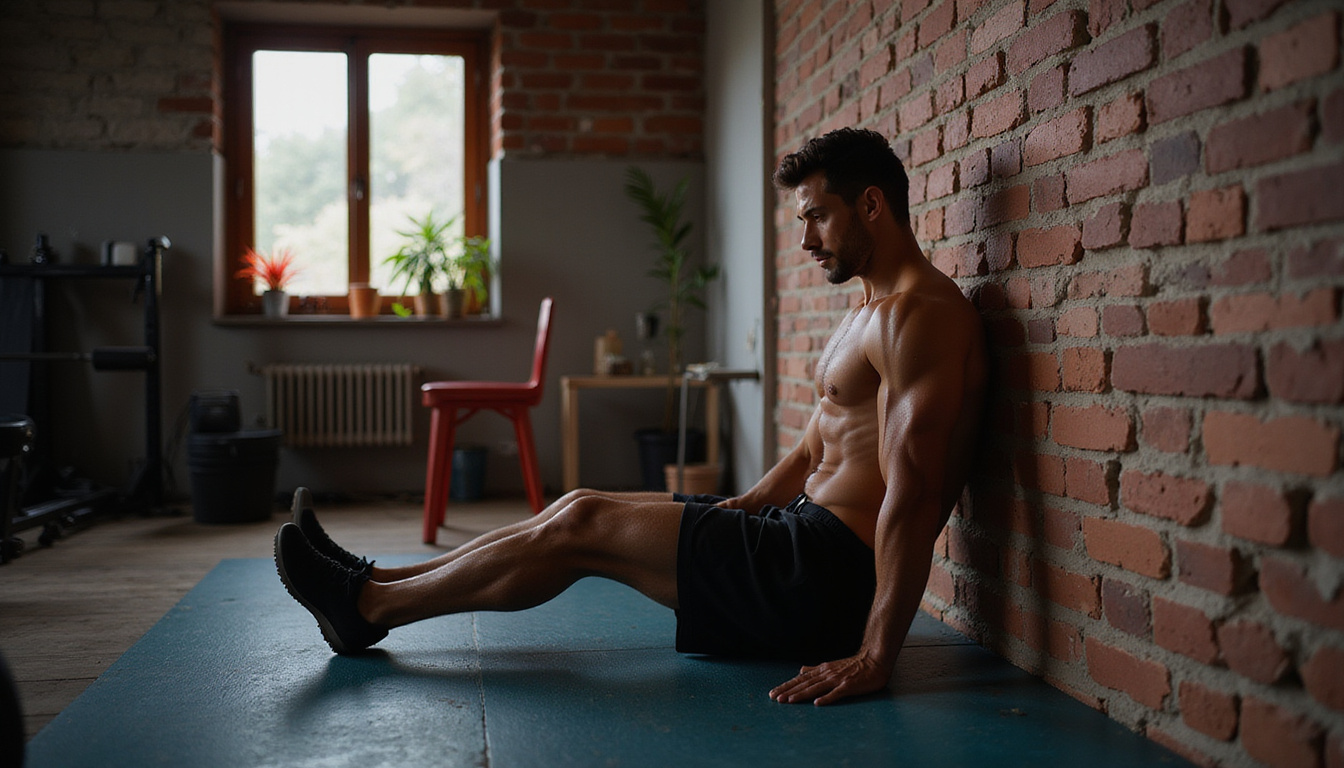
• Wall sit – hold a seated position against the wall.
• Glute bridge hold – lift and hold your hips.
• Static lunge hold – keep a lunge with each leg.
Your muscles contract well, and your joints stay in place.
This set-up can be kinder on your knees than high-impact moves, yet it still challenges your muscles.
Isometrics do not directly melt fat.
They do, however:
• Build and maintain muscle mass.
• Increase daily calorie burn with more effort.
• Support better posture and smoother movement.
Pair them with sensible eating and daily activities (like walking or taking stairs) to help you shred fat and build strength at home.
──────────────────────────────
Benefits of Isometric Exercises for Daily Life in Singapore
Many in Singapore experience:
• Achy knees after standing or walking long hours.
• Pain when going down stairs.
• Stiffness after sitting at a desk or in a car.
• Wobbliness when squatting or kneeling.
Isometric exercises help because they:
• Strengthen muscles without heavy loading.
You challenge muscles without a squat rack or heavy dumbbells.
• Allow joint-position control.
You choose a knee angle that feels comfortable.
• Require little space or equipment.
They work well in HDB flats or condos.
• Scale easily with time.
Beginners hold for 5–10 seconds; advanced users hold for 30–60+ seconds.
Research shows isometric training can improve strength and lower joint pain when used with other exercises.
(Source: National Library of Medicine)
──────────────────────────────
At-Home Isometric Workout Plan
Always warm up first.
March gently for 3–5 minutes, swing your legs, make arm circles, and do sit-to-stands.
1. Wall Sit (Thigh & Knee Support)
- Stand with your back against a wall.
- Slide down until your knees bend 45–90 degrees.
• If you have discomfort, start higher (less bend). - Keep knees over your ankles and do not let them collapse inward.
- Hold for 20–40 seconds and breathe steadily.
Do 2–4 rounds.
Rest 30–60 seconds between rounds.
2. Glute Bridge Hold (Hips, Hamstrings & Lower Back)
- Lie on your back with knees bent and feet flat, hip-width apart.
- Press through your heels and lift your hips until your body is in a straight line from shoulders to knees.
- Squeeze your glutes and keep your ribs down.
- Hold for 20–40 seconds and breathe slowly.
Do 2–4 rounds.
This move supports your hips and eases some strain on your knees from walking or climbing stairs.
3. Plank Hold (Core & Shoulders)
- Get into a forearm plank with elbows below your shoulders and toes on the ground.
- Keep your body in a straight line from head to heels.
- Do not let your hips sag or pike up.
- Hold for 15–40 seconds.
Do 2–4 rounds.
If needed, modify by performing on your knees or against a wall/table.
4. Static Split Squat / Lunge Hold (Single-Leg Support)
- Stand with one foot forward and one foot back as in a lunge.
- Slightly bend both knees and lower your body a little.
- Place most weight on the front leg with the heel planted.
- Hold for 10–30 seconds, then switch legs.
Keep the movement shallow if you have knee sensitivity.
Over time, you may lower further as you gain strength and comfort.
5. Isometric Calf Raise Hold (Ankles & Balance)
- Stand near a wall or chair for support.
- Lift your heels so you stand on the balls of your feet.
- Hold for 15–30 seconds and keep your knees slightly soft (do not lock them).
Do 2–3 rounds.
This move helps your calves and improves walking and stair performance.
──────────────────────────────
Sample Weekly Isometric Plan
Aim for 3–4 sessions per week:
• Day 1, 3, 5 (e.g., Mon/Wed/Fri):
– Wall sit: 3 rounds
– Glute bridge hold: 3 rounds
– Plank: 3 rounds
– Static lunge hold: 2 rounds per leg
– Calf hold: 2 rounds
• Day 2, 4 (optional – light day):
– Brisk walk or cycling for 20–30 minutes
– Gentle mobility (hip circles, ankle circles, light stretching)
Adjust the plan based on your strength and schedule.
──────────────────────────────
Can Isometric Exercises Help With Fat Loss?
Isometric exercises do not directly “melt fat.”
They play a key part in a fat-loss plan because:
• More muscle means a higher energy use at rest.
• Isometrics boost overall training volume without stressing the joints too much.
• They work best when combined with:
– Daily walking (to MRT/bus, lunchtime walks, evening strolls).
– Choosing stairs over lifts or escalators when possible.
– Mindful food choices such as whole foods, lean protein, and less sugary drinks.
Combine isometrics with aerobic activity and smart nutrition to support fat loss in a lasting way.
──────────────────────────────
Common Knee Care Options in Singapore
If your knees hurt, click, give way, swell, or feel stiff, it is wise to get personalized advice before increasing your exercise.
Here is an overview of common care options in Singapore:
MOH-Licensed Medical Doctors
• General Practitioners (GPs):
They are your first contact.
They assess, give basic management, and advise on when to refer you to a specialist.
• Orthopaedic Specialists:
These doctors focus on bones, joints, and muscles.
They may order imaging, guide your activity levels, and review non-surgical or surgical options.
You can see them in public hospitals or private clinics.
Licensed Traditional Chinese Medicine (TCM) Practitioners
TCM physicians may use:
• Acupuncture
• Manual techniques
• Herbal formulations
Some people in Singapore use TCM along with conventional care.
Make sure you discuss all treatments with your providers so they can work together safely.
Standard Physiotherapy (Primarily Exercise-Based)
Physiotherapists in hospitals and clinics typically offer:
• Individual exercise programs (often with isometric moves and progressive strength work).
• Movement retraining (for walking, stair climbing, and balance).
• Daily activity tips.
They may also add manual therapy or tech-supported treatments.
Non-Licensed Providers
Some choose help from providers who are not in the formal healthcare licensing system (like certain trainers or wellness practitioners).
If you use these services:
• Check their background, training, and experience.
• Ensure they advise you to seek medical advice if symptoms worsen.
• Be cautious of anyone who promises a guaranteed “cure” or tells you to stop your medications.
──────────────────────────────
Non-Invasive Technology-Based Options
Some opt for technology-assisted, non-invasive options to complement exercise and lifestyle changes.
Shockwave Therapy
In Singapore, shockwave therapy is well-established.
It is often part of a licensed physiotherapy service and uses high-energy sound waves on targeted tissues.
• It is used with or without an exercise program.
• Trained medical or physiotherapy professionals usually deliver it.
• For example, The Pain Relief Practice offers this service:
https://thepainreliefpractice.com
Always ask:
• How many sessions will you need?
• What costs are expected?
• How does it work with your overall rehab plan?
Hotheal Therapy
Hotheal therapy uses radiofrequency for deep tissue heating. • It covers broad, deep tissues. • Many users report fast-acting comfort and easier movement. • It is sometimes used along with an exercise program.
A home-based option in Singapore is offered by PhysioLife:
https://physiolife.com.sg
Ask for details about:
• Who will oversee your case (a physiotherapist or doctor).
• Safety, especially if you have implants or medical conditions here.
• How to combine it with isometric exercises.
Medical Oversight, Cost & Convenience
When you consider shockwave, Hotheal, or other tech options, think about:
• Medical oversight – Does a qualified professional track your progress?
• Cost – What is the total expense, and does it fit your budget and insurance?
• Convenience – Is the location or home-based option right for your work and family life?
──────────────────────────────
Nutrition & Long-Term Support: The Role of Regenerix Gold
Isometric training is just one part of staying strong and lean.
Joint and muscle support also depend on good nutrition and a healthy lifestyle.
This includes enough sleep, low stress, and regular movement.
For extra joint support, some choose a daily supplement like Regenerix Gold.
How Regenerix Gold Fits In
Regenerix Gold works as:
• Nutritional support for joint and muscle health.
• A supplement for preventive or maintenance use.
• A helper for healthy joint and muscle function.
Remember, it is not a medicine.
It does not diagnose, treat, or cure any disease.
It is one piece of a broader plan that includes:
• Regular strengthening with isometrics.
• Aerobic activities like walking, cycling, or swimming.
• A balanced diet with whole foods, lean protein, fruits, and vegetables
(source: Harvard School of Public Health).
Regenerix Gold has:
• Been recommended by some doctors and physical therapists.
• Over a decade of use with positive international reviews.
• A focus on helping active people protect their joints and muscles.
If you have medical conditions, are pregnant or breastfeeding, or take medications, talk with your doctor or pharmacist before you start.
Considering Cost, Health Savviness, and Long-Term Security
Many in Singapore worry about:
• High medical costs if joint problems worsen.
• Time off work, which may affect job security.
• Being seen as someone who delays taking care of themselves.
By using isometric exercises, choosing nutrient-dense foods, and adding a joint-support supplement like Regenerix Gold, you take small, smart steps now to save future costs and improve your well-being.
Explore Regenerix Gold here:
──────────────────────────────
FAQ About Isometric Exercises at Home
-
Are isometric exercises enough to build strength without weights?
Isometric exercises can build strength, especially for beginners or those returning after a break.
As you progress, combine them with dynamic moves (like squats or step-ups) or add resistance with bands or weights. -
Are isometric exercises safe for knee issues?
Many people with mild knee discomfort find that isometrics at comfortable angles work well.
If pain becomes sharp, persistent, or worse, see a medical doctor or physiotherapist. -
How often should I do isometric exercises for best results?
Most people exercise 3–4 times per week with rest days in between.
Combine them with walking and good nutrition for better fat loss, strength, and daily function.
────────────────────────────── By combining isometric exercises, daily movement, non-invasive options when needed, and smart nutrition (like Regenerix Gold), you take confident steps toward stronger, leaner, and more resilient joints and muscles—all from the comfort of your Singapore home.
Special Discount
If you prefer preventive nutrition to minimize expensive knee surgery and potentially addictive pharmaceuticals, Regenerix Gold is your savvy solution.
You qualify for a special discount.
Simply use the link below and a discount will automatically be applied during checkout.
Get Regenerix Gold => HERE

