

Below is a rewritten version that uses dependency grammar ideas. In each sentence, the subjects, verbs, and objects stay close together. Short, clear clauses and simple words keep the reading ease in the 60–70 range. The formatting remains the same.
If each step sends pain through your knee, or you tire of “walking funny” to guard that sore joint, a joint support cane can change the game. Used well, the cane takes pressure off your knee, helps you stand and sit with less pain, and gives you the confidence to move without fear that your knee might “give out.”
This guide serves Americans who live with daily knee pain—whether it comes as an ache on stairs, stiffness after sitting long, or a sharp jab when you twist—and have a need for clear, expert tips to move better.
How a joint support cane actually helps your knees
A properly used joint support cane does more than "help you balance." It can:
• It offloads weight from your knee with each step.
• It eases grinding, pinching, or “knife-like” pain on bad days.
• It improves your walk so you do not limp or favor one side.
• It lets your thigh and calf muscles work well without overcompensation.
Think of the cane as a portable “third leg.” It shares the load with a painful knee. When you set the cane to the right height and use it on the correct side, it cuts the load on your knee by a good margin (source: Mayo Clinic).
Do you actually need a joint support cane?
You do not have to be “old” or disabled to use a cane. Think about one if:
• Your knee feels weak, wobbly, or ready to buckle.
• You limp by the end of the day.
• Your knee flares after walking a few blocks or standing in line.
• Stairs feel slow, stressful, or painful.
• You grab walls, furniture, or carts for support.
If any of these points match you, using a joint support cane now can protect your knee. It cuts irritation and lets nearby muscles work without being overworked.
Choosing the right joint support cane for knee discomfort
Not all canes are equal. The best one fits how your knee feels and where you struggle.
1. Single-point vs. quad base
• Single-point joint support cane
- Use it if you mainly need to take load from your knee and improve walk.
- It is light and works well on stairs.
- It is good for those with fair balance and painful knees.
• Quad-base (four-prong) cane
- It adds stability if your knee feels very unstable or if you feel off balance.
- It is heavier and a bit clumsy on stairs but best on flat ground.
2. Handle style
Your hand and wrist will quickly feel if the handle is wrong.
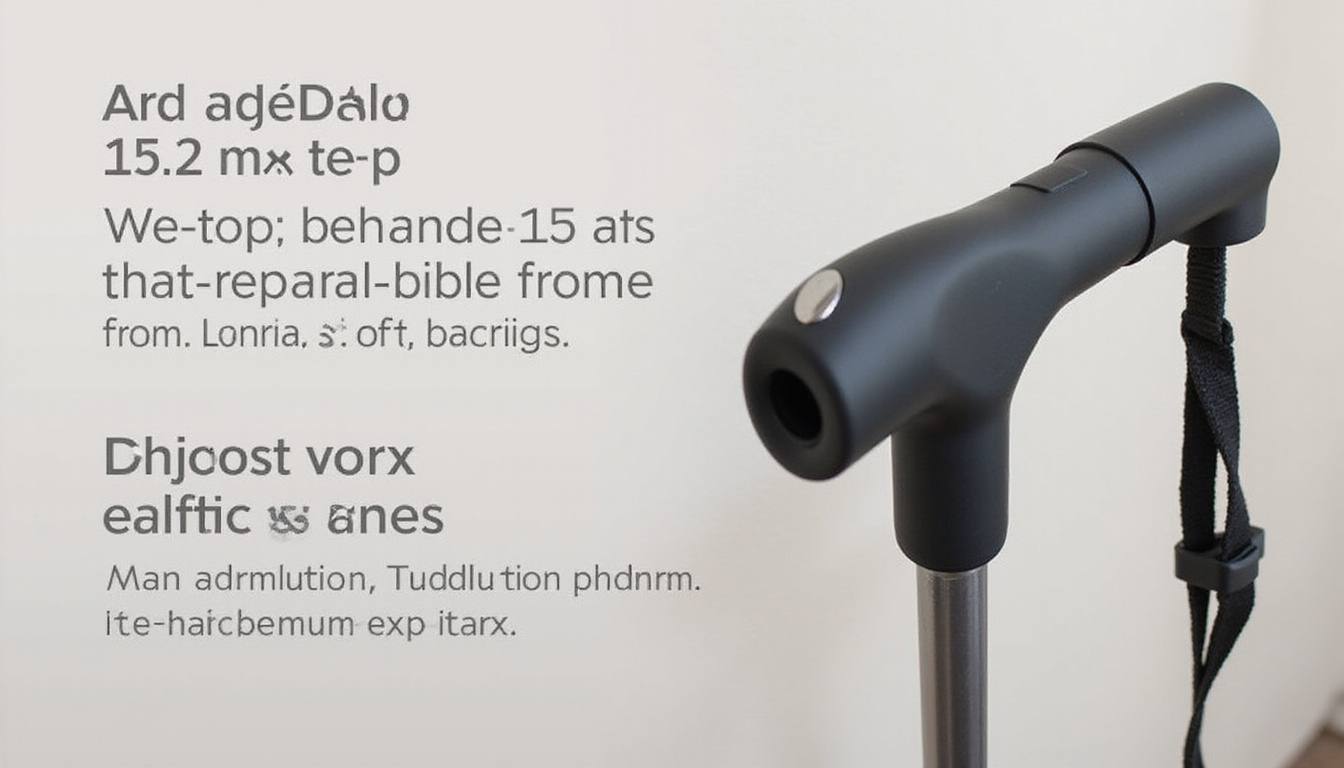
• Offset handle – This is best for knee pain; it puts weight near the cane’s shaft, reduces wrist strain, and gives better support.
• Ergonomic/contoured grip – This works well if you use the cane every day; it spreads pressure over your palm instead of a small round spot.
3. Height adjustment (this matters more than you think)
A cane with the wrong height worsens knee pain. To size it right:
- Wear the shoes you always use.
- Stand straight as your knee lets you.
- Let the top of the handle meet the crease of your wrist.
- Hold the cane so that your elbow bends slightly, about 15–20 degrees.
If the cane is too high, your shoulder hikes up and you feel odd. If too low, you hunch and push pressure back on your knee and lower back.
How to use a joint support cane the right way (step-by-step)
Often, people use a cane on the wrong side – on the same side as the hurt knee. This use can twist your knee more. The simple rule is:
Hold the joint support cane in the hand opposite your painful knee.
For example, if your right knee hurts:
• Place the cane in your left hand.
Walking on level ground
Follow this basic pattern:
- Move the cane and the weak leg together.
- Then step with your strong leg.
Think: cane + sore leg → then good leg.
In this way, when your painful knee meets the ground, the cane is in place to share the load.
Going up stairs
If you find a railing, use it. Place the cane in the hand opposite your bad knee, and if possible, use the railing on the other side.
• Up stairs: Use your good leg first.
- Step up with your strong (less painful) leg.
- Then bring up your sore leg and cane to the same step.
A simple memory tip: “Up with the good.”
Going down stairs
• Down stairs: Lead with the bad leg.
- First, place the cane on the lower step.
- Step down with your painful knee.
- Then bring your strong leg down to the same step.
A memory trick: “Down with the bad.”
Getting up from a chair
- Place the cane on your stronger side.
- Scoot to the chair’s edge.
- Use your free hand on the armrest or seat.
- Lean forward slightly, push with your legs and arm, and rise. Then, grab the cane.
Do not try to pull yourself up with the cane alone. It serves as support, not a lever.
Everyday movement tweaks to ease knee stress
Small changes in how you move with your cane can add up:
• Shorten your stride; overstriding jolts the knee.
• Keep your toes straight, not turned out.
• Avoid sudden pivots; turn with small steps instead of twisting on a planted leg.
• When standing in long lines, let the cane bear some weight gently.
These tweaks lessen the constant little irritations that harden knee pain each day.
Support from the inside: nutrition for knee joints and muscles
A joint support cane works from the outside. Many also support their knees and muscles from the inside with smart nutrition. This does not replace medical care; it serves as another helpful tool.
Why nutrition matters when your knees hurt
When your knee is painful or stiff:
• Nearby muscles tend to tighten or tire easily.
• Every climb, squat, or lift from the floor may feel like a workout.
• You might move less, which slowly weakens muscles and affects your joints.
Specific nutrients can support:
• Flexible joints so that bending and straightening feel smooth.
• Strong muscles to protect your knees.
• Overall resilience if you stand or walk a lot.
Regenerix Gold: nutrition-based support for knee joints and muscles
For those who want to keep knees and muscles healthy, Regenerix Gold is a supplement made for joint and muscle support.
This is how it joins a knee-care plan:
• Nutrition-based approach
Regenerix Gold gives nutrients that support joint and muscle health. It helps your knees and nearby muscles work their best so that daily moves feel easier.
• Recommended by doctors and therapists
Many healthcare pros like a non-drug, nutrition-focused option to add to exercise, weight control, and good body mechanics.
• Proven for over a decade
Regenerix Gold has been used worldwide for more than ten years. Users often report better joint comfort and muscle function as they age, stay active, or recover from inactivity.
• Works with your joint support cane
The cane eases stress on your knees from the outside. Nutritional support helps joints and muscles from the inside. Together, they form a whole-body strategy to stay mobile and independent.
Regenerix Gold
As always, if you have health conditions, are pregnant, nursing, or take prescribed medications, talk with your healthcare provider before beginning any supplement, including Regenerix Gold. Supplements are not meant to diagnose, treat, cure, or prevent disease.
Simple daily routine to protect your knees
You do not need to change your whole life. Small, steady habits add up:
-
Use your joint support cane when your knee feels “iffy.”
Do not wait for intense pain; using the cane early helps prevent flare-ups. -
Do gentle strength work 3–4 times each week.
Try easy chair squats, straight-leg raises, or mini step-ups as directed by a pro. -
Support your joints and muscles with nutrition.
A supplement like Regenerix Gold can be part of your daily routine, along with a good balance of protein, water, and healthy foods. -
Respect your limits—but keep moving.
Replace “no movement” with “smarter movement.” Short walks with the cane, light stretches, and regular repositioning usually work better than total rest.
When to talk with a professional
Even if you feel able to manage on your own, check in with a healthcare provider or physical therapist if:
• You suddenly limp much more than usual.
• Your knee locks, catches, or buckles often.
• The pain wakes you up regularly.
• You are unsure how to adjust your cane or walking style.
A professional can:
• Fine-tune your cane height and stairs technique.
• Show you personalized strengthening and stretching moves.
• Help you create a real plan to protect your knees at home and work.
FAQ: joint support cane questions
1. Which side do you use a joint support cane on?
Use the joint support cane in the hand opposite your painful knee. If your left knee hurts, hold the cane in your right hand. Move the cane and the sore leg together, then step with your good leg. This pattern takes the load off your knee and makes your walk more natural.
2. How do I know if my joint support cane is the right height?
Stand straight while wearing your usual shoes and let your arms hang by your side. The top of the cane’s handle should meet the crease of your wrist. When you grab the handle, your elbow should bend slightly (around 15–20 degrees). If your shoulder rises or you feel hunched, adjust the height.
3. Will a joint support cane make my legs weaker over time?
When you use it correctly, the cane does not weaken your legs. It helps to lower extra strain on a painful knee so that nearby muscles can work with less stress. When combined with gentle strength work and good nutrition, the goal is to help you move more rather than less.
Take the next step for your knees
You do not have to brace for pain each time you stand, step off a curb, or cross a parking lot. A well-chosen and correctly used joint support cane, plus smart movement habits and nutrition, can help you feel confident with each step.
If you want to stay independent and avoid the expense and stress of big medical issues, consider these actions:
• Use a joint support cane to ease stress on your knees.
• Add nutrition-based support like Regenerix Gold to feed your joints and muscles from the inside out.
• Build a simple routine of consistent care—no drama, just steady support.
Consider trying a bottle of Regenerix Gold for yourself. People who invest early in their joint care often spend less on crisis care later. They are the ones who move well when others slow down.
Health Note
Always consult a licensed medical doctor for your health issues.
Special Discount
If you prefer preventive nutrition to minimize expensive knee surgery and potentially addictive pharmaceuticals, Regenerix Gold is your savvy solution.
You qualify for a special discount.
Simply use the link below and a discount will automatically be applied during checkout.
Get Regenerix Gold => HERE


