

If your knees feel wobbly when you walk down stairs, or you notice a buckle when you squat, or you ache after standing too long, you are not alone. Many American adults deal with unstable knees every day. Their knees pop, grind, shift, and sometimes give way. The good news is that the right stability strategies can make your steps feel secure, boost your confidence, and protect your joints over time.
Below are practical, people-tested tips and unexpected exercises that target muscles and tissues. These parts work together to keep your knees aligned.
Why Knee Stability Matters More Than You Think
When people speak of “bad knees,” they normally stress pain. Yet a loose, shaky knee can also:
- Make you avoid stairs, hills, or long walks
- Disrupt your balance and posture
- Increase strain on cartilage, ligaments, and nearby muscles over time
Your knee works as a hinge joint. It relies on support from friends:
- Your quadriceps (front of the thigh)
- Your hamstrings (back of the thigh)
- Your glutes (butt muscles)
- Your calf muscles
- Smaller stabilizers around the hip, knee, and ankle
A weak link or poor coordination in any of these parts makes your knee wobble, shift sideways, or fail to line up with your toes when you bend.
The Surprising Truth: Your Hips and Ankles Control Your Knees
You feel the issue in your knee, but your hip and ankle act as the managers of knee stability. When your glutes and hip muscles are weak, your thigh collapses inward and pulls your knee along. When your ankles are stiff or unstable, your knee must compensate as your foot lands.
A few knee extensions or leg presses alone are not enough. To stabilize your knees, you must work the whole chain: hips → knees → ankles.
Warm-Up First: Waking Up the Knee Stabilizers
Before any strengthening work, wake up the muscles that support knee stability. A simple 5–7 minute home routine can change how solid your knees feel.
Try this sequence:
-
Heel-toe marches in place – 1–2 minutes
- Stand tall and march slowly.
- Roll your foot from heel to toe.
- Land softly and in control.
-
Mini knee bends holding a counter – 1–2 minutes
- Keep your feet hip-width apart.
- Bend your knees slightly; shift your weight side to side.
- Keep your knees over your middle toes without letting them collapse inward.
-
Standing leg swings – 1 minute each leg
- Hold a chair lightly.
- Swing one leg forward and backward inside a comfortable range.
- Let your hip loosen without forcing the motion.
This warm-up primes your muscles so that later exercises hit the proper spots.
Unexpected Exercise #1: Side-Lying Leg Lifts for Hip Control
This exercise does not look like a knee move. Yet, it powerfully boosts knee stability.
How to do it:
- Lie on your side with your bottom leg bent and your top leg straight.
- Keep your hips stacked, and do not let them roll backward.
- Lift your top leg slowly by about 12–18 inches. Your toes should point forward or slightly down.
- Lower your leg steadily without letting it drop.
Target: The gluteus medius (the side of your butt) controls how your thigh and knee align.
Why it helps: A strong gluteus medius stops your knee from caving in when you walk, squat, or climb stairs. Caving in often makes knees feel wobbly or unstable.
Start with 2–3 sets of 10–15 repetitions per side, 3–4 days per week.
Unexpected Exercise #2: “Monster Walks” With a Mini Band
Monster walks might look odd, but they work wonders for knee stability in everyday moves.
How to do it:
- Place a light resistance band around your lower thighs (just above the knees).
- Stand with feet hip-width apart, bend your knees slightly, and push your hips back a little.
- Step diagonally forward and outward with one foot. Then step the other foot, keeping tension on the band.
- Take 8–10 steps forward, then 8–10 steps back.
Key cues:
- Keep your knees aligned with your toes.
- Do not let your knees cave inward.
- Move slowly and with control.
This exercise trains your hips and knees to work together when carrying groceries, climbing stairs, or rising from the floor.
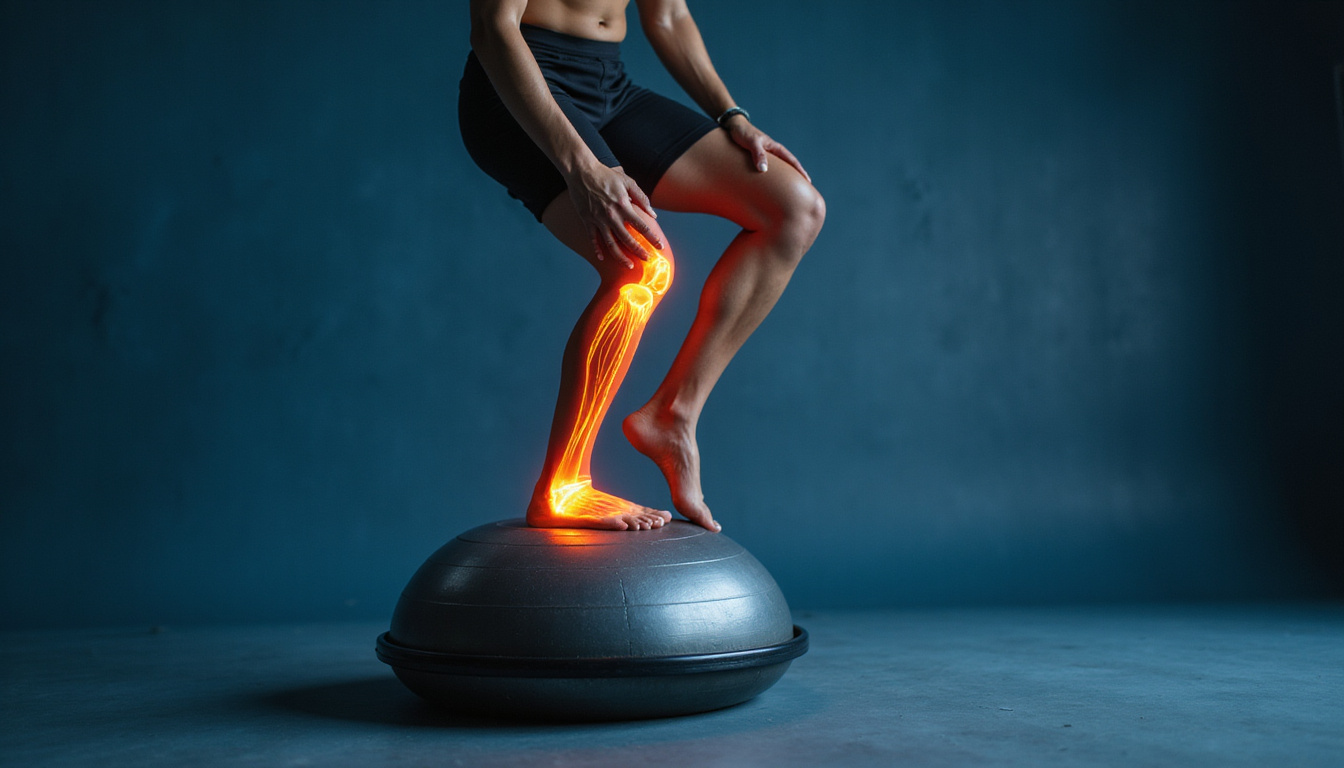
Unexpected Exercise #3: Single-Leg Stands (Balance + Stability)
If you feel your knee shake when standing on one leg, this move is for you.
Basic version:
- Stand near a counter or sturdy chair.
- Lift one foot slightly off the ground.
- Keep a soft bend in the standing knee (do not lock it straight).
- Hold for 20–30 seconds while keeping your knee over your mid-foot.
Progressions:
- Turn your head side to side while balancing.
- Close your eyes briefly if it is safe.
- Stand on a folded towel to create an unstable surface.
This exercise helps your knee’s supporting muscles react quickly to small shifts. That is important on uneven surfaces or sudden turns.
Unexpected Exercise #4: Step-Downs (Not Step-Ups)
Many people perform step-ups. In contrast, step-downs train control as you lower your body. This control is key for stability on stairs.
How to do it:
- Stand on a low step (start with 2–4 inches) with one foot on the step and one foot hanging off.
- Slowly bend the standing knee to lower your hanging heel toward the ground.
- Lightly tap your heel on the floor, then push back up to a straight position.
- Keep your knee aligned with your middle toes; do not let it drift inward.
Begin with a shallow step and increase the depth only when your knee feels stable.
Unexpected Exercise #5: Calf Raises for Shock Absorption
Strong calves absorb impacts before they reach your knees.
How to do it:
- Stand near a counter or chair for balance.
- Keep your feet hip-width apart.
- Slowly rise onto your toes, pause at the top, and lower slowly.
- Focus on control, not speed.
For extra stability:
- Shift a little more weight to one leg as you gain strength.
- If you feel comfortable, try single-leg calf raises later.
A Simple Weekly Knee Stability Routine
Here is a sample plan you can adjust. Always change it to suit your comfort level or follow your healthcare provider’s advice.
2–4 days per week:
- Warm-up (5–7 minutes)
- Side-lying leg lifts – 2–3 sets of 10–15 reps each side
- Monster walks – 2–3 laps forward/backward
- Single-leg stands – 2–3 rounds of 20–30 seconds each side
- Step-downs – 2–3 sets of 8–10 reps each leg
- Calf raises – 2–3 sets of 12–15 reps
As your knees gain strength, increase sets and difficulty very gradually.
Don’t Ignore the Basics: Weight, Footwear, and Movement Habits
Even when you exercise well, daily habits can work against you.
- Body weight: Reducing excess weight lowers stress on your knees with every step (source: CDC).
- Shoes: Worn-out shoes or those with tilted soles can disrupt your alignment from the ground up.
- Posture: Locking your knees when standing or sitting for long hours can let your muscles turn off and stiffen.
Small changes, like swapping old shoes, taking short breaks to move, and avoiding long periods with locked or twisted knees, help support better stability.
Nutrition Support for Knee Stability: Where Regenerix Gold Fits In
Exercise and smart daily habits lay the foundation for knee stability. Many also look for nutritional support to help their joints and muscles.
Regenerix Gold is a supplement for those who want to keep their knee joints and muscles healthy. It is a nutrition-focused solution—not a drug. It does not treat or cure any condition. Instead, it adds nutrients that help your knees move smoothly and comfortably.
Key points about Regenerix Gold:
- Doctors and physical therapists often recommend it as part of a broader plan to keep knees strong and steady.
- It has a decade-long history with positive user feedback from many countries.
- It works best when you combine it with strengthening exercises, stretching, weight management, and good movement habits.
When you focus on long-term knee stability, you address both:
- Outside-in: Exercise that targets the muscles controlling joint alignment.
- Inside-out: Nutritional support for muscles and joints.
Regenerix Gold
How to Know If Your Knee Stability Is Improving
When you work on knee stability each day, you may notice:
- A reduction in the “shaky” feeling on stairs or hills
- Easier movement in and out of cars or low chairs
- Better balance when you stand on one leg
- Less tension in your thighs after standing or walking
Small wins matter. A little more control in a rep, a steadier step-down, or a day with less “untrustworthy” knees all show progress.
When to Talk to a Professional
These tips target general stability and comfort. However, see a healthcare provider if you experience:
- Sudden, sharp pain in your knee
- Inability to put weight on your leg
- Noticeable swelling or deformity
- A sudden change in how your knee looks or moves
A doctor, physical therapist, or other licensed professional can assess your case. They will help you tailor a safe and appropriate plan.
FAQ: Knee Stability Questions People Actually Ask
Q1: What are the best exercises for knee stability at home?
Good at-home options are side-lying leg lifts, monster walks with a mini band, single-leg stands near a counter, controlled step-downs from a low step, and calf raises. These exercises work on the hips, knees, and ankles all together—key for real-world knee stability.
Q2: Can a supplement help with knee joint stability and comfort?
Supplements can support healthy joints and muscles by adding needed nutrients. They do not replace exercise or medical care. A nutrition-based product like Regenerix Gold supports joint and muscle health as part of a comprehensive plan that includes strengthening, stretching, and smart habits.
Q3: How long does it take to improve knee stability?
Many notice small changes in knee control and confidence within a few weeks of consistent exercise, especially with targeted hip and balance work. Lasting improvements typically come after several weeks to a few months of regular practice, combined with proper footwear, weight management, and nutritional support.
Take Control of Your Knees Before They Control You
Wobbly, unsteady knees can chip away at your confidence at work, home, or even while stepping off a curb. But you are not stuck with that feeling. A focused knee stability routine, better movement habits, and smart nutrition support can help you reclaim strength and trust in your legs.
If you are serious about staying active, avoiding future medical costs, and keeping your knees reliable, now is the time to take action. Start your stability routine and add a nutrition-based supplement like Regenerix Gold to support your joints and muscles from the inside.
Getting a bottle now is a small, proactive investment compared to the financial and emotional stress of being sidelined later. It is a choice that many health-savvy people make to prevent problems before they start.
Take the next step: commit to your exercises this week, and secure your own bottle of Regenerix Gold. Feel the difference of a complete, inside-and-out approach to knee stability in your everyday life.
Health Note
Always consult a licensed medical doctor for your health issues.
Special Discount
If you prefer preventive nutrition to minimize expensive knee surgery and potentially addictive pharmaceuticals, Regenerix Gold is your savvy solution.
You qualify for a special discount.
Simply use the link below and a discount will automatically be applied during checkout.
Get Regenerix Gold => HERE


