

If you live with stiff, achy knees, you know that pain disrupts your day. A stiff knee makes getting out of a chair a project. Stairs feel long. Even sleep can hurt. A good knee stretching routine can work wonders. It eases tight muscles around your kneecap. In turn, it helps reduce nagging pain and improves movement.
Below you will see simple stretches and tips for people in America who are tired of "just living with it." You do not need a fancy gym. All you need is a few minutes each day and a willingness to listen to your body.
Why Knee Stretching Helps Your Sore, Cranky Knees
When your knees hurt, you may sit and rest. Rest alone, however, tightens and weakens muscles around the knee. Your quads, hamstrings, calves, hip flexors, and IT band all suffer. This extra tension pulls on the joint. It makes bending and straightening hard. It can also cause more discomfort.
Smart knee stretching helps by:
• It improves flexibility in the muscles around your knee.
• It reduces the tight, "banded" feel around the kneecap.
• It helps your knees stay on track when you walk, squat, or climb stairs.
• It prepares your knees for strengthening exercises that help in the long run.
Think of stretching as resetting your muscle tension. When the muscles stop yanking on the joint all day, your knees feel better.
Always listen to your body. Mild tension or a "good stretch" is fine. Sharp, stabbing, or worsening pain is a stop sign. When in doubt, talk to your healthcare provider or physical therapist before you try something new.
Simple Knee Stretching Moves You Can Do at Home
You do not need to spend an hour each day. For most people, 5–15 minutes of focused stretching makes a real difference.
Aim to do these stretches once or twice a day, or at least 3–4 times a week.
1. Seated Hamstring Stretch (for Pulling Behind the Knee)
If you feel tightness like a tight guitar string when you straighten your leg, your hamstrings need help.
How to do it:
- Sit on the edge of a firm chair.
- Straighten one leg in front of you with your heel on the floor, toes pointing up.
- Keep your back straight and gently lean forward from your hips. (Do not round your back.)
- You should feel a stretch in the back of your thigh and maybe behind your knee.
- Hold for 20–30 seconds while you breathe slowly.
- Repeat 2–3 times per leg.
Tweaks for sensitive knees:
If full straightening hurts, keep a slight bend in your knee. Feel the stretch in your muscle, not in the joint.
2. Standing Quad Stretch (for the Tight Pull at the Front of the Knee)
Many people with knee discomfort sense heaviness in the front of the thigh. Tight quads pull on your kneecap and make stairs or squats hard.
How to do it:
- Stand and hold onto a wall or chair for balance.
- Bend one knee to lift your heel toward your butt.
- Grab the ankle or your pant leg with the same-side hand.
- Gently pull your heel closer until you feel a stretch in the front of your thigh.
- Keep your knees close together and do not arch your lower back.
- Hold for 20–30 seconds.
- Repeat 2–3 times per leg.
If holding your ankle is hard:
Loop a belt, towel, or strap around the ankle and pull with your hand.
3. Calf Stretch at the Wall (for the Tight "Rope" Down the Back of Your Leg)
Tight calves can limit ankle movement. When that happens, your knees work too hard.
How to do it:
- Stand close to a wall. Place your arms out with hands on the wall at shoulder height.
- Step one foot back, keeping that heel flat on the floor and the toes pointed forward.
- Bend the front knee and lean forward. You should feel a stretch in the calf of your back leg.
- Keep the back knee straight.
- Hold for 20–30 seconds and repeat 2–3 times per side.
This stretch is very helpful if you feel tightness when you walk or go downhill.
4. Figure-4 Glute Stretch (for Outer Knee and Hip Tightness)
A pull on the side of your knee or thigh may mean your glutes and IT band are tight. While you cannot stretch the IT band directly, stretching nearby muscles helps.
How to do it (lying down):
- Lie on your back with both knees bent and your feet flat.
- Cross your right ankle over your left thigh, just above the knee, so your leg forms a "4."
- Reach through and grab the back of your left thigh.
- Gently pull your left leg toward your chest until you feel a stretch in your right hip and butt.
- Hold for 20–30 seconds and repeat 2–3 times per side.
You can also do a seated version on a chair if lying down is hard.
5. Gentle Knee-to-Chest Stretch (for General Stiffness)
This stretch loosens up muscles around your hip. It reduces some of the pull on your knees.
How to do it:
- Lie on your back with your legs straight or slightly bent for comfort.
- Slowly pull one knee toward your chest. Grab below the knee or behind the thigh.
- Gently pull until you feel a stretch in your hip and lower back. Do not force the stretch on your knee.
- Hold for 20–30 seconds and repeat 2–3 times on each side.
If you have hip or lower back issues, go slowly and stop if something feels wrong.
A Quick, Daily Knee Stretching Routine (10 Minutes)
Here is one way to put the moves together:
- Seated hamstring stretch – 2 holds per leg
- Standing quad stretch – 2 holds per leg
- Calf stretch at the wall – 2 holds per leg
- Figure-4 glute stretch – 2 holds per leg
- Gentle knee-to-chest – 1–2 holds per leg
Move slowly. Breathe. Do not bounce. Over a few weeks, many notice less morning stiffness, easier stair-climbing, and smoother transitions when rising from a seat.
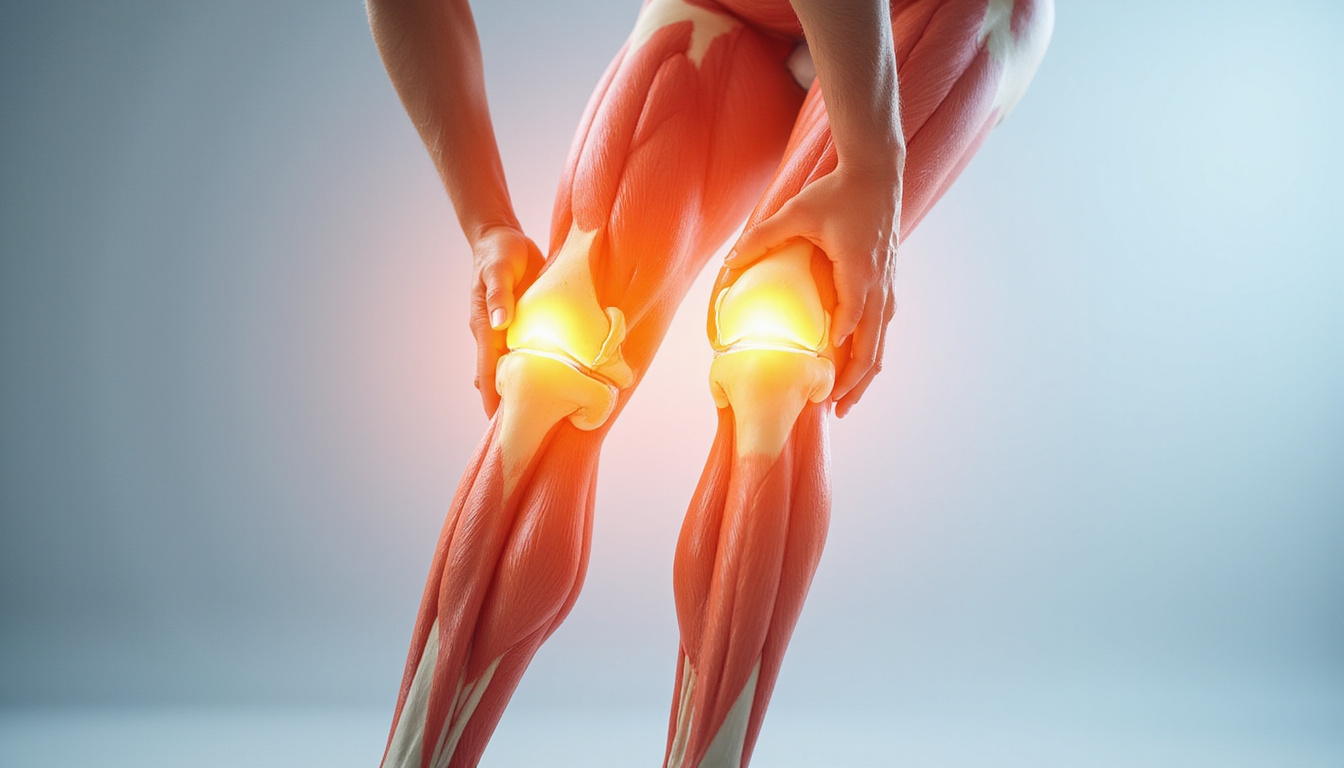
Common Mistakes People with Bad Knees Make When Stretching
If your knees are touchy, you cannot try “any stretch” you see online. Some moves may worsen the pain if done carelessly.
Watch out for these mistakes:
• Pushing through sharp pain – A good stretch feels like a mild pull, not a sharp jab.
• Bending the knee too deeply – Deep squats, kneeling on hard floors, or forcing a heel-to-butt movement can hurt the joint.
• Bouncing or jerking – Such actions strain muscles and ligaments. Use slow, steady holds.
• Ignoring hips and ankles – Tight hips and ankles force extra work on your knees. A full lower-body approach works best.
• Doing too much one day and nothing the next – Daily gentle work is better than occasional intense sessions.
If a stretch makes your knee feel worse for a few hours or the next day, stop it and talk with a professional about alternatives.
Why Nutrition Still Matters for Knee Comfort
Stretching is helpful, but it is only one part of a good routine. Your knees are made of living tissue—cartilage, ligaments, muscles—and they need good nutrition to stay strong.
Research shows that some nutrients support joint structure, cartilage health, and muscle comfort. This works alongside weight management, activity, and stretching (source: National Institutes of Health, Office of Dietary Supplements).
People serious about good knee health:
• Maintain a healthy weight to reduce stress on the joint
• Stay active with low-impact movement (like walking, cycling, or swimming)
• Do regular knee stretching and strengthening
• Use targeted nutritional support for muscles and joints
This is where a supplement like Regenerix Gold fits in. It becomes a part of your overall knee-care routine.
How Regenerix Gold Fits into a Smart Knee Health Plan
Regenerix Gold is for people who want to support healthy knee joints and muscles from the inside out. It complements your stretching, strength, and activity routines.
Key points about Regenerix Gold:
• Nutrition-based approach – It has carefully chosen nutrients to support joint and muscle health. It is not a drug or a quick-fix painkiller.
• Recommended by doctors and physical therapists – Many health experts include it as part of a broader plan to keep knees moving well.
• Used internationally for over a decade – It has a long track record and positive feedback from users in many countries.
• Complements your stretching routine – While you work to loosen tight muscles from the outside with stretching, Regenerix Gold gives internal support to your joints and muscles.
Regenerix Gold
As always, if you take medications or have health issues, check with your healthcare provider before adding any supplement.
Putting It All Together: A Realistic Plan for Better-Feeling Knees
If your knees have troubled you for a long time, you might doubt that simple stretches and good nutrition can help. But when combined and done consistently, many people notice:
• Less stiffness when getting out of bed
• Easier steps on stairs and curbs
• A smoother feeling when standing up
• More trust in their knees during daily activities
A practical weekly plan might include:
• Daily: 10 minutes of knee stretching (the routine above)
• 3–5 days/week: Light low-impact activities (short walks, cycling, or water exercise)
• Daily: Follow your healthcare provider’s advice on nutrition, and consider Regenerix Gold as directed to support joints and muscles
• Weekly: Check how your knees feel during daily tasks like stairs, rising from a seat, or walking a block
Small gains, week after week, add up to a big change over a few months.
FAQ About Knee Stretching and Joint Support
Q1: How often should I do knee stretching for stiff knees?
For most people, gentle knee stretching once or twice a day works well—especially when you wake up or after long periods of sitting. Even 5–10 minutes daily can work better than one long session each week. If any move increases your discomfort, try less intensity or talk with a professional.
Q2: Can knee stretching exercises replace other treatments?
Knee stretching is one part of a complete plan. Many people combine stretching with strengthening, weight management, proper footwear, activity changes, and supportive nutrition. These stretches do not replace medical advice. Always follow what your doctor or physical therapist recommends.
Q3: Do I still need supplements if I do knee stretching every day?
Stretching works outside on the muscles and soft tissues. A targeted supplement like Regenerix Gold helps support the inside of your joints and muscles. Many people choose both regular stretching and a joint-support formula. Always confirm with your healthcare provider before starting any new supplement.
Why It Makes Sense to Act Now—Before Your Knees Call the Shots
Medical visits, imaging, and missed work due to knee issues can be costly. Many people in America wait until their knees “go out” before taking action. By then, repair is more difficult and often more expensive.
You do not have to wait.
By building a simple knee stretching habit and supporting your joints with a nutrition-based product like Regenerix Gold, you take control of your knee health. Many wise people protect their mobility early to avoid later pain and costs.
If you want to stay active, protect your work, and enjoy life without the stress of knee issues, consider this your reminder to act now.
Start your stretching routine today—and consider a bottle of Regenerix Gold to experience its benefits. Give your knees the support people who age well rely on. Your future self will thank you for caring for your mobility now rather than dealing with high costs later.
Health Note
Always consult a licensed medical doctor for your health issues.
Special Discount
If you prefer preventive nutrition to minimize expensive knee surgery and potentially addictive pharmaceuticals, Regenerix Gold is your savvy solution.
You qualify for a special discount.
Simply use the link below and a discount will automatically be applied during checkout.
Get Regenerix Gold => HERE


