

If you’ve played hard on the court, chased an Erne, or rushed back for a lob and felt that ankle tweak, you know that good
pickleball ankle support matters. Ankle sprains and tweaks are common for both casual and tournament players. They can bench you from leagues, ladders, or even cost you precious DUPRs.
This guide explains the best shoes, braces, and nutrition tips to keep your ankles, joints, and muscles ready for every dink, drive, and poach.
Why Picklers Are So Prone to Ankle Tweaks
Pickleball is not just “old people tennis.” It uses short sprints, quick stops, split steps, and constant lateral shuffles on hard surfaces. These moves put stress on your ankles. For example:
- You change direction suddenly on hard courts.
- You backpedal for lobs instead of turning and running.
- You land awkwardly after a jump.
- Fatigue sets in during the third game or late in a tournament day.
Even if you do not have a full sprain, small rolls and aches alert your body. Your body signals that it needs more stability and support on the court and between sessions.
The Foundation of Pickleball Ankle Support: Proper Court Shoes
Your shoes provide your first defense. Wearing running shoes or worn-out sneakers begs for an ankle roll.
Why running shoes are risky on the pickleball court
Running shoes work well for straight-ahead motion, not for lateral lunges or split steps. They create problems because:
- Their cushioned soles feel unstable on side cuts.
- Their soft uppers do not lock the midfoot or ankle.
- Their outsoles grip only forward, not in many directions.
This lets your foot slide inside the shoe or roll off the sole. That rolling is a setup for a sprain.
What to Look for in Supportive Pickleball Shoes
When you shop for shoes that support your ankle, check for:
-
Lateral Stability
- A wider, flared outsole to stop your foot from rolling.
- Stiff sidewalls so the shoe stays firm when you push off.
-
Firm Heel Counter
- A firm back that feels solid when you squeeze it.
- A locked heel for less wobble on landings and push-offs.
-
Mid-Cut or Well-Padded Low-Cut Collars
- Some players like a mid-top for extra ankle support.
- A low-cut with proper padding can also lock the heel and ankle.
-
Court-Specific Outsoles
- Herringbone or multi-directional treads for solid traction.
- For indoor play, stick with non-marking rubber; for outdoor, choose a durable sole.
-
Correct Fit and Lacing
- Shoes should feel snug around the midfoot with no heel slip.
- Try lunging or shuffling; your foot should not slide inside the shoe.
If your ankle protests during play, a more supportive shoe is a simple, quick win.
Ankle Braces and Sleeves: Extra Support for Aggressive Play
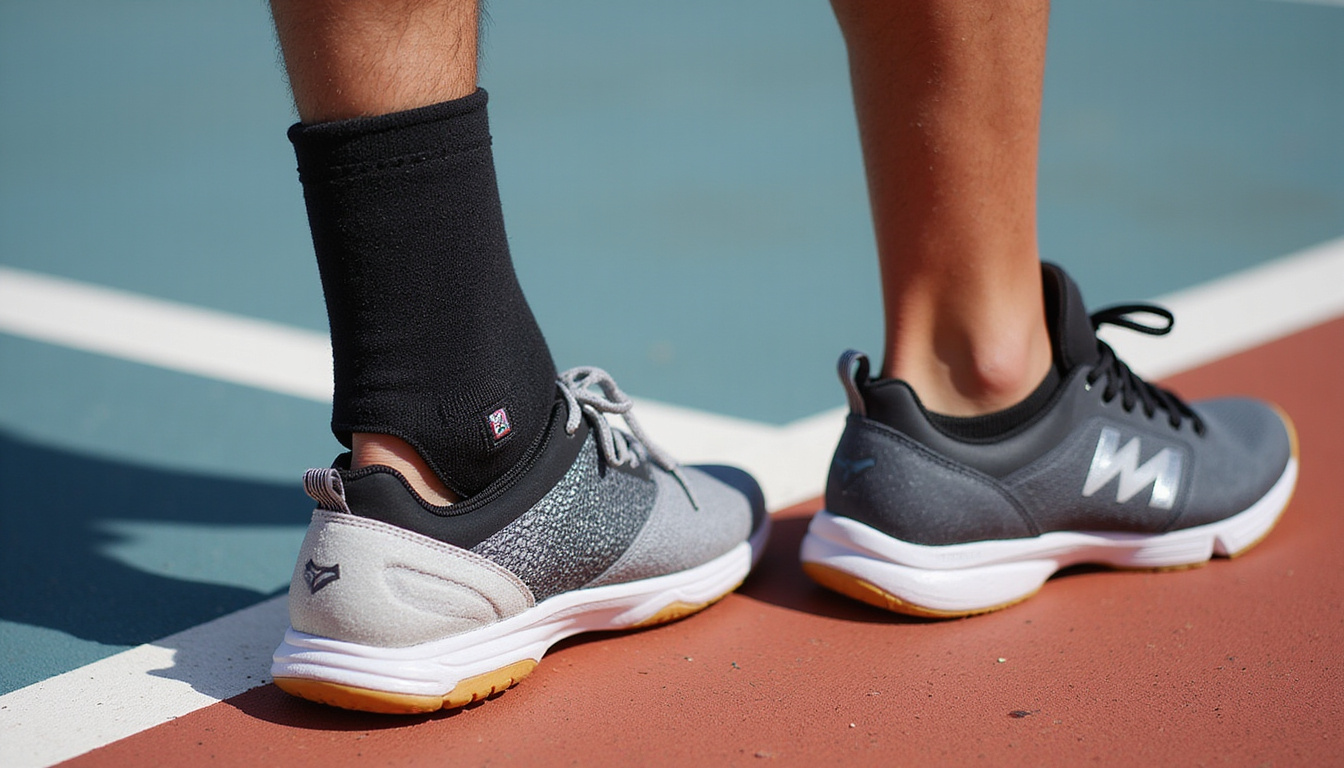
Even with good shoes, ankle braces and sleeves add a second layer of support. They help players who:
- Have injured an ankle before.
- Often feel unstable during aggressive moves.
- Play on cracked or uneven outdoor courts.
- Compete in tournaments or long doubles marathons.
Types of Ankle Support Gear for Picklers
-
Compression Sleeves
- Thin, sock-like sleeves that offer light compression.
- They help with mild soreness and keep your ankle warm.
- They protect the least but feel very light.
-
Figure-8 or Wrap-Style Braces
- Fabric braces that cross the front and support the arch.
- They add more support than sleeves while staying comfortable.
-
Lace-Up Braces with Straps
- “Boot-like” braces that lace up and use figure-8 straps.
- They give strong stability and limit your ankle’s roll.
- They suit players with a history of sprains or instability.
-
Semi-Rigid or Hinged Braces
- Braces with hard side supports and a hinge at the ankle.
- They offer maximum support but can feel bulky.
- They are often used during recovery under medical advice.
How to Choose the Right Level of Ankle Support
Match your gear to your needs:
- For mild discomfort and no sprains, try a compression sleeve or light wrap-style brace.
- If you have rolled your ankle before, a lace-up brace with figure-8 straps may work best.
- With multiple prior sprains or frequent instability, consider a semi-rigid or hinged brace with advice from a professional.
Always test the brace with your actual court shoes and paddle. Move as you play: split step, shuffle, crossover, backpedal, and mimic overheads to check for rubbing or shifting.
On-Court Habits That Quietly Protect Your Ankles
Shoes and braces matter, but so do smart movement habits for long-term comfort.
Warm Up Like You Mean It
Jogging from your car to the court does not count. Before serving, spend:
- 3–5 minutes on light jogging or fast walking.
- A few dynamic moves: ankle circles, calf raises, side shuffles, high knees, and butt kicks.
- Some gentle lateral lunges and short sprints to copy real play moves.
This warm-up fires up the small muscles that stabilize your ankle during quick moves.
Movement Rules for Safer Ankles
- Turn and run for lobs instead of backpedaling.
- Take shorter, quicker steps instead of long strides for more control.
- Stay on the balls of your feet in a ready position.
- Do not ignore fatigue; sloppy footwork increases ankle risk.
Coaches say, “Your feet set up your swing.” Firm footwork not only saves your ankles but also improves your shots.
Supporting Ankles from the Inside: Joint & Muscle Nutrition
Pickleball ankle support goes beyond braces. What you feed your body between games matters too. Your joints and soft tissues need fuel to handle start, stop, and slide actions.
Good joint and muscle health depends on:
- A balanced intake of nutrients that support connective tissue.
- Enough protein for muscle recovery.
- Proper blood flow to keep tissues nourished.
- Managing the wear-and-tear of lateral moves.
Many Picklers add a joint and muscle supplement as their weekly court time increases and their bodies start to “talk back” after heavy play.
Why Many Picklers Choose Regenerix Gold for Joint & Muscle Support
For players who want to stay competitive in leagues, keep their DUPR high, and feel ready each morning, Regenerix Gold is a popular choice in a long-term joint strategy.
Regenerix Gold
What Sets It Apart for Pickleball Players
-
Nutrition-focused solution
Regenerix Gold is made as a nutrition-based supplement to boost joint and muscle comfort. It helps your body absorb the demands of quick lunges and long sessions. -
Recommended by Doctors and Physical Therapists
Many healthcare experts, including physicians and PTs, advise Regenerix Gold as part of a larger plan that includes strong shoes and smart moves. -
A Decade of International Use and Positive Feedback
Used for more than 10 years, many active people trust Regenerix Gold to let them move, train, and play without joint pain.
How It Fits into a Real Pickleball Routine
Most Picklers will not do a full strength and mobility circuit every day. Regenerix Gold is appealing because:
- It fits into a daily routine simply.
- It works with good shoes and ankle braces rather than replacing them.
- It eases joint and muscle discomfort so that long sessions feel more sustainable.
As with any supplement, talk with your healthcare provider, especially if you have any medical issues, take medications, or are pregnant. Supplements do not replace any disease treatment and results may differ.
Strength and Mobility: The Invisible Ankle Braces
External supports help, but your real base is strong, agile muscles around the ankle and lower leg.
Simple Exercises (No Gym Required)
Try these exercises between pickleball days:
- Calf Raises – Do them with straight legs or bent knees to work different parts of your calf.
- Single-Leg Balance – Stand on one leg while you brush your teeth. Then try it with your eyes closed.
- Lateral Band Walks – Use a mini-band around your ankles or knees and side-step in a short squat.
- Ankle Alphabet – Sit down and “write” the alphabet with your toes. This keeps your ankle mobile.
These moves help your ankle react when the ball takes a weird bounce or a partner leaves you hanging on a sharp cross-court.
The Bigger Picture: Why Ankle Support Matters for Your Life, Not just Your Dink Game
Smart ankle support does more than keep you ready for tournaments. It helps you:
- Stay active without worry of sitting out with a nagging tweak.
- Avoid extra doctor visits, imaging tests, or lost work time because of sprains.
- Enjoy your rec groups and league teams without pain.
The CDC links regular joint-friendly activity to better physical and mental health (see CDC Physical Activity Guidelines). Keeping your ankles happy helps you stay active.
FAQ: Pickleball Ankle Support Questions from the Court
Q1: What’s the best pickleball ankle support for rec players who only play a couple times a week?
For most recreational Picklers, a good court shoe with lateral stability and a firm heel is the base. If you feel mild soreness, try a light compression sleeve or wrap-style brace. Add a joint-support supplement like Regenerix Gold to help your joints and muscles handle regular play.
Q2: Do I need ankle braces for pickleball if I already have supportive shoes?
Not everyone does. If you have never rolled your ankle and feel steady on aggressive moves, good shoes may be enough. If you have past ankle issues or feel your ankle wants to roll during wide cuts, add a lace-up or figure-8 brace for extra support.
Q3: Can a joint and muscle supplement really help with pickleball-related ankle discomfort?
A supplement cannot replace proper technique, good shoes, and smart training. However, a well-crafted product like Regenerix Gold can support joint and muscle health. Many Picklers feel that daily nutritional support keeps their body ready for frequent play. Always talk with your healthcare provider to see what fits your needs.
Make Your Next Match Your Strongest: A Smart Call to Action
You have invested in paddles, balls, shoes, and maybe private lessons—all to improve your game. But if your ankles or joints fail, none of that matters.
High medical costs, lost work time, and the frustration of watching your crew play while you rest show that acting now is a wise move. Serious rec players and tournament warriors do more than tape and hope. They invest in:
- Proper court shoes for lateral movement.
- The right external ankle support for their play style.
- Strength and mobility work that builds a solid base.
- Nutrition that keeps joints and muscles resilient under stress.
If you want to be the player who stays sharp throughout the match while others tire, give your body every advantage.
Consider a bottle of Regenerix Gold as part of your daily routine. It is doctor- and PT-recommended, nutrition-based, and trusted by active people worldwide for over a decade.
Give yourself the edge—today, tomorrow, and in every game you play.
https://youtu.be/mGrH5UWFxUs?si=X9bScbG6dvejGkZf
Health Note
Always consult a licensed medical doctor for your health issues.
Special Discount
If you prefer preventive nutrition to minimize expensive knee surgery and potentially addictive pharmaceuticals, Regenerix Gold is your savvy solution.
You qualify for a special discount.
Simply use the link below and a discount will automatically be applied during checkout.
Get Regenerix Gold => HERE


