
proprioception training: Rapid Techniques to Fix Balance and Prevent Injuries
by Zestora on Dec 30, 2025

If your knees feel “wobbly,” give out on stairs, or you’re always bracing yourself when stepping off a curb, proprioception training might be the missing link in your routine. Proprioception training focuses on your body’s internal GPS—your ability to sense where your joints are in space without looking at them. For people in America living with cranky, unstable, or sore knees, sharpening this “joint awareness” can make a huge difference in balance, confidence, and day‑to‑day comfort.
Below, you’ll find practical, knee‑friendly proprioception drills, what’s actually going on inside your joints, and how nutrition support like Regenerix Gold can help keep your knees and muscles ready for the demands of real life.
What Is Proprioception—and Why Your Knees Care So Much
Proprioception is your body’s built‑in feedback system that tells your brain:
- Where your knee is
- How bent or straight it is
- How fast it’s moving
- How much pressure or load it’s taking
Tiny sensors in your ligaments, tendons, muscles, and joint capsules constantly send information to your brain. In healthy, well‑trained knees, this system fires fast and accurately. You step off a curb awkwardly, your body reacts instantly, and you catch yourself without thinking.
When this system gets dulled—because of age, past tweaks or strains, sitting too much, or protective “favoring” of one leg—you may notice:
- Knees buckling or “giving way” on uneven ground
- Hesitation on stairs or slopes
- Needing a handrail more than you used to
- Feeling “off balance” in the shower, on grass, or in crowds
- Extra tension in your thighs or calves, like your body is constantly bracing
This is where targeted proprioception training comes in: it sharpens that feedback loop so your knees and muscles react faster and more accurately, helping you move with more confidence and fewer stumbles.
How Proprioception Training Protects Your Knees
For people already dealing with knee discomfort, the idea of “training” can be intimidating. Proprioception work is different—it’s usually low‑impact, controlled, and focused more on control than on sweat.
Consistent proprioception training can help:
- Improve balance and prevent missteps or tumbles
- Make your knee feel “more solid” under you
- Reduce that constant guard‑up tightness in your thighs
- Restore trust in a knee that’s felt sketchy for a long time
- Support better walking mechanics, especially on slopes or uneven surfaces
Research shows that balance and proprioceptive exercises can improve joint stability and reduce the risk of future joint injuries in active and older adults (source: NIH/National Library of Medicine).
Ground Rules Before You Start
Before jumping into proprioception training for your knees, keep these safety basics in mind:
- Mild muscle fatigue or a “working” feeling is okay; sharp, stabbing, or catching pain is not.
- Always start near stable support (countertop, sturdy chair, or rail).
- Train barefoot or in thin, stable footwear if safe—this boosts sensory feedback.
- Short, frequent sessions (5–10 minutes) beat long, exhausting ones.
If you see a doctor, physical therapist, or other licensed health professional, clear new exercises with them first, especially if you’ve had recent surgery or a significant knee injury.
Level 1: Simple Proprioception Training You Can Do in Your Kitchen
These drills are great if your knees feel tender, you’re nervous about balance, or you’re just getting started.
1. Heel‑to‑Toe Ground Scan
Why: Wakes up the nerve endings in your feet and ankles, the first line of support for your knees.
How:
- Stand holding the counter with both hands.
- Slowly shift weight from your heels to the balls of your feet, then back.
- Next, roll gently to your outer edges, then inner edges, keeping knees soft—not locked.
- Feel how your knees react with each shift.
Do 2 sets of 20–30 seconds.
2. Single‑Leg Stand with “Safety Net”
Why: Trains your knee to stabilize when all your weight is on one side—just like when you climb stairs or step off a curb.
How:
- Stand side‑on to the counter, hand lightly resting for balance.
- Lift one foot an inch off the floor—just enough so the weight is fully on the standing leg.
- Keep your knee slightly bent and your trunk tall.
- Hold 10–20 seconds, focusing on keeping the knee from wobbling inward.
Repeat 3–5 times per leg. Over time, use just a fingertip, then hover your hand.
3. Eyes‑Closed Weight Shifts
Why: Removing vision makes your joint sensors and muscles work harder.
How:
- Stand with feet hip‑width, lightly holding the counter.
- Close your eyes.
- Gently shift weight right and left, then forward and back, without lifting your feet.
Do 2–3 sets of 20–30 seconds. If you feel unsteady, open your eyes immediately.
Level 2: Building Real‑World Knee Stability
Once Level 1 feels easy and your confidence improves, progress to dynamic proprioception training—movements that look more like real life.
4. Step‑Down Control Drill
Why: Teaches your knee to handle lowering your body—critical for stairs, curbs, and hills.
How:
- Stand on a low step (2–4 inches), one foot on the step, the other hanging off.
- Holding a rail or wall, slowly bend the front knee and tap the heel of the hanging leg to the floor.
- Press through your heel to come back up, keeping your knee tracking roughly over the middle of your foot (not collapsing inward).
Start with 2 sets of 8–10 reps per leg. Move slowly; this is about control, not speed.
5. Lunge “Hover Holds”
Why: Trains your knee to stabilize in a mid‑bend position, like when you kneel down to reach something.
How:
- Take a small step forward into a mini lunge—back heel lifted, front knee slightly bent.
- Lower a little, then pause and hold for 5–10 seconds.
- Focus on feeling where your front knee is in space; adjust so it doesn’t cave inward.
- Push back to standing.
Do 2 sets of 5–8 per side. Keep the range small if your knees are sensitive.
6. Unstable Surface Balance (Pillow Drill)
Why: Simulates real‑life uneven ground (grass, gravel, soft dirt) in a safe way.
How:
- Place a firm pillow or folded towel on the floor near a counter.
- Stand with one foot on the pillow, the other off, hands hovering over the counter.
- Try to balance for 15–20 seconds without grabbing, then switch sides.
Repeat 3–4 times per leg. When easier, try small knee bends while balancing.
Level 3: Higher‑Challenge Proprioception for Active Knees
If you’re already walking a lot, doing light workouts, or have a history of sports, these drills build more advanced proprioception training into your week.
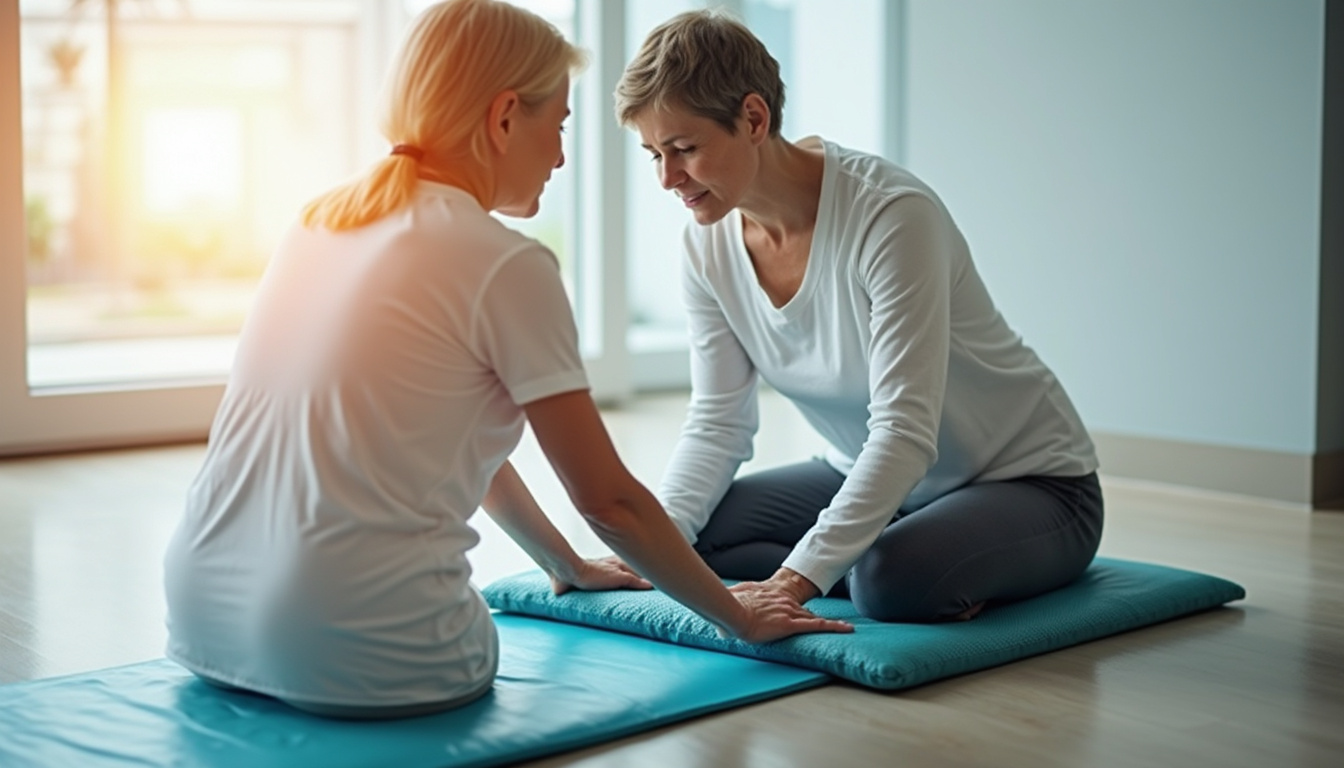
7. Diagonal Step‑Overs
Why: Real movement is rarely straight ahead. Diagonal steps train your knee to adjust on the fly.
How:
- Stand behind a line on the floor (or edge of a mat).
- Step your right foot diagonally forward and across the line, then bring it back.
- Repeat diagonally out to the side and back.
- Keep your knee aligned with your second toe, not collapsing.
Do 2 sets of 8–10 step‑overs at each angle, then switch legs.
8. Mini Hops and “Quiet Landings”
Why: For those who can tolerate impact, this helps your knees learn to absorb shock smoothly.
How:
- Stand with feet hip‑width.
- Perform tiny hops in place—just enough that both feet briefly leave the ground.
- Focus on landing softly with knees bent, not stiff or locked.
- If pain shows up, stop and regress to Level 2. Start with 2 sets of 10–15 gentle hops.
How Often Should You Do Proprioception Training?
For most people with knee issues, this schedule works well:
- Frequency: 3–5 days per week
- Duration: 5–15 minutes per session, depending on your level
- Approach: Choose 3–5 exercises, mix levels as needed, and rotate weekly to keep your nervous system challenged
Consistency is more important than intensity. Think of this as brushing your teeth for your joints—small, regular inputs keep the system sharp.
Supporting Your Joints from the Inside: Nutrition and Regenerix Gold
Your nervous system and joints don’t just rely on movement—they also depend on having the right nutritional building blocks available. For people who want healthy knee joints and muscles, this “inside‑out” support can complement proprioception training.
Regenerix Gold is a nutrition‑based supplement that’s been recommended by doctors and physical therapists as part of a comprehensive plan for people who care about joint and muscle health. It has been used for over a decade with positive reviews from users internationally, many of whom report feeling more comfortable staying active with their knees.
While no supplement can replace proper medical care, exercise, or an evaluation by a licensed professional, many Americans choose joint‑support formulas like Regenerix Gold to:
- Support the structural integrity of joints and muscles
- Help maintain comfortable mobility as they age
- Complement physical therapy and proprioception training routines
Regenerix Gold is intended for adults who want to stay ahead of problems by investing in their knee comfort and stability now, rather than waiting until limitations interfere with work, family responsibilities, or favorite activities.
As always, if you’re pregnant, nursing, have existing health conditions, or take medications, speak with your healthcare provider before starting any new supplement.
Regenerix Gold
Putting It All Together: A Sample 10‑Minute Routine
Here’s how you might build a quick proprioception training session around your busy day:
- Heel‑to‑Toe Ground Scan – 30 seconds
- Single‑Leg Stand with “Safety Net” – 2 x 15 seconds each leg
- Eyes‑Closed Weight Shifts – 2 x 20 seconds
- Step‑Down Control Drill – 2 x 8 reps per leg
- Pillow Balance – 3 x 15 seconds per leg
Total: about 10 minutes, 3–4 times per week. On days you feel stronger, add Lunge Hover Holds or Diagonal Step‑Overs.
FAQs About Knee Balance and Proprioception Training
Is proprioception training good for knee instability?
Yes. Proprioception training specifically targets the “feedback and control” system around your knees. By improving how quickly and accurately your joints sense position and movement, you can often feel less wobble and more control during daily tasks like stairs, stepping off curbs, or walking on uneven ground. Always adjust exercises to a pain‑free level.
How often should I do proprioception exercises for knees?
Most people benefit from 3–5 sessions per week of proprioception exercises for knee stability, focusing on short, consistent sessions instead of long, exhausting workouts. If your knees feel extra irritated one day, you can cut the time in half or choose simpler, Level 1 drills.
Can proprioception training and supplements work together for knee support?
They can complement each other. Proprioception training works on the control and coordination side, while nutrition‑based joint supplements like Regenerix Gold support overall joint and muscle health from the inside. Many people working with doctors and physical therapists use both: guided exercises plus a daily supplement to support long‑term comfort and mobility.
Your Next Step: Don’t Wait for a Bigger Scare
If you’re already feeling your knees wobble, catching yourself on railings more, or hesitating on stairs, your body is warning you that your joint control system needs attention. You can either wait until a bigger scare—like a costly fall, missed workdays, or medical bills—or you can act now with:
- Simple, at‑home proprioception training
- Smarter daily movement habits
- Nutritional support for your joints and muscles
Choosing tools like Regenerix Gold signals that you take your long‑term mobility and financial security seriously. Instead of gambling on future procedures, time off the job, or rising healthcare costs, you’re giving your knees a better chance to keep up with the life you want.
If you’re ready to feel more solid on your feet, more confident on stairs, and less anxious about your knees failing you at the worst time, consider starting proprioception training today—and get a bottle of Regenerix Gold to experience its joint‑support benefits for yourself.
Health Note
Always consult a licensed medical doctor for your health issues.
Special Discount
If you prefer preventive nutrition to minimize expensive knee surgery and potentially addictive pharmaceuticals, Regenerix Gold is your savvy solution.
You qualify for a special discount.
Simply use the link below and a discount will automatically be applied during checkout.
Get Regenerix Gold => HERE


