

If each step reminds you that your knees are different now, you are not alone.
Many adults in America feel stiffness when they go down stairs. They sense “creaky” joints when rising from the couch or a dull ache after a long day at work. That is why yoga for knees has grown into a favorite choice. It offers a gentle, non‐impact way to ease discomfort and rebuild strength and confidence in your legs.
This guide shows you eight beginner‑friendly poses. It explains how to change a pose if your knees are sensitive. It also shows you how to support your joints from the inside out with good nutrition, including a supplement like Regenerix Gold.
Why yoga for knees can feel different from other exercise
If you have tried heavy workouts or basic squats and felt more pain than gain, you know your knees need care. Yoga is a good choice if your knees are sensitive because it focuses on:
• Gentle, controlled motions instead of pounding or twisting.
• Balanced muscle work around the knees. This work helps the quads, hamstrings, calves, and hips.
• Joint‑friendly alignment that guides you to stack your ankles, knees, and hips in a safe way.
• Slow, mindful changes in movement. This helps you avoid sudden “tweak” moments.
Research shows that regular, guided exercise and stretching can help joint comfort, flexibility, and function as we grow older (source: Arthritis Foundation). Yoga will not cure a disease, but many people with frequent knee pain feel more stable and less stiff when they use the right poses.
Before you start: safety checks for sensitive knees
If your knees are already sore, do not choose any online yoga video without care. Use these rules:
• Speak with your healthcare provider first. This is important if you have had surgery, a major injury, or medical advice about your joints.
• Avoid deep bends or forced stretches. No pose should make your joint feel like it is “grinding” or “pinching.”
• Use props well. A thick yoga mat, a folded towel, a pillow, yoga blocks, or even a strong chair can help a lot.
• Remember the pain rule: Mild, stretching discomfort in muscles is okay. But if you feel sharp, stabbing, or catching pain in the knee joint, stop or skip that pose.
1. Supported Mountain Pose (Tadasana) – finding safe alignment
This standing pose looks simple. For people with knee issues, it can help how you stand and walk each day.
How to do it:
- Stand with your feet at hip‑width near a wall or chair for balance.
- Distribute your weight evenly on both feet. Do not lock your knees.
- Soften your knees slightly while you use your thigh muscles as if you are lifting your kneecaps gently.
- Stack your hips over your ankles and your shoulders over your hips.
- Breathe steadily for 5–10 breaths.
Why it helps:
This pose teaches you not to “hang” on your knee joints. Instead, you use your muscles to support your weight. That reduces strain when you stand, walk, or climb stairs.
2. Chair-Assisted Half Squat (Utkatasana variation)
Full squats can be too hard on sore knees. A mini‑bend using a chair can help you strengthen your thighs and glutes safely.
How to do it:
- Stand in front of a sturdy chair with feet at hip‑width.
- Hold lightly on the back of the chair.
- Inhale and then exhale as you bend your knees only a few inches, like you are about to sit; stop early.
- Let your knees track over your second toes. Do not let them cave inward.
- Press through your heels to straighten up slowly.
- Repeat 5–8 times with slow movements.
Modifications for sensitive knees:
• Bend only as far as you feel no sharp pain.
• Start with a small range of motion—just enough to wake your thigh muscles.
Why it helps:
Stronger quads and glutes take some load off your knees. This helps when you stand from a chair or get out of a car.
3. Reclined Leg Stretch with Strap (Supta Padangusthasana variation)
Tight hamstrings pull on your knee area. This stretch helps your leg to move freely without extra pressure on your knee.
How to do it:
- Lie on your back with legs extended.
- Loop a yoga strap, belt, or towel around the ball of your right foot.
- Keep your left leg bent with the foot on the floor if your low back needs support.
- Gently lift your right leg toward the ceiling while holding the strap ends.
- Keep a slight bend in your knee if you feel uncomfortable when it is straight.
- Hold for 5–10 breaths, then change sides.
Why it helps:
This stretch gently lengthens tight hamstrings and calves. It does not place weight on your knees and helps ease the “pulling” sensation in the back of your legs.
4. Bridge Pose (Setu Bandhasana) – gently building hip and leg strength
Bridge is done on your back. Your knees do not bear full body weight, but the muscles work hard.
How to do it:
- Lie on your back with knees bent and feet at hip‑width. Place your heels at a comfortable distance from your sit bones.
- Press your feet into the mat and lightly use your core muscles.
- Inhale; then exhale as you lift your hips a few inches off the floor.
- Keep your knees pointing forward. Do not let them fall in or out.
- Hold for 3–5 breaths and slowly lower back down.
- Repeat 3–5 times.
Modifications:
• Place a yoga block or firm pillow under your sacrum (the back of your pelvis) for a supported bridge that needs less effort.
Why it helps:
Bridge strengthens the glutes, hamstrings, and core. These muscles lessen the daily load your knees must carry.
5. Side-Lying Leg Raises – no pressure, all support
Many with knee pain feel uneasy on one leg. Side‑lying work builds hip and thigh strength while sparing your knees.
How to do it:
- Lie on your side with the bottom leg bent and the top leg straight.
- Rest your head on your arm or a pillow for comfort.
- Flex the top leg’s foot and slowly lift the leg to near hip height.
- Pause for a moment, then lower it with control.
- Do 8–12 reps and then change sides.
Why it helps:
Stronger hip muscles help keep your knees aligned. They stop your knees from collapsing when you walk, squat, or go downstairs.
6. Supported Warrior II (Virabhadrasana II) – alignment and confidence
Traditional lunges can feel risky if your knee hurts. This modified Warrior II uses a shorter stance and extra support.
How to do it:
- Stand sideways to a wall or chair. Keep your feet wide but comfortable.
- Turn your right toes out and your left toes slightly inward.
- Hold the back of the chair or rest a hand lightly on the wall.
- Slowly bend your right knee just a little. Keep the knee stacked over the ankle; do not push it past your toes.
- Press weight on your heel and the ball of your foot.
- Hold for 3–5 breaths, then straighten up and change sides.
Why it helps:
This pose reminds you to keep the knee tracking over the toes while building strength in your thighs and hips. This makes everyday movements more stable.
7. Supported Child’s Pose (Balasana) – release for the whole chain
The classic child’s pose can jar the knees, but support can turn it into a gentle stretch.
How to do it:
- Kneel on a thick blanket or pillow placed under your shins.
- Spread your knees wide and bring your big toes together if you can. If this is too hard, keep your knees closer.
- Place a stack of pillows or bolsters between your thighs.
- Gently lower your torso onto the support so that your hips stay as high as needed.
- Rest your arms forward or by your sides, and breathe for 5–10 breaths.
If kneeling feels too painful:
Choose a seated forward bend over a pillow on your lap while you sit comfortably in a chair.
Why it helps:
This pose relaxes the lower back and hips. It eases the tightness that may occur when your knees suffer.
8. Supine Figure-Four Hip Stretch
Tight hips can make your knees work harder. This lying‑down stretch avoids extra pressure on the knees that standing or seated stretches may cause.
How to do it:
- Lie on your back with knees bent and feet on the floor.
- Cross your right ankle over your left thigh, just above the knee.
- If you feel okay, lift your left foot and gently hold the back of your left thigh.
- Keep your right foot flexed to protect your knee.
- Hold for 5–10 breaths, then change sides.
Why it helps:
Releasing tight outer hip muscles and glutes can reduce the sideways pull some feel around the knees when they walk or turn.
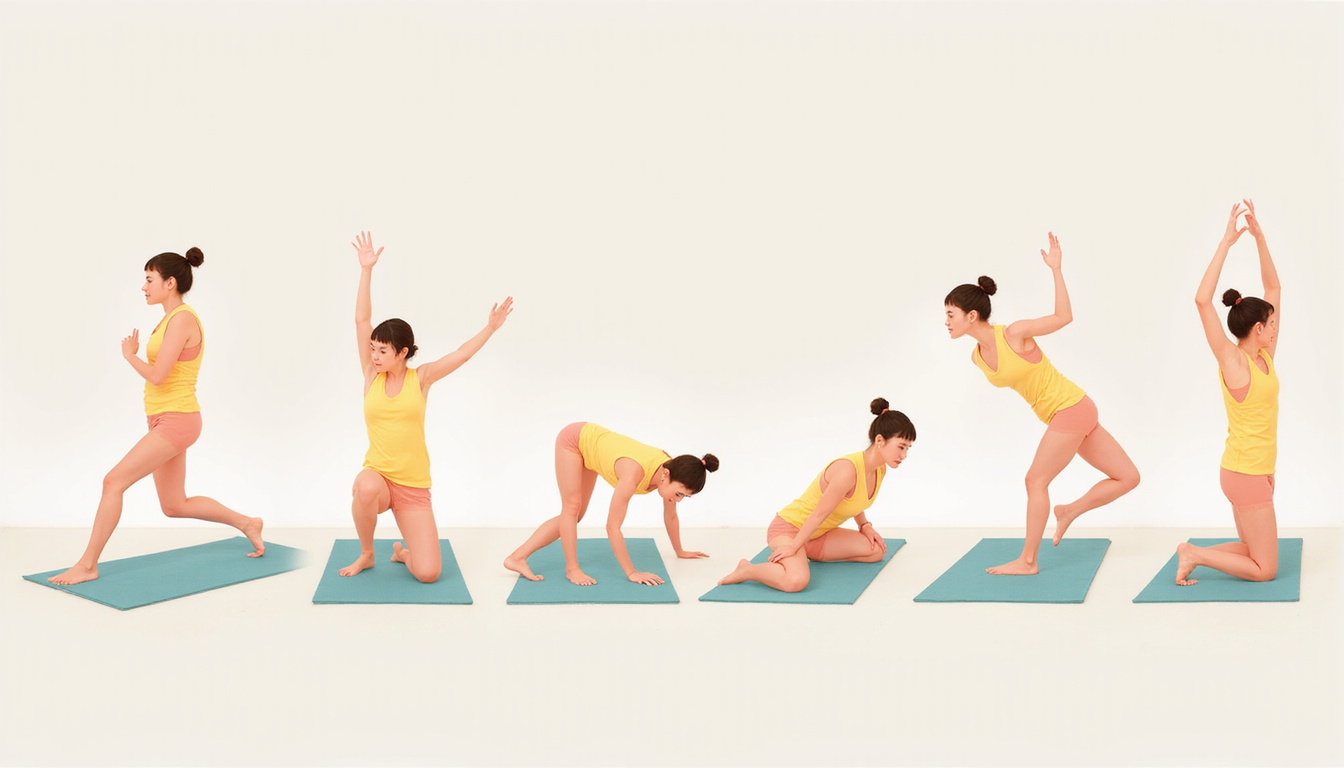
Putting it together: a simple yoga for knees routine
You can build a 15–25 minute routine by combining these poses:
- Supported Mountain Pose – 5–10 breaths
- Chair-Assisted Half Squat – 5–8 slow reps
- Supported Warrior II – 3–5 breaths on each side
- Bridge Pose – 3–5 rounds
- Side-Lying Leg Raises – 8–12 reps on each side
- Supine Figure-Four – 5–10 breaths on each side
- Reclined Leg Stretch – 5–10 breaths on each side
- Supported Child’s Pose or Seated Forward Fold – 5–10 breaths
Practice this routine 3–4 times each week. Listen to your body and skip any pose that causes pain.
Supporting your knees from the inside: nutrition and Regenerix Gold
Exercise is just one part of knee care. People who take yoga for knees seriously also watch what they eat. Your joints and muscles respond to long‑term nutritional choices.
Key lifestyle steps to help your knees:
• Get enough protein to help build muscles that support the joints.
• Fill your diet with fruits and vegetables for vitamins and phytonutrients.
• Eat healthy fats to keep your joints comfortable and mobile.
• Stay well hydrated so your tissues do not feel stiff or dried out.
Many Americans add a joint‑support supplement to their daily routine. One product that doctors and physical therapists often recommend for healthy joints and muscles is Regenerix Gold.
Regenerix Gold is:
• Nutrition‑based. It gives targeted ingredients to support good joint structure and muscle function.
• Recommended by doctors and therapists. It is popular with active adults, older adults, and those who want to move with ease.
• Trusted in real life. It has over a decade of positive reviews from users around the world. Many say it helps them climb stairs with more confidence and keep up with work and family demands.
As with any supplement, Regenerix Gold is not meant to diagnose, treat, cure, or prevent any disease. It is important to talk with your healthcare provider—especially if you use other medications, have health issues, or are pregnant or nursing.
When you combine gentle yoga, smart nutrition, and daily good habits, a formula like Regenerix Gold can be part of your proactive plan for caring for your knees.
Regenerix Gold
FAQ: yoga for knees and joint-support questions
Q1: Is yoga good for bad knees, or will it make things worse?
Gentle, well‐modified yoga for knees can help. It builds muscles that support your joints and improves flexibility without harsh impact. The key is to avoid pain, use supports, move slowly, and work with an experienced instructor if possible. Always check with your healthcare provider before starting new exercises if you have knee issues.
Q2: What are the best yoga poses for knee joint support?
The best poses build strength in your thighs and hips without deep bends or twists. Many find that supported Mountain, chair-assisted half squats, Bridge, side‑lying leg raises, and supported Warrior II are ideal. These poses focus on safe alignment and control rather than extreme movements.
Q3: Can I combine yoga and joint supplements for better knee comfort?
Yes. Many combine knee-friendly yoga exercises with a daily joint-support supplement like Regenerix Gold. Yoga helps retrain your movement and strengthen muscles. Nutritional support helps your body maintain healthy joints and muscles from the inside. Doctors and therapists often recommend combining both methods to stay active and independent.
Take the next step for your knees
If you are tired of wincing when you stand, bracing before each staircase, or worrying that your knees will hold back your work or retirement, doing nothing can be costly—especially with rising medical costs and lost work days.
A better choice is to:
• Start a gentle, realistic yoga for knees routine at home.
• Support your joints and muscles with good nutrition and regular movement.
• Add a targeted supplement like Regenerix Gold, trusted for over a decade and recommended by many healthcare professionals.
You do not have to wait until your knees worsen. Show them that you care by taking action now. Consider a bottle of Regenerix Gold and begin the routine above. It is a smart, small investment compared with the cost of letting knee issues limit your life.
Your future self—walking comfortably, climbing stairs without fear, and staying active—will thank you.
Health Note
Always consult a licensed medical doctor for your health issues.
Special Discount
If you prefer preventive nutrition to minimize expensive knee surgery and potentially addictive pharmaceuticals, Regenerix Gold is your savvy solution.
You qualify for a special discount.
Simply use the link below and a discount will automatically be applied during checkout.
Get Regenerix Gold => HERE
