

Working through 200 covers each night forces you to use your best knife. The wrong knife does more than annoy you—it burns your hands, wrists, elbows, and shoulders. Many pros say arthritis friendly knives are not a luxury; they are tools to survive. If you are a Chef in America and feel joint or muscle ache after years on the board, the right knife can let you glide through service instead of gritting your teeth with every chiffonade.
This guide explains what to seek in arthritis friendly knives. It shows you how to adjust your knife habits to care for your body. It also tells you how joint-support supplements like Regenerix Gold can play a role. You stay on the line longer when you feel strong and in control.
Why standard chef’s knives can wreck your joints over time
Most Chefs learn with the classic 8–10" Western chef’s knife. It gives power and versatility. Yet it does not protect tired joints.
Common issues Chefs share:
- Death-gripping a thin handle causes thumb and finger pain.
- Repeated pronation and awkward board angles strain the wrist.
- Marathon prep sessions hurt the forearm and elbow.
- Hacking through dense products or reaching too far tires the shoulder.
If you already feel stiffness or discomfort, a familiar blade can make the pain worse. Arthritis friendly knives reduce strain. They improve leverage. They let you work fast and precise without hurting your joints.
What makes a knife “arthritis friendly” for working Chefs?
You do not buy a home cook gadget. You buy a tool built for busy service. Look for these features in a pro kitchen.
1. Handle design that fits a service grind
For joint-friendly work, the handle is key.
Key features:
-
Thicker, contoured handles
The handle fills your palm. You relax your grip, so your thumb and fingers feel less strain. Think of an ergonomic shape with a subtle swell, not a skinny broomstick. -
Non-slip material
Textured polymers, rubberized over-molds, or sandblasted micarta keep the grip secure. They let you relax even when your hands are wet or greasy. -
Offset or angled handles (like on santoku or ergonomic knives)
These handle styles keep your wrist neutral when rocking on a board. They reduce twisting force on your wrist and forearm.
If a handle forces you to twist, it works against you during a long shift.
2. Blade length and profile that match your station
Bigger is not always better. A 10" knife may seem strong, yet if your joints protest, choose a shorter blade.
- A 7–8" chef or santoku knife often fits the work. It works for volume prep and moves easily, sparing sore joints.
- A curved rocker profile supports smooth chopping for those who use Western techniques.
- A flatter santoku or nakiri profile works best for light push-cuts, lowering the impact on wrists and shoulders.
A knife that glides is much kinder than one that slams down.
3. Weight and balance that do the work for you
A heavy knife forces more strain on your joints, while a knife that is too light makes you muscle harder.
Look for:
- Moderate overall weight—sturdy but not heavy as a brick.
- A slightly blade-forward balance—so gravity helps you cut through dense items.
- A thin, well-tapered edge—which allows for low-resistance slicing.
A sharp, keen edge is more arthritis friendly because it needs less force per cut.
4. Grip options that reduce tension
Most Chefs hold a pinch grip out of habit. If your joints are sensitive, try changing your grip:
- Modified pinch: Use more of the handle in your palm. This reduces strain on your fingers.
- Hammer grip: Use a full handle grip on a knife with a thick, ergonomic handle during heavy prep.
- Top-hand assist: Gently press the spine of the knife with your non-dominant hand to help with stubborn cuts.
Arthritis friendly knives allow you to use multiple grips. Switch grips as your hands grow fatigued.
Types of arthritis friendly knives worth testing in a pro kitchen
Many kitchens have house policies. But if you can bring your own tools, consider these types.
Ergonomic chef’s knives
These knives are built for joint comfort. They often feature:
- Angled or offset handles that keep your wrist neutral.
- Thicker, anatomically shaped grips that fit your hand well.
- Generous knuckle clearance to keep your hand free above the board.
They may look a bit different, but they can be a game-changer during prep or garde manger work.
Santoku and nakiri knives
These are the “vegetable killers” on the line:
- Santoku: This knife is shorter, lighter, and has a gentle curve. It works well if you use a rocking motion.
- Nakiri: With a tall, flat blade, it is ideal for straight up-and-down chopping and push-cuts. Its shape helps guide your knuckles and eases work on vegetables.
Utility and petty knives
When you work in tight stations, these smaller knives help:
- A 5–6" utility or petty knife with an ergonomic handle spares your joints during quick jobs.
- It works well for trimming proteins, delicate tasks, and small cuts at the pass.
A 5–6" utility or petty knife with an ergonomic handle spares your joints during quick jobs.
Setup matters: board height, station layout, and technique
Even the best arthritis friendly knife cannot fix a poor setup.
Optimize board height
Your arm should hang relaxed with your elbow at a 90-degree angle. The board should sit just below that level. Many tables are too high, which forces shoulder hunching and wrist twisting.
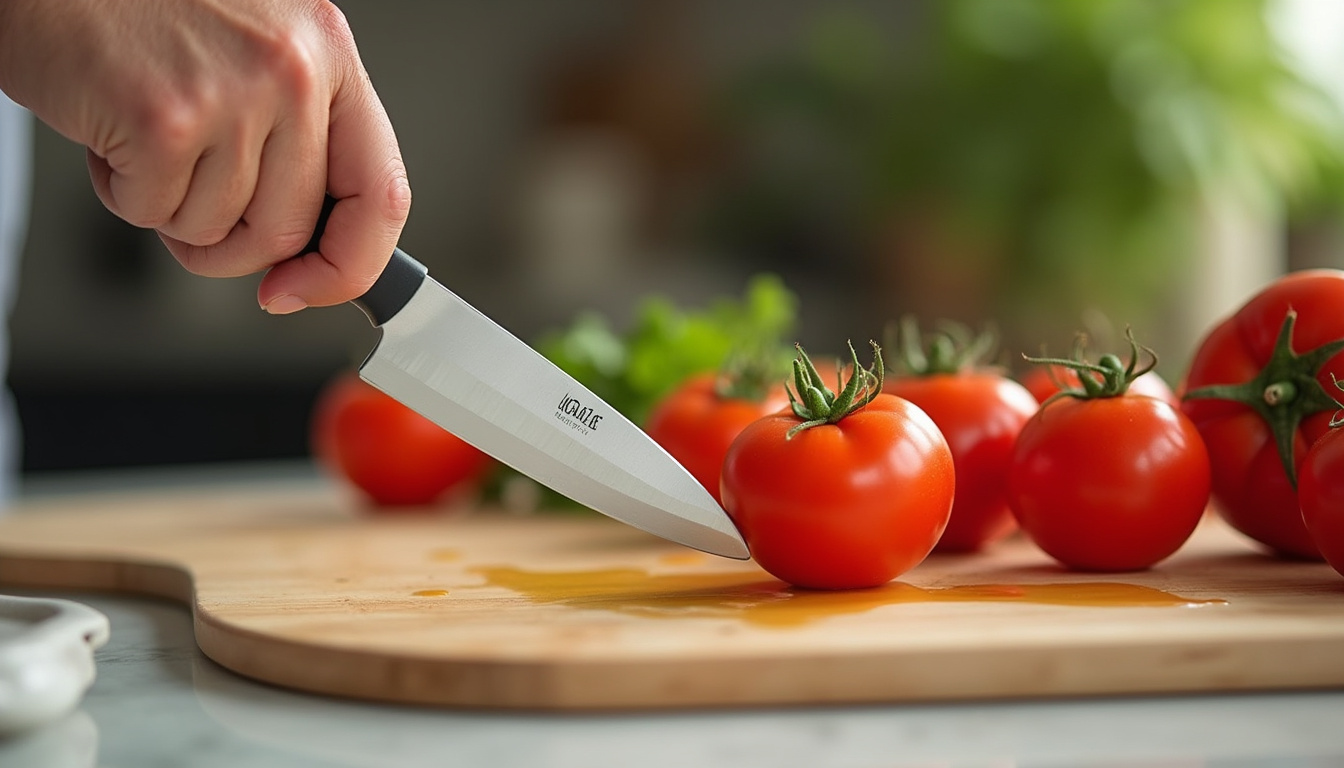
Quick fixes Chefs use:
- Stand on a mat or small platform if the table is too high.
- Adjust your foot position to bring your stance lower.
- Use a thicker cutting board if the table is too low.
Keep your product close
Repeated reaching harms shoulders and the back.
- Place hotel pans, deli cups, and scrap bins close by.
- Bring the product to you instead of twisting your waist each time.
Use low-impact cutting techniques
Switch from brute force to finesse:
- Rocking motions work well for herbs and soft vegetables.
- Push cuts use a forward and downward move on firm items.
- Slice instead of chopping hard; let the knife’s edge glide gently.
Every reduction in impact protects your joints during a long day.
How to choose arthritis friendly knives on a working Chef’s budget
You can protect your joints without breaking the bank.
Consider this checklist before buying:
- Handle comfort: Can you hold the knife for 2–3 minutes without your fingers tightening?
- Grip security: Does the knife feel stable with wet hands or gloves on?
- Wrist position: Does the knife help keep your wrist neutral, or does it force a twist?
- Balance: Does the knife feel like a natural extension of your hand, or are you fighting it?
- Edge quality: A sharp, well-grounded edge indicates good quality even if it needs honing.
Look for brands with pro-friendly warranties. Many mid-range options offer excellent ergonomics at a fair price.
Care habits that keep your knives—and your body—working longer
Arthritis friendly knives work best when you treat them right.
- Sharpen regularly: A honed knife cuts better and requires less force. Consider a professional sharpening schedule if your house permits.
- Use the right knife for each task: Do not use your chef’s knife as a cleaver or can opener. Misuse forces extra strain.
- Rotate tasks when possible: If you lead a team, spread out the prep tasks. This avoids repeated motions that flare up joint pain.
For more guidance on joint and muscle health in demanding work, resources from the NIOSH Musculoskeletal Health Program are very useful (source: CDC/NIOSH).
Where joint-support supplements like Regenerix Gold may fit in
Tool choice, proper setup, and good technique form your first line of defense. Some Chefs also add supplements for extra joint and muscle care.
Within a balanced diet, a supplement like Regenerix Gold is made to:
- Support healthy joint function and mobility.
- Help keep movement comfortable during repetitive tasks.
- Provide nutrients for muscles and connective tissues that face daily kitchen strain.
In the U.S., supplements do not diagnose, treat, cure, or prevent any disease. They do not replace professional medical care. If you have joint or muscle concerns—or if you take medications—talk with your healthcare provider before starting any new supplement.
To learn more, watch this YouTube FAQ about Regenerix Gold:
https://youtu.be/mGrH5UWFxUs?si=X9bScbG6dvejGkZf
Quick checklist: making your knife kit more arthritis friendly
Use this list on your next day off to check your kit:
- [ ] At least one main knife with an ergonomic, non-slip handle.
- [ ] Blade length that fits your station needs (not just what looks “chef-y”).
- [ ] Moderate weight with a balance point slightly ahead of the bolster.
- [ ] A sharp, thin edge and access to regular honing or sharpening.
- [ ] A cutting board height adjusted to prevent shrugging or hunching.
- [ ] A backup small utility knife for fine tasks or flare-up days.
- [ ] A planned rotation between tasks to avoid constant, repetitive motion.
FAQ: arthritis friendly knives for professional kitchens
Q1: What are the best arthritis friendly chef knives for high-volume kitchens?
A1: The best knife depends on your hand size and station needs. Look for a 7–8" chef or santoku knife with an ergonomic, slightly thicker handle. It should offer good knuckle clearance and a balanced, moderately light blade. Test it in-hand before you buy if you can.
Q2: Are there affordable arthritis friendly kitchen knives suitable for line cooks?
A2: Yes. Many mid-range brands offer knives with synthetic, grippy handles and comfortable profiles. They often come with solid factory edges. You do not need a $300 blade; you need one that stays sharp, feels neutral to your wrist, and does not force a tight grip.
Q3: Do ergonomic knives for arthritis really help Chefs?
A3: Yes. Many working Chefs find that ergonomic or arthritis friendly knives reduce strain on small hand joints and keep the wrist neutral. Combined with good technique, proper board height, and joint-support habits (including supplements like Regenerix Gold), these knives help you stay productive and comfortable during long services.
Your craft is elite. Your tools and body care should be, too.
You have put in the years, the burns, the long shifts, and even the 2 a.m. breakdowns. Do not let joint and muscle discomfort limit how long you work. Investing in arthritis friendly knives is a smart, pro-level move. You work faster when you hurt less and show your team what top-tier mise en place looks like. Pair these tools with a thoughtful station setup, low-impact techniques, and a careful approach to joint and muscle support—including supplements like Regenerix Gold. With your healthcare provider’s guidance, you can keep your edge, stay in control, and lead the brigade for years to come.
https://youtu.be/mGrH5UWFxUs?si=X9bScbG6dvejGkZf
Health Note
Always consult a licensed medical doctor for your health issues.
Chefs Discount
If you are a chef who prefers preventive nutrition to minimize expensive surgery and potentially addictive pharmaceuticals, Regenerix Gold is your savvy solution.
Chefs qualify for a special discount.
Simply use the link below and a discount will automatically be applied during checkout.
Get Regenerix Gold => HERE


