

If you’re an Oldhead who stays close to the three-point line, wrist pain hits in a new way.
You feel more than simple soreness. Your release feels off. Your follow-through seems weak. That natural jumper now takes extra effort. When your wrist hurts, it affects your handle and your touch near the rim.
This guide is for Basketball Oldheads in America who still play, still compete, and still want smooth form without three days of joint complaints.
Why Basketball Wrist Pain Hits Oldheads Harder
In your 20s, you could play all day, go to the gym, and still recover fast. Now, one long run can make your wrist feel like it just played two full games.
Consider these Oldhead facts:
- You have shot thousands of jumpers, floaters, and spin layups over the years.
- You have taken many falls from rough landings, charges, and hard fouls.
- You grabbed rims, braced falls, and got your hand hit on shots.
- You now sit at a desk or drive all week, then try to hoop as if it were AAU time.
All these moments add up. They bring stiffness, soreness, and that low, annoying basketball wrist pain after runs.
Quick Courtside Fixes When Your Wrist Starts Barking
You are at the gym or park. Your wrist starts to bother you. You will not quit. You make adjustments. Here are quick, smart tweaks you can do between games.
1. Change Your Warm-Up From “Lazy Shots” to “Wrist Prep”
Instead of walking in and firing from the logo, spend 5 minutes on your wrist:
- Do wrist circles. Make 10 slow circles in each direction for both wrists.
- Do a prayer stretch. Put your palms together at chest level and push down gently for 20–30 seconds.
- Stretch the back of your hand. Extend your arm with the palm down and lightly pull your fingers for 15–20 seconds.
- Do light fingertip push-ups on the wall. Perform 2 sets of 10. Just activate your wrist, do not strain it.
You never skip layup lines. Do not skip “wrist lines” either.
2. Dial Back the “Hero Range” for a Bit
If your wrist is sore, deep threes behave like fuel on fire. Instead, move closer:
- Focus on form shooting from 5–15 feet.
- Work on your arc, follow-through, and soft touch.
- Save the 28-footers for when your wrist is warmed up.
You do not prove anything by forcing NBA distance on a hurting wrist during a Tuesday run.
3. Use Your Off-Hand Smarter
If your main wrist complains, switch to your other hand:
- Make off-hand passes instead of forcing shots with a sore wrist.
- Use soft bounce passes instead of strong chest passes.
- Rely on body positioning in defense rather than hard slaps or swipes.
You are not quitting. You play like a veteran who wants to hoop all year, not just tonight.
Technique Tune-Ups: Restore Your Shooting Power Without Overloading Your Wrist
Sometimes the pain is not only pain. Your shot may feel weak or flat. Oldhead adjustments can ease the load on your wrist. They send more pressure to your legs and core.
1. Let Your Legs Do the Heavy Lifting
When you use only your arm, your wrist and forearm do too much work:
- Bend your knees more.
- Use an upward drive from your legs in a smooth motion.
- Think “Legs lift, wrist guides.” Do not think “wrist launches.”
You now have Old Man Strength. Let your whole chain work together, not just your wrist.
2. Fix Your Release Point
A messy release makes your wrist snap too hard:
- Release the ball in front of your eyebrow.
- Keep your guide hand light. Do not twist the ball on release.
- Finish with your fingers pointing at the rim. Do not let them point sideways.
Clean mechanics mean less strain and more power.
3. Short, Snappy Follow-Through (Not a Forced One)
Many Oldheads try to force a big follow-through. Instead:
- Let your wrist flick be quick and relaxed. It should not feel forced.
- End your motion once the snap is natural. Do not hold a dramatic pose.
- Think “Snap and freeze” not “wrench and hold.”
The goal is efficient and repeatable motion, not a wrestling match with the ball.
Recovery Moves After the Run: What You Do Post-Hoop Matters
Before, you shot, showered, and forgot about it. Now, your post-run routine may decide if you play well tomorrow or if you hurt all week.
1. Contrast Care: Hot and Cold Rotation
Ease minor aches by using warm and cool compresses:
- Apply heat for 5–10 minutes.
- Then apply cool for 5–10 minutes.
- Repeat a couple of cycles.
Keep the temperature comfortable. Do not use extremes.
2. Gentle Mobility, Not Aggressive Stretching
After play, your wrist might feel tight. Use light mobility moves instead of hard stretches:
- Do slow wrist circles.
- Open and close your fist gently.
- Stretch your wrist in flexion and extension without bouncing.
Think “oil the joint” instead of “yank it into place.”
3. Respect the “Day After” Rule
If your wrist feels worse the day after a light run, listen to it:
- Reduce the number of games or long-range shots.
- Shorten your practice sessions.
- Give extra time to warm-up and cool down.
Ignoring the signal turns a small issue into a long-term problem.
Strength and Stability: The Oldhead Wrist Protection Plan
You do not need to train as if you are in Summer League. A little strength work can help a lot with basketball wrist pain.
Try This Simple “Oldhead Wrist Maintenance” Circuit 2–3 Times a Week
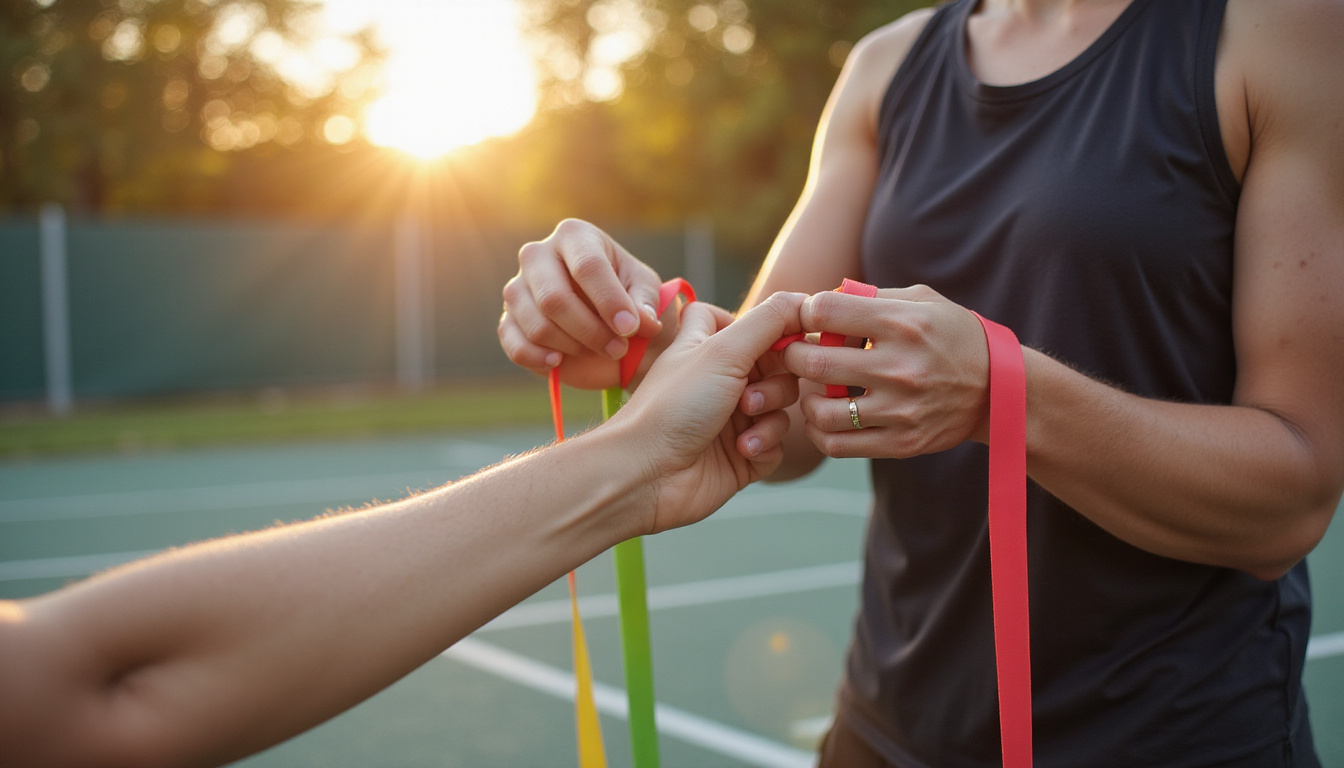
- Wrist curls (with a light dumbbell or resistance band) – do 2 sets of 12–15 on each hand.
- Reverse wrist curls – do 2 sets of 12–15 on each hand.
- Forearm pronation/supination – hold a light weight; rotate your palm up and down; do 2 sets of 10 each way.
- Grip squeezes – use a grip trainer or tennis ball; do 2 sets of 20.
- Farmer’s carry – hold light dumbbells; do 2 walks of 20–30 seconds.
Use light or moderate weight. The aim is resilience, not huge forearms.
Lifestyle Plays: What You Do Off the Court Shows Up On the Court
Most Basketball Oldheads no longer just play; they work, drive, type, and parent. Daily habits add up.
1. Desk and Phone Habits
- Do not spend long hours with your wrist bent over a keyboard.
- Take short breaks: shake out your hands and roll your wrists.
- Do not death-grip the steering wheel as if you are in a full-court press.
2. Sleep and General Recovery
Poor sleep makes everything feel worse—joints, mood, and energy. Aim for:
- A steady sleep schedule.
- A comfortable sleeping position where your wrists are not awkwardly bent under your head or pillow.
Your jumper will thank you more than a late-night scroll.
3. Nutritious Support for Joints and Muscles
Many Oldheads seek nutrition and supplements to support joint and muscle health. No supplement can replace smart training, rest, and professional care. Some ingredients are studied for their role in supporting joint comfort and mobility (source: NIH Office of Dietary Supplements).
Always remember: supplements are not meant to diagnose, treat, cure, or prevent any disease. Talk with a healthcare professional before starting any new regimen, especially if you have health issues or take medications.
Regenerix Gold: A Smart Option for Oldheads Who Still Want to Hoop Like It’s Saturday at the Rec
You think differently as an Oldhead. You do not chase mixtapes; you chase longevity. You want to keep making buckets without paying for them in pain later.
Regenerix Gold can join your game plan. It is made for people who care about healthy joints and muscles. It helps your wrist stay sharp, your jumper stay smooth, and your body keep playing without pain.
You already spend money on shoes, gym fees, and maybe even back therapy. Taking care of your joints and muscles is smart. It can help you avoid sudden aches that ruin your shot and your work life. Missed days, medical bills, and job limits add up—more than smart, preventative health care ever could.
Regenerix Gold is not a magic fix and it does not diagnose, treat, cure, or prevent disease. For Basketball Oldheads who want to move well, feel strong, and stay ready, it is a smart addition to a lifestyle of good nutrition, careful training, and proper rest. It may help you live not just longer, but better.
Regenerix Gold
FAQ: Basketball Wrist Pain and Your Jumper
1. How do I know if my basketball shooting wrist pain is from overuse?
Your wrist may feel sore, tight, or tired after your games or the next day. This is common after lots of shooting or dribbling. If you have sharp, sudden pain or the pain does not improve with rest and simple care, see a healthcare professional.
2. What’s the fastest way to calm basketball wrist joint pain after a run?
Many Oldheads get relief with a mix of rest, gentle stretching, and warm/cold therapy. You may also need to lower your volume for a while. If the discomfort continues, worsens, or affects your daily life, please consult a healthcare provider.
3. Can supplements help with basketball wrist pain and joint comfort?
Supplements cannot diagnose, treat, cure, or prevent any disease. Some supplements support joint and muscle health as part of an overall wellness plan. Products such as Regenerix Gold focus on helping you maintain movement and comfort. Always speak with your healthcare professional before adding any supplement to your routine.
If you still love hearing the ball hit the net, feeling a perfect wrist snap, and earning respect as the Oldhead who can still score, then do not leave your joints or muscles to chance. Tighten your warm-up, clean your shooting form, and recover like a pro. You might add Regenerix Gold to your long-term plan to help you stay on the court, support your livelihood, and live an active, confident life.
Health Note
Always consult a licensed medical doctor for your health issues.
Special Discount
If you prefer preventive nutrition to minimize expensive knee surgery and potentially addictive pharmaceuticals, Regenerix Gold is your savvy solution.
You qualify for a special discount.
Simply use the link below and a discount will automatically be applied during checkout.
Get Regenerix Gold => HERE


