

If you have a cranky knee that pops, clicks, swells, or reminds you it exists all day, you may have heard about corticosteroid injections.
Your doctor might suggest one, or a friend may claim it “fixed” their knee for a while.
Before you let a needle near your sensitive joint, know what these shots do, what they do not do, and what other choices exist.
This guide explains corticosteroid shots in plain, real terms for people in America who live with knee pain—not for textbook readers.
What Are Corticosteroid Injections, Really?
Corticosteroid injections deliver strong anti‑inflammatory medicine directly into your knee joint or near it.
They differ from muscle‑building steroids.
They work like a concentrated version of your body’s own hormones that calm irritation.
People usually get these injections when a knee:
• Feels swollen or “puffy” all the time
• Aches after standing, walking, or climbing stairs
• Becomes stiff after sitting, long drives, or sleeping
• Feels hot, tight, or “angry” after light activity
The goal is simple.
The shot calms joint irritation so your knee moves with ease.
What to Expect Before, During, and After the Shot
If your doctor suggests a corticosteroid injection, here is a simple step‑by‑step guide.
Before the Injection
Your provider will ask about your symptoms, activity level, and past treatments.
They will check your medications and supplements.
They might do imaging tests (like an X‑ray or MRI) if needed.
They also discuss benefits, risks, and how often the shots can safely repeat based on your case.
During the Injection
The appointment is often quick and only mildly uncomfortable.
- Positioning – You lie or sit with your knee bent a little.
- Cleaning the area – The skin is cleaned well to help stop infection.
- Local anesthetic – A small numbing shot comes first; this sting is sometimes worse than the main shot.
-
The corticosteroid injection – The needle enters the knee joint (ultrasound may guide it).
You may feel close pressure, a brief sharp sting, and then a deep ache that soon fades. - Bandage – A bandage covers the spot, and you can usually walk out on your own.
The whole process takes only a few minutes.
Right After the Injection
For 24–48 hours, you might feel:
• A heavy or full sensation in your knee
• Slight extra soreness, known as a “cortisone flare”
• A temporary numb or odd feeling from the anesthetic
You are told to rest your knee for a couple of days.
It is best to avoid heavy activities like running, jumping, or strenuous leg workouts.
Ice packs used on and off can ease irritation.
Pain relief might start within a day, but full relief often appears after several days.
How Long Do Corticosteroid Injections Last?
How long they help depends on you and your knee.
• Some get clear relief for a few weeks.
• Others feel better for 2–3 months.
• A few people feel only days of relief or none at all.
Corticosteroid injections do not rebuild joint structures.
They calm irritation so you can move a bit more easily in the short term.
How long the relief lasts depends on your knee’s irritation before the shot, your body weight on the joint, your daily activity, and if you work on strength, alignment, and flexibility while in relief.
Medical groups often limit these shots in one knee because repeated use may affect tissues (source: American Academy of Orthopaedic Surgeons).
Risks and Downsides of Corticosteroid Injections
Corticosteroid injections help many people, but they are not free of downsides, especially when a knee feels fragile.
Short-Term Side Effects
Side effects are usually mild but still annoying:
• A temporary increase in pain or swelling (cortisone flare)
• Skin thinning or color change at the shot spot
• Facial flushing or warmth that lasts one or two days
• Brief blood sugar changes, especially for those with blood sugar issues
Joint and Tissue Concerns (With Repeated Use)
Your knee endures a lot of wear.
Too many corticosteroid shots may weaken nearby soft tissues or affect joint surfaces.
They may make the joint feel unstable if you push it to move more without muscle support.
Thus, many clinicians limit injections in one knee to three or four per year.
Rare But Serious Risks
While rare, these risks are important:
• Joint infection
• Severe allergic reaction
• Significant bleeding inside the joint (more common if you take blood thinners)
• Sudden sharp pain, heat, or redness in the knee that needs quick medical care
Be sure to share your full medical history with your provider so they can check your risk.
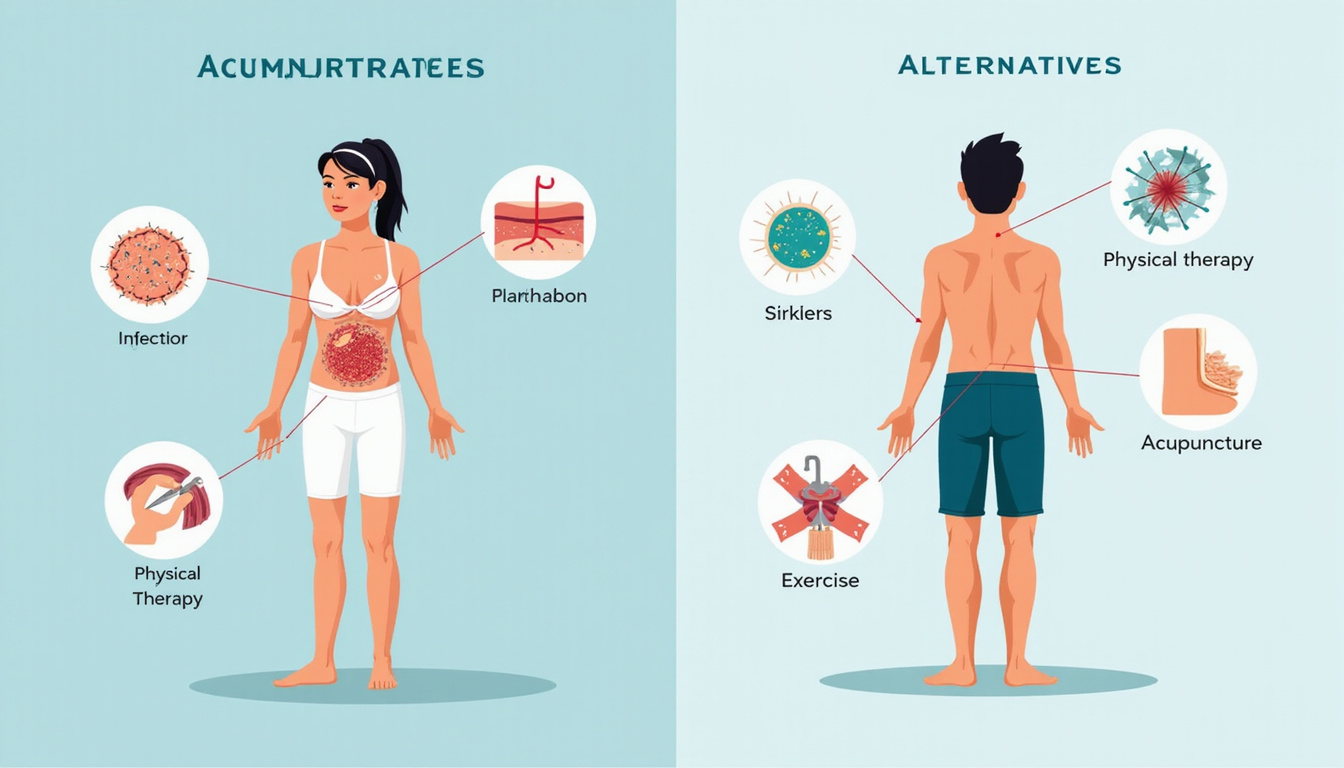
Alternatives to Corticosteroid Injections for Knee Discomfort
Corticosteroid injections are only one tool among many.
Some want to avoid repeated shots or find the relief is not long enough.
If your knee reminds you of its presence often, consider these other ways.
1. Targeted Strength and Movement Work
A strong, stable knee often hurts less, even if scans show problems.
This approach includes:
• Leg and hip exercises that support your knee
• Working on proper alignment to stop knees from caving inward
• Learning to move without locking or overextending the knee
A good physical therapist or sports clinician can create a plan based on how your knee handles stairs, getting out of a car, or standing during work.
2. Weight and Load Management
If you carry extra weight, even modest loss reduces stress on your knee.
Also, you might:
• Shift from high-impact to low-impact exercises like cycling, swimming, or using an elliptical
• Use supportive shoes or insoles
• Change tasks that force long periods of standing without breaks
3. Heat, Cold, and Basic Support
Simple methods still work well:
• Use ice packs after activity if your knee tends to swell
• Apply heat before moving to ease stiffness
• Try knee sleeves or braces (when advised) for extra support
• Use over‑the‑counter topical creams for short-term relief
4. Nutrition-Based Support: Regenerix Gold
Some people want to support healthy knees from inside out rather than just numb the pain.
Regenerix Gold is a nutritional supplement aimed at people who need healthier knee joints and muscles.
It helps people who:
• Feel their knees protest after long shifts, long walks, or stairs
• Want daily joint comfort and flexibility
• Prefer a steady, daily approach instead of waiting for a flare
Key points about Regenerix Gold:
• It is a nutritional solution—not an injection or drug.
• It is recommended by doctors and physical therapists as part of a joint‑care plan.
• It has been used for over a decade with positive feedback from users who rely on their knees for work, caregiving, and staying active.
• It focuses on supporting healthy joints and muscles, which can work well with exercise, weight management, and load control.
Remember, like any supplement in America, it is not meant to diagnose, treat, cure, or prevent any disease.
Always discuss it with your healthcare professional if you take medications, are pregnant, or have complex conditions.
Regenerix Gold
When to Consider a Corticosteroid Injection vs. Alternatives
You do not have to choose only shots or no help at all.
Think of corticosteroid injections as one tool that can work with other methods.
You might try a corticosteroid injection if:
• Your knee is so sore or swollen that you cannot start or continue physical therapy
• You have already tried activity changes, simple medications, and basic supports
• You need short‑term relief to handle a busy work season, travel, or an important event
You might choose alternatives if:
• You have had several injections with little or short‑lived relief
• You worry about long‑term joint health and want to avoid frequent shots
• You prefer nutrition‑based or movement‑based methods for daily knee support
Often, combining approaches works best:
• Occasional injection when the knee flares up
• Ongoing work on joint strength and alignment
• Lifestyle adjustments to limit stress on your knee
• Daily nutritional support like Regenerix Gold for joints and muscles
Practical Tips for Talking to Your Doctor About Corticosteroid Injections
When in the doctor’s office, you might feel rushed.
Use these questions to guide your talk:
• How many corticosteroid injections do you give in one knee per year?
• Based on my knee and my activities, how long might I feel relief?
• What non‑injection options exist for me at this time?
• How can injections pair with physical therapy or strength work so I do not rely on shots alone?
• Are there nutrition‑based supplements, like Regenerix Gold, that fit safely with my situation?
Bring these written questions so you leave the visit feeling like you are in control.
FAQ: Corticosteroid Injections and Knee Care
Q1: How often can you safely get corticosteroid injections in your knee?
There is no single answer.
Many clinicians limit injections to a few times a year in one knee.
Too many shots may affect joint tissues.
Your provider will set limits based on your age, activity, and joint condition.
Q2: Do corticosteroid injections fix the underlying knee problem?
They can calm irritation and reduce pain but do not rebuild joint structures.
They are short‑term help.
They allow you to move, strengthen, and protect your knee better—but they are not a cure.
Q3: Are there natural alternatives to corticosteroid injections for knees?
Yes.
Alternatives include strength and movement work, weight and load management, braces or sleeves, heat and cold therapy, and nutrition‑based support.
Many people use supplements like Regenerix Gold as part of a lifestyle plan for joint and muscle health.
Take the Next Step Toward Smarter Knee Care
Living with a knee that feels “on the verge of giving out” or “one wrong step away from trouble” is tiring.
Corticosteroid injections can give you a break, but they are not the only solution and should not bear the full load.
If you aim to stay ahead of your knee problems instead of only reacting when they get worse, consider adding a nutrition‑based joint strategy now.
Regenerix Gold is recommended by doctors and physical therapists, has been used internationally for over a decade, and helps people who understand that relying only on injections can be costly—physically, financially, and emotionally.
A bottle of Regenerix Gold is a small investment compared with missed workdays, high medical bills, or constant worry about your knee during busy times.
Talk with your healthcare provider and consider Regenerix Gold if you want to take smart steps every day for your knee health.
Health Note
Always consult a licensed medical doctor for your health issues.
Special Discount
If you prefer preventive nutrition to minimize expensive knee surgery and potentially addictive pharmaceuticals, Regenerix Gold is your savvy solution.
You qualify for a special discount.
Simply use the link below and a discount will automatically be applied during checkout.
Get Regenerix Gold => HERE


