
Delivery driver arthritis: Essential pain-relief strategies for long shifts
by Zestora on Dec 14, 2025

If you’re a delivery driver with aching knees, stiff shoulders, or nagging soreness, you are not alone.
Your job and long hours make your joints suffer.
Delivery driver arthritis shows up more than managers admit.
Routes, heavy parcels, and door-to-door duties cause pain.
This guide speaks your language—PODs, last-mile hustles, tailgate lifts—and it gives you clear, on-road ways to ease the pain and keep you moving.
Why delivery drivers are at higher risk for joint and muscle pain
Long shifts produce many same moves.
You bend when you lift boxes, twist to grab parcels, and move from sitting to standing on long runs.
Potholes, tight parking spots, and solo routes add to the strain.
Repetitive loads, awkward posture, and time pressure work together to stress joints and muscles.
Experts say good body care and movement help prevent musculoskeletal pain.
On-shift quick fixes that actually work
When you roll from stop to stop, you need fast moves.
These quick fixes work so you get back to your van fast:
-
Micro-stretches at every stop:
- Shoulder circles (10 reps each way) keep your rotator cuff flexible after lifting overhead.
- Hip hinges (a slow sit-back) ease your lower back before you lift another bag.
- Calf pumps (30 seconds) boost circulation after heavy work.
-
Switch hands and sides:
- Do not use your dominant hand every time; alternate left and right to share the load.
-
Use the tailgate like a workstation:
- Lower the tailgate to knee height so you lift loads without bending deeply at the waist.
-
Keep a folding dolly and load straps in the cab:
- Heavy stacks get easier on your body and reduce extra lifts.
-
Hydrate and snack smart:
- Dehydration makes muscles cramp; keep electrolytes and protein snacks handy.
Simple van setup tweaks to protect joints
Small changes in your cab and cargo area can help a lot:
- Seat position: Adjust tilt and slide so your hips and knees stay near 90 degrees. Keep a rolled towel for your lower back.
- Step height: Use a non-slip folding step to avoid awkward lifts when loads drop high.
- Load layout: Put parcels for frequent stops in the front of your cargo area.
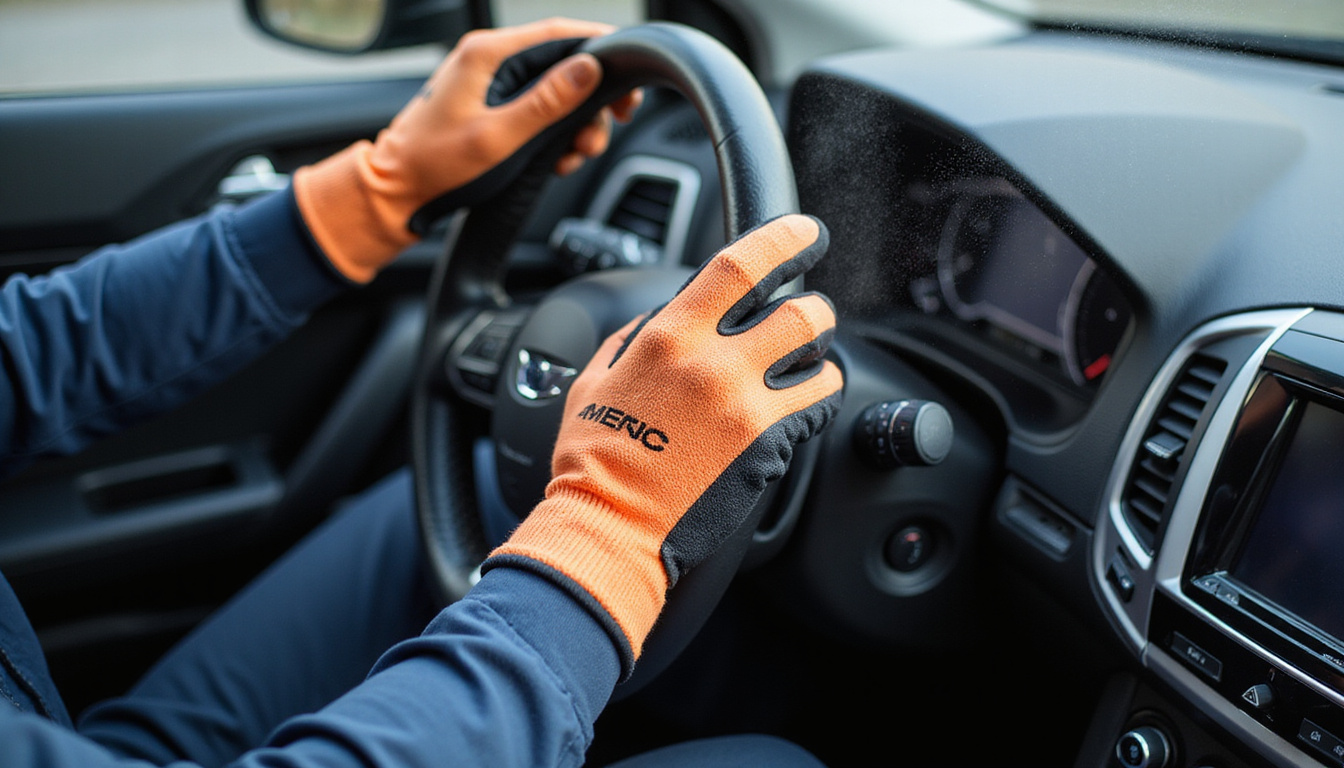
- Tools at hand: Keep straps, a hand truck, and gloves close so you do not twist or scramble for gear.
Stretch and mobility routine for before and after shifts
Do this 6-minute routine before you start and after your shift.
Watch the video demonstration here: https://youtu.be/lqUsGnM3tAU?si=lqyxSOU32bvlpWX2
- 1 minute — Neck and shoulder rolls, slow and steady.
- 1 minute — Cat-cow hip hinges to open up your lower back.
- 1 minute — Standing quad and hamstring stretch (30 seconds each leg).
- 1 minute — Ankle circles and calf stretches.
- 1 minute — Thoracic rotations by moving one arm across your chest to loosen your mid-back.
- 1 minute — Deep, slow breathing to clear toxins and reset your body.
Recovery habits that keep you on the road longer
Your time off matters as much as your driving hours.
Build recovery into your breaks and evenings:
- Sleep: Set a steady bedtime. Rest helps tissues repair.
- Ice or heat: Use ice after heavy work days and heat before long shifts to ease muscles.
- Compression sleeves: Wear sleeves on knees or elbows to support the joint during long routes.
- Active recovery: Walk during lunch stops rather than sitting in the cab for all of your break.
- Track mileage: Note routes that feel worse; rotate tasks to avoid repeating the same strain.
When to ask for help (and how to talk to dispatch)
If pain gets worse or stops you from driving safely, speak up.
Let dispatch know with clear words: “I need a temporary light-load because my left knee is flaring from last week’s heavy runs.”
If a manager asks for proof, stress that you want to avoid an accident; you are not seeking a diagnosis.
If a doctor suggests changes or a return-to-work plan, keep a copy for dispatch.
Supplement basics — what to expect and how to stay safe
Many drivers try supplements to support joint comfort and muscle recovery.
Follow these points:
- Supplements help joint and muscle health but do not replace good posture, movement, or professional advice.
- Choose products made in FDA-registered facilities with third-party testing for purity.
- Check labels for clear doses and ingredients.
- Tell your doctor or pharmacist about any supplements, especially if you are taking other medications.
Regenerix Gold and why drivers consider it
If you look for a supplement that fits your delivery driver lifestyle—small, easy to store, and taken with a snack—check out products for joint comfort, mobility, and muscle recovery.
Many drivers prefer a daily capsule before a shift to help them keep moving through long runs.
Regenerix Gold aims to support your joints and muscles on the job.
(Note: Supplements support healthy joints and muscles but do not diagnose, treat, cure, or prevent any disease.)
A practical checklist for every shift
- Before shift: Do the 6-minute mobility routine, fill a water bottle, and stow your dolly.
- During shift: Alternate hands, use the tailgate as your workstation, and micro-stretch at stops.
- After shift: Walk to cool down, ice any inflamed areas, and take your supplement if it is part of your plan.
FAQ — Common questions drivers ask
Q: Can delivery driver arthritis go away on its own?
A: Many drivers find that consistent ergonomics, rest, and movement ease the symptoms. If pain does not improve, see a health care professional. For work advice, check ergonomics resources.
Q: What’s the best supplement for delivery driver arthritis?
A: Look for supplements that support joint comfort and mobility. Avoid products that claim to treat diseases. Always talk to your provider before starting any supplement.
Q: How can I prevent future issues from delivery driver arthritis?
A: Rotate your tasks when possible, use mechanical aids, maintain a mobility routine, and keep a plan for recovery which includes good sleep, nutrition, and hydration.
Authoritative source
For ergonomics and musculoskeletal health at work, see the National Institute for Occupational Safety and Health page: https://www.cdc.gov/niosh/topics/ergonomics/
Conclusion — Keep your route, protect your livelihood
You know the daily grind: the same streets, heavy drops, and the rush to hit your targets.
Protecting your joints is not a luxury; it is smart route management.
Good ergonomics, regular movement, proper recovery, and wise supplement choices work together.
For delivery drivers who want to stay on the road longer and earn more, Regenerix Gold fits into a routine that supports joint and muscle health.
It is an easy, daily step that helps you keep moving—because downtime costs money and you cannot afford to be benched.
Make the move now: build good habits, watch the mobility video, and consider Regenerix Gold to run your routes stronger and smarter.
Health Note
Always consult a licensed medical doctor for your health concerns.
https://youtu.be/lqUsGnM3tAU?si=lqyxSOU32bvlpWX2


