
delivery driver tendonitis: 9 Quick Fixes for Pain Relief on the Job
by Zestora on Dec 24, 2025

If you haul packages, run food orders, or handle last‑mile routes, tendonitis can hit fast. One week you feel a small twinge when you grab a box. The next, your wrist, elbow, shoulder, knee, or Achilles aches each shift. Every stop counts and your miles keep rising. It is hard to “just rest it.”
This guide serves U.S. delivery drivers—van, box truck, gig app, LTL, parcel—who need clear, real‑world steps to ease tendon pain and keep earning.
Below are 9 quick fixes you can start using on your route, plus long‑term ideas to keep your joints, muscles, and tendons ready for work.
What Is “Delivery Driver Tendonitis” in Real Life?
You may not read “delivery driver tendonitis” in a diagnosis. Yet you feel it every day:
- You feel a sharp pull in the elbow from yanking doors and tossing boxes.
- You feel burning in your wrist from gripping the steering wheel and scanner.
- Your shoulders ache from reaching that top shelf in the truck.
- Your knee or Achilles hurts when you step in and out of the cab or climb stairs.
“Tendonitis” means a tendon is irritated. Tendons connect muscle to bone. Overuse, repetition, awkward angles, and little recovery time add stress. For drivers, the strain usually goes to:
- Wrist and thumb from the scanner and steering wheel.
- Elbow from door handles, lifting totes, and “throwing” boxes.
- Shoulder from over‑the‑shoulder loads and bulk stops.
- Knee and Achilles from stairs, curbs, and the “Amazon shuffle” to doors.
If you ignore the pain, it grows. It can hurt you off the clock or lower your route numbers. It might even keep your card from staying active.
1. Micro‑Breaks: 30–60 Seconds That Save Your Shift
You can rarely take long rests. Yet you can take micro‑breaks, even on tight routes. Try 30–60 seconds of off‑duty time for your joints a few times every hour.
On‑the‑job ideas:
- At a long light, ease your grip on the wheel. Gently move your wrists and shoulders.
- After a big bulk stop, sit in the driver’s seat. Stretch your forearms and calves for 30 seconds.
- Before starting the next 10–15 stops, do 3–4 slow shoulder rolls and neck turns.
These small pauses lower tension and give your tendons a moment of rest instead of constant strain.
2. Smarter Lifting: Adjust the Way You Handle Boxes
Much of your tendon pain grows from “hero lifts” and bad habits that you do without thinking.
Quick lift fixes that help:
-
Keep the load close.
The farther a box is from your body, the more your shoulders and elbows hurt. Hold it tight against your torso. -
Use your legs, not just your arms.
Bend at your hips and knees instead of only bending your back and shoulders. Think “mini squat” and stand, not “lean and yank.” -
Use both hands.
If you can, carry with two hands instead of one. This choice eases the strain on your dominating wrist and elbow. -
Do not twist under load.
Turn your feet. Do not twist your spine and shoulders when holding a box.
These simple changes take little extra time and help your tendons during busy shifts.
3. Steering Wheel and Scanner Grip: Loosen the Death Clamp
Many drivers do not notice they white‑knuckle the wheel or squeeze the scanner handle all day. That tight grip works your wrist and forearm tendons hard.
Try this:
- Drive with a lighter grip. Keep control but do not squeeze.
- Change your hand positions regularly—high/low, left/right, or one‑hand for short, safe pauses.
- When handling the scanner, relax your fingers between scans. Do not hold a trigger curl.
A small reduction in grip force over many turns and scans can ease wrist and forearm pain.
4. Route‑Friendly Stretches for Common Driver Hotspots
You do not need a yoga mat in your van. You only need 20–40 seconds when you can.
Wrist/Forearm Release (for scanners and the steering wheel):
• Hold one arm straight with the palm down.
• Use the other hand to pull your fingers gently down until you feel a stretch on the top of your forearm.
• Hold for 15–20 seconds. Then flip your palm up and pull your fingers gently for a reverse stretch.
• Repeat on each side.
Shoulder Doorway Stretch (at building entrances):
• Rest your forearm on a door frame at shoulder height.
• Lean your body forward gently until you feel a stretch in your chest and shoulder front.
• Hold for 15–20 seconds on each side.
Calf and Achilles Stretch (for stairs):
• Stand on a curb or step. Place your front foot forward and keep your back heel on the ground.
• Lean forward with a straight back knee until you feel a calf stretch.
• Hold for 20 seconds on each side.
You can do these when:
• You wait for someone to answer the door.
• You stand by freight elevators.
• You load the next batch at the truck.
5. Ice, Heat, and Compression: Simple Tools that Actually Help
You cannot pack a full physical therapy clinic in your cab. Yet you can keep a few basics.
• Ice packs or instant cold packs:
Use them after your shift or during lunch on sore spots for 10–15 minutes. They help calm soreness from use.
• Warm shower or heating pad at home:
Use gentle warmth before work or in the evening. This warmth loosens stiffness and aids your pre‑shift stretching.
• Light compression sleeves or wraps:
Some drivers use elbow or knee sleeves for support. They should feel like a hug, not a squeeze.
These tools are not a cure. They help manage everyday discomfort from a demanding route.
6. Strengthening, Not Just Resting: Tendons Like Load (the Right Kind)
Doing nothing may calm pain for a while, but tendons need controlled load to grow stronger.
Try these low‑equipment exercises at home on off‑days:
• Do wrist curls with light dumbbells or a water bottle. Do both palm up and palm down moves.
• Use light resistance band rows to work your shoulders and upper back.
• Do calf raises on a step. Hold on to a railing for balance.
• Do glute bridges for hip strength. Strong hips aid your knees and back.
Move slowly and in control. Avoid heavy or fast reps. If you feel sharp pain, stop and adjust. If pain continues or worsens, see a healthcare professional or physical therapist for advice.
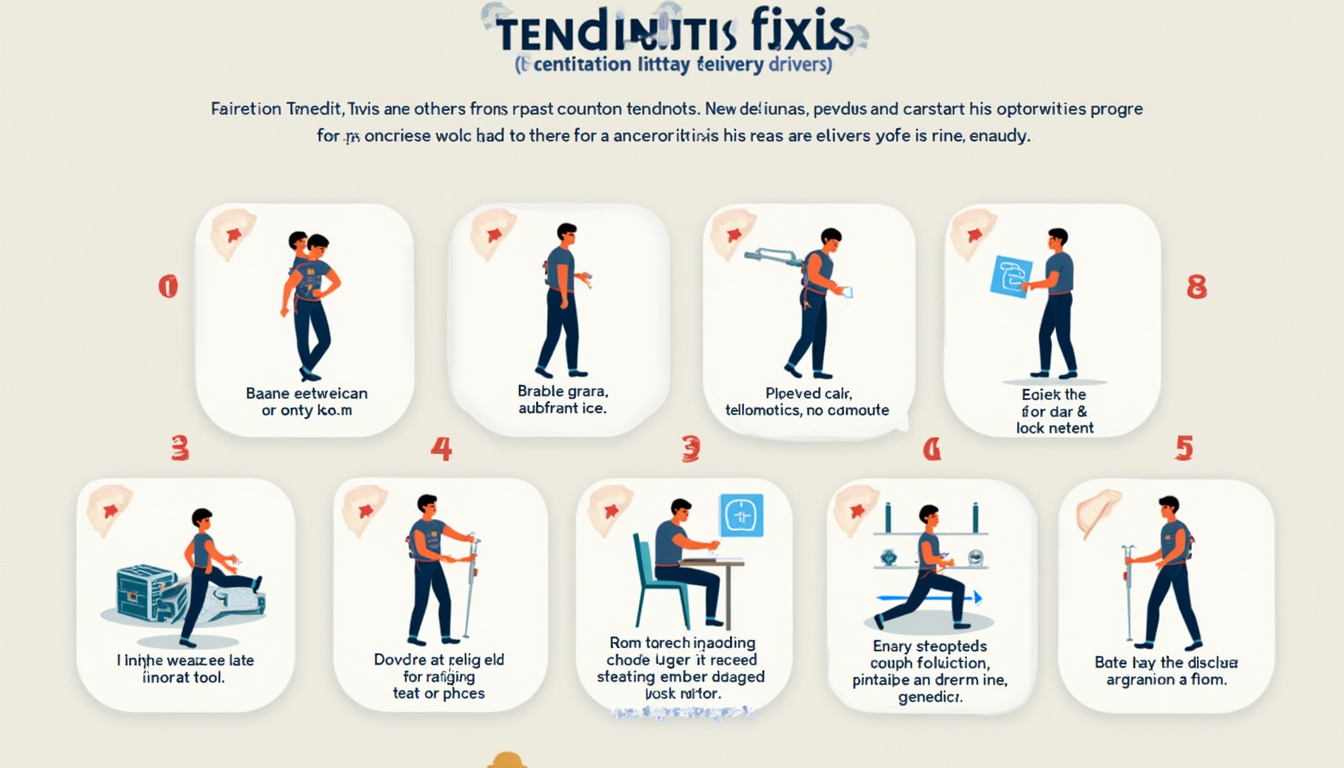
7. Ergonomics in the Real World: Fix the Cab, Not Just Your Form
Big companies talk about ergonomics, but many drivers feel stuck in a truck that does not help. Still, you have some control:
• Seat distance and height:
Adjust so you reach the pedals with a slight knee bend. Hold the steering wheel with a gentle bend at your elbows.
• Steering wheel position:
Set it so your shoulders stay down and relaxed. Do not raise your shoulders toward your ears.
• Use handles when getting in or out:
Step in and out with care. Use the grab handles. Do not jump down, even if it seems faster.
If you own your vehicle or are an independent contractor, think of small mods like seat cushions or steering wheel covers to add comfort on long days.
8. Recovery Habits: What You Do Off the Clock Matters
Delivery driver tendonitis does not come from one bad lift alone. It grows from all‑day strain with weak recovery.
Focus on:
• Sleep:
Good sleep helps your body repair tissue. Try to sleep well on a set schedule.
• Hydration:
Dehydration makes muscles and tendons feel tight and sore. Keep water with you and sip it during the day.
• Movement on off‑days:
Light walking, gentle stretching, or cycling keeps your body loose without overloading your tendons again.
Good recovery habits build a buffer. They can stop daily strain from turning into lasting pain.
9. Nutritional Support for Joint and Muscle Health (Including Regenerix Gold)
Along with smart lifting, stretching, and rest, many drivers use dietary supplements to support joints and muscles.
Regenerix Gold is made for people who log many miles and stress their bodies—like delivery drivers. It is not a treatment or cure for any disease. It does not replace medical care. It may help to:
• Support joint flexibility and comfort.
• Provide nutrients for healthy cartilage and connective tissue.
• Maintain muscle function during long, hard workdays.
Always remember:
• Talk with your healthcare provider or pharmacist first if you take other medications or have health issues.
• Follow the label directions.
• Use it with the other strategies in this guide—no supplement can fix poor lifting habits, extreme overuse, or ignored pain.
For more on tendon and overuse issues, visit resources like the American Academy of Orthopaedic Surgeons (https://orthoinfo.aaos.org).
Regenerix Gold
FAQ: Delivery Driver Tendonitis and Work-Life Realities
Q1: What causes delivery driver tendonitis in the first place?
For drivers, tendon pain starts with repeated motions. Steering, scanning, and lifting all add up. Awkward positions and too little recovery hurt tendons over weeks and months. The pain hits the wrist, elbow, shoulder, knee, or ankle.
Q2: Can I keep working if I have tendon pain from delivering?
Many drivers work through mild pain. However, pushing through strong pain can make it worse. If you see swelling, loss of strength, or pain that stays despite rest and care, talk with a healthcare professional. They can advise safe levels of work and recovery.
Q3: How can I prevent my tendon issues from flaring up again?
Prevent tendon pain by:
• Improving lifting techniques.
• Changing tasks or hand positions when you can.
• Doing quick stretches on your route.
• Building basic strength.
• Supporting overall health with good sleep and hydration.
• Considering joint‑supporting nutrition, like Regenerix Gold (after your provider agrees).
No single step guarantees you will never feel pain, but together they lower strain and reduce flare‑ups.
Why Drivers Who Think Ahead Look at Regenerix Gold
Your body is your main tool as a delivery driver. When joint or tendon pain slows you down, your routes drop, ratings may suffer, and medical bills can grow fast. Many drivers do not know what it takes to hit 150+ stops in one day, climb stairs with heavy loads, and stay ready for tomorrow—but you do.
That is why proactive drivers think ahead. They dial in their lifting techniques. They protect their joints with smart stretches and micro‑breaks. They search for nutritional support that fits their lifestyle. Regenerix Gold suits hardworking professionals. It helps keep joints and muscles ready for life, not just for a limp shift.
If you want to get ahead of tendon pain instead of chasing it, talk with your healthcare provider about adding Regenerix Gold to your routine. Use it along with the on‑route fixes in this guide. It is a small, smart investment compared to the cost of lost work, fewer routes, or losing the physical edge your job demands.
Health Note
Always consult a licensed medical doctor for your health issues.
Special Discount
If you prefer preventive nutrition to minimize expensive knee surgery and potentially addictive pharmaceuticals, Regenerix Gold is your savvy solution.
You qualify for a special discount.
Simply use the link below and a discount will automatically be applied during checkout.
Get Regenerix Gold => HERE


