

If you slow down your walks because of grandparent knee pain, you are not alone. Many grandparents feel stiffness, soreness, or creakiness in their knees as the years go by. Good news comes in the form of simple, at‑home steps you can take today. These steps help you move with ease, keep your independence, and play with the little ones.
Below you find tested ideas that do not need fancy equipment. They need only consistency and a bit of patience.
Understanding grandparents knee pain in plain language
You do not need a medical degree to know about your knee pain. Grandparents often explain their discomfort in clear terms:
- They feel rusty when getting out of bed.
- They feel loose after moving for a while.
- They feel pain when climbing stairs or standing from a favorite chair.
Common causes include the effects of natural wear over the years, extra weight that loads the knees, weak muscles around the knee and hip, long periods of sitting, and past bumps or strains.
Important note: If you experience sudden, severe pain, major swelling, or a leg that cannot bear weight, ask for medical help right away. At‑home steps help with everyday aches and stiffness, not emergencies.
First things first: gentle movement is your best friend
When knees hurt, you may want to sit more. But long hours in a recliner can make grandparents knee pain worse. Your joints need to move—gently and often.
Easy daily “grandparent-safe” movements
Try these low‑impact moves once or twice a day. Stay in a comfortable range and stop if you feel sharp pain:
-
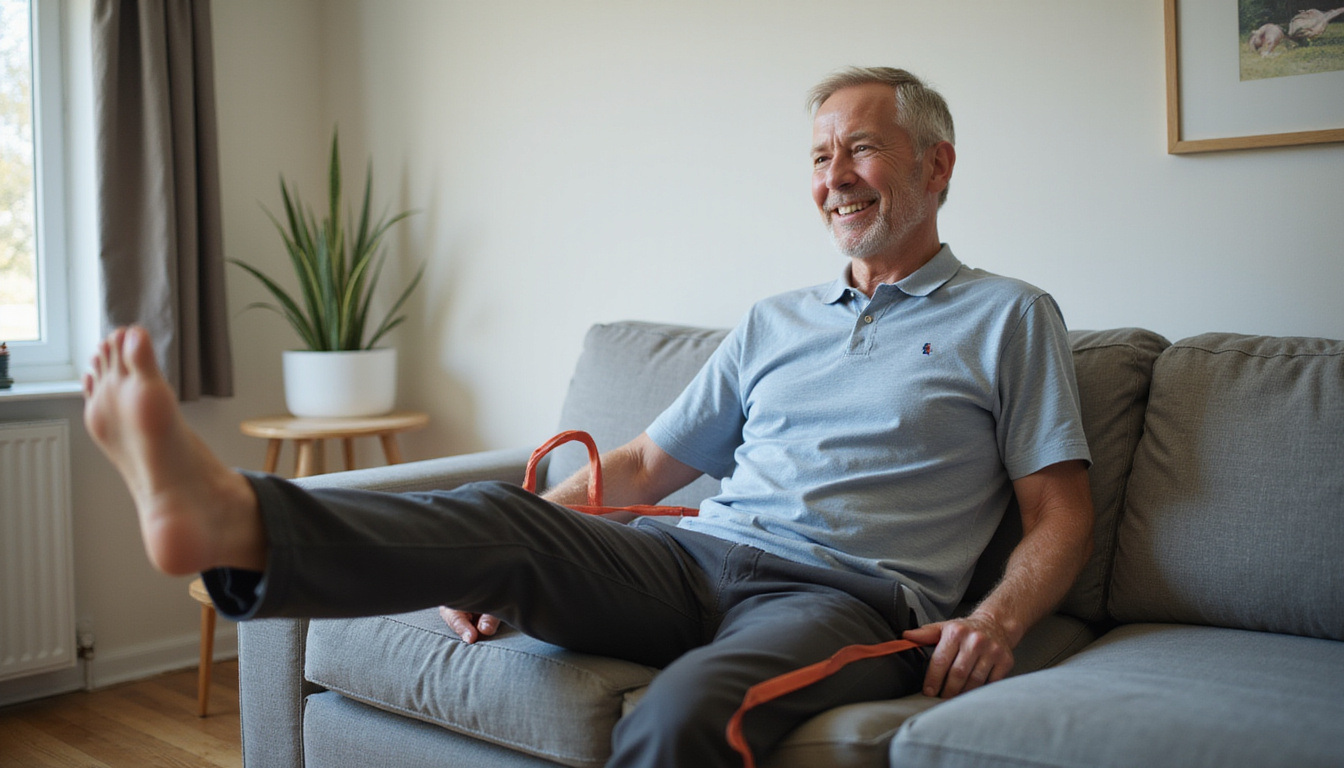
Seated knee straightenings
Sit up straight in a sturdy chair. Slowly straighten one leg until it is almost flat. Hold for 2–3 seconds. Lower your leg slowly. Do 10–15 repetitions per leg. -
Ankle pumps for circulation
While sitting or lying down, point your toes away, then pull them toward your nose. Do this 20–30 times. It boosts blood flow and eases tension in your lower legs and knees. -
Short, frequent walks
Instead of one long walk, take several short walks lasting 5–10 minutes throughout the day. Walk inside the house, to the mailbox, or in the grocery store while holding your cart. -
Chair sit‑to‑stands
Sit near the edge of a sturdy chair with your feet under your knees. Lean forward slightly and stand using your legs as much as you can. Slowly sit back down. Start with 5–8 repetitions. Use a table or walker if needed.
Regular, gentle movement keeps your joints lubricated and your muscles strong.
Hot, cold, and simple comfort tricks
You do not need gadgets. Old‑fashioned comforts can help your knees.
When to use warmth
Warmth helps your knees feel less stiff, especially in the morning or before activity. Use warmth by:
- Taking a warm shower that focuses on your knees for 5–10 minutes.
- Using a warm, non‐scalding heating pad or warm towel on your knees for 10–15 minutes.
- Enjoying a warm bath if it feels safe for you.
Do not fall asleep with a heating pad and always check your skin for burns.
When to use cold
Cold soothes your knee after more use, such as extra time at the park with the grandkids:
- Wrap a cold pack or a bag of frozen peas in a thin towel.
- Apply it to the knee for up to 15 minutes.
- Wait 30–60 minutes between sessions.
Many grandparents use warmth before moving and cold afterward if their knee feels irritated.
Light strengthening: building your “shock absorbers”
Your thigh and hip muscles act as shock absorbers for your knees. When these muscles gain strength, your knees work less.
Try this simple routine 3–4 days per week:
-
Quad squeezes (front of thigh)
Lie down or sit with one leg straight. Tighten the muscle in the front of your thigh. Try to press the back of your knee gently toward the bed or couch. Hold for 5 seconds. Repeat 10–15 times per leg. -
Side leg raises (hip helpers)
Stand while holding a counter or chair. Slowly lift one leg out to the side a few inches with toes facing forward. Lower it slowly. Do 10–12 repetitions per leg. -
Calf raises (ankle and balance support)
Hold a counter and slowly rise up onto your toes before lowering your heels. Repeat 10–15 times. This move helps with balance and eases strain on your knees.
These exercises should feel like gentle work, not a struggle.
Watch your weight and your footwear
Even small weight changes can ease grandparents knee pain. Research shows that losing about 10–12 pounds can reduce the load on your knees with each step.
Simple, realistic tweaks
- Use smaller plates and fill half with vegetables or salad.
- Swap one sugary drink a day for water or herbal tea.
- Add a serving of lean protein (like eggs, beans, fish, or poultry) to support muscle.
Shoes that are kind to your knees
Old shoes or very flat slippers offer little cushioning. Instead:
- Choose shoes with good arch support and cushioning.
- Avoid high heels and unsupportive flip‑flops.
- Use supportive shoes indoors rather than going barefoot.
Your feet form your foundation. With better support, your knees can gain comfort too.
Home safety: protect your knees from “oops” moments
A wrong twist or trip at home can cause days or weeks of discomfort. Use these quick fixes:
- Place night lights in hallways and bathrooms.
- Remove or secure loose rugs that catch toes or walkers.
- Keep stairs and walkways clear of clutter.
- Install stable grab bars in bathrooms if needed.
- Choose sturdy chairs with armrests to help when standing or sitting.
These simple changes protect your knees and keep you independent.
Smart use of over‑the‑counter options
Many grandparents reach for over‑the‑counter (OTC) products when their knees hurt. Always:
- Follow all label directions.
- Check for any interactions with other medications.
- Talk with your healthcare provider or pharmacist if you take blood thinners, blood pressure medicine, or have ongoing health issues.
Some grandparents also use topical creams or rubs around the joint. Use products as directed and avoid them on broken skin.
Supporting your knees from the inside: lifestyle and supplements
Comfort in your knees comes not just from outside care, but from what you do inside your body.
Everyday habits that support joints and muscles
- Drink plenty of water.
- Aim for 7–9 hours of sleep to help your body recover.
- Avoid sitting for more than 45–60 minutes at a time. Stand up, stretch, or walk for a minute or two.
- Sit up straight as slumped posture can make your knees work harder.
A note on joint & muscle supplements
Many older adults use joint and muscle health supplements. These products are not meant to diagnose, treat, cure, or prevent disease. They are chosen by some to support joint comfort, maintain cartilage health, and help muscles and connective tissues.
If you consider a supplement:
- Discuss it with your healthcare provider, especially if you take medications.
- Choose products from reputable companies with good manufacturing practices.
- Remember that supplements work best alongside a healthy lifestyle.
When to get your knees checked in person
At‑home steps help, but they are not a substitute for professional care. Talk to a healthcare professional if:
- Your knee pain grows worse over weeks instead of improving.
- You see significant swelling, redness, or warmth.
- Your knee often gives way or feels unstable.
- You have trouble with daily tasks like standing from a chair, using the toilet, or climbing a few stairs.
A professional can check for serious issues and offer physical therapy, imaging, or other options that are right for you.
Quick checklist: daily habits to help grandparents knee pain
You can print or copy this list and stick it on your fridge:
- [ ] Take a short walk (5–10 minutes) once or twice today.
- [ ] Do simple knee exercises (seated straightenings, quad squeezes, or chair sit‑to‑stands).
- [ ] Make one healthy food swap (for example, replace a sugary drink with water).
- [ ] Use warmth on your knees before activities if they feel stiff.
- [ ] Wear supportive shoes when you are on your feet.
- [ ] Stand and move at least once every hour while awake.
- [ ] Follow a wind‑down routine for better sleep tonight.
These steps, done consistently, help you move with ease and build confidence.
FAQ: common questions about grandparents knee pain
1. What’s the best exercise for knee pain in older adults?
No single move works best for everyone. A mix of low‑impact activities, such as walking, cycling, or water exercise, and light strengthening moves like chair sit‑to‑stands and leg raises, works well. The key is to do a little often, stay in a comfortable range, and avoid sharp pain. A physical therapist can help design a plan for you.
2. Are home remedies enough for elderly knee pain?
Home remedies such as gentle movement, warm or cold packs, weight management, supportive shoes, and joint‑supporting supplements help with everyday knee pain. Yet, if pain stops you from doing daily activities, affects your sleep, or lasts more than a few weeks, it is time to talk to your healthcare provider.
3. Can supplements really help with grandparents’ joint and muscle comfort?
Some older adults choose supplements to support joint and muscle health. These products do not treat or cure any disease, but they may help support joint structure and muscle function. Always choose reputable brands and discuss any supplement with your healthcare provider.
For more information on a supplement, watch this helpful YouTube FAQ video about Regenerix Gold:
https://youtu.be/mGrH5UWFxUs?si=X9bScbG6dvejGkZf
Why many savvy grandparents choose Regenerix Gold
You have worked hard for decades. The last thing you want is to spend your grandkid years worrying about every step and bill. Many grandparents who care for their joints and muscles use smart, proactive ways to support their bodies before discomfort limits their plans.
Regenerix Gold is a joint and muscle support supplement. Grandparents who want comfortable movement choose it. It is for anyone determined to live actively. It is for those who:
• Want to keep age‑related stiffness at bay and stay mobile.
• Prefer a modest monthly cost rather than high medical bills later.
• Take pride in finding smart, proactive solutions.
• Want to continue gardening, traveling, playing with grandkids, or even handling side work.
No supplement can replace a healthy lifestyle or guarantee specific results. Still, Regenerix Gold fits into the daily routine of grandparents who care for their joints from the inside out. If you are ready to move confidently, reduce rising healthcare costs, and show what aging well means, talk with your healthcare provider about adding Regenerix Gold to your joint‑care plan.
https://youtu.be/mGrH5UWFxUs?si=X9bScbG6dvejGkZf
Health Note
Always consult a licensed medical doctor for your health issues.
Grandparents Discount
If you are a Grandparent who prefers preventive nutrition to minimize expensive surgery and potentially addictive pharmaceuticals, Regenerix Gold is your savvy solution.
Grandparents qualify for a special discount.
Simply use the link below and a discount will automatically be applied during checkout.
Get Regenerix Gold => HERE
[center][h2]
[/h2][/center]


