
Groin strain symptoms, recovery, and best exercises for faster healing
by Zestora on Dec 22, 2025

If you’re a tennis player, you may know a groin strain.
You might have hurt your inner thigh or seen someone grab it mid-rally.
Quick lateral cuts, forceful serves, and sudden stops on hard courts load your adductors and hip flexors.
It is key to know what happens, calm the pain, and build strength again so you can play with confidence—and stay on the court.
What is a groin strain for tennis players?
In tennis, a groin strain means you stretch or tear tiny fibers in the muscles or tendons on your inner thigh (adductors) or near your hip.
It often shows when you:
- Lunge widely for a crosscourt shot
- Push off fast to change from defense to offense
- Split-step late and lose balance
- Slide or reach on clay or slick hard courts
Most groin strains affect soft tissues (muscles and tendons) and vary from a small tweak to a full pull that stops you mid-play.
Typical groin strain symptoms on and off the court
Knowing the symptoms helps you tell a small setback from something that needs full care.
Tennis players often say they feel:
- A sharp inner-thigh twinge when changing direction, especially when moving sideways or diagonally
- A pulling or tight feeling during wide forehand or backhand stances
- Discomfort when serving as you drive off the back leg or rotate your hips
- Tenderness when you press along the inner thigh or near your groin
- Stiffness after sitting, such as while driving or watching a match, making the first steps feel tight
- Less push-off power, so you feel slower getting to drop shots or short balls
In tougher cases, you may also feel:
- A sudden grab that forces you to stop play immediately
- Pain when doing a side lunge or crossover step, even lightly
- Soreness climbing stairs or walking with large strides
If pain is severe, if you cannot put weight on it, or if it does not ease with rest and basic care, see a health professional to rule out serious damage.
Why tennis players are so prone to groin strain
Tennis is not just straight-line running; it is full of lateral moves that stress your muscles.
Your adductors work hard to:
- Split-step and take that first step to control your center of mass
- Brake quickly and keep balance during stops
- Push off one leg to get back to the middle after a corner shot
- Hold low, wide stances to reach wide balls on hard courts where sliding is tough
Add long matches, hard surfaces, busy schedules with little rest, and weekend-warrior habits.
These factors load your groin muscles and make injury more likely.
Immediate care: what to do in the first 48–72 hours
If you feel a sudden inner-thigh grab while rallying, do not try to "walk it off" just for extra games.
Early care can help shorten recovery time.
In the first two to three days consider:
- Relative rest: Stop playing and avoid sprinting, side shuffling, or deep lunges. Gentle walking in a small range is usually fine if it feels comfortable.
- Cold packs: Wrap a cold pack in a towel and apply it to the inner thigh for short intervals. Do not place ice directly on your skin.
- Compression shorts: Wear supportive shorts to give your muscles a sense of stability.
- Gentle, pain-free motion: Do light movements like small hip circles or gentle leg swings. These help keep stiffness at bay.
If pain remains high, swelling is serious, or walking is very hard, see a qualified healthcare provider for advice.
How long does groin strain recovery usually take?
Each player and each strain is different.
Broadly speaking:
- Mild (Grade I): 1–2 weeks of modified activity. You may hit in a careful way and avoid aggressive side moves.
- Moderate (Grade II): 3–6 or more weeks, with a clear rehab plan before returning to full match play.
- Severe (Grade III): May take much longer and need formal medical care.
Your recovery time depends on:
- How soon you eased load on the area
- Your age, training, and overall fitness
- Any previous groin or hip issues
- How closely you follow a step-by-step return-to-tennis plan
A good hint is if any move brings back that sharp pain, it is not yet time to load that movement fully.
Best exercises for faster, smarter groin strain recovery
After the sharp pain settles (usually after a few days or more), careful loading is one of the best ways to help healing.
For tennis players, the goal is not only to ease discomfort but to build strength in the groin for split-steps, lateral sprints, and long matches.
Always move within a comfortable range, and if you work with a physical therapist or athletic trainer, follow their advice.
1. Early-phase: gentle activation and mobility
These exercises work once walking and simple movements feel comfortable.
Supine adductor squeeze (pillow squeeze)
- Lie on your back with knees bent and feet flat.
- Place a pillow or soft ball between your knees.
- Squeeze gently for 5–10 seconds and then relax.
- Do 1–2 sets of 10 reps at a comfortable intensity.
Hip adductor stretch (mild)
- Sit on the ground with the soles of your feet together (butterfly).
- Keep your back straight and let your knees drop gently toward the floor.
- Hold for 15–20 seconds, repeating 2–3 times without any sharp pull.
2. Mid-phase: building strength for lateral tennis movement
When everyday motions feel fine and light squeezing or stretching is comfortable, you can add more strength work.
Side-lying hip adduction
- Lie on your side with the injured side down.
- Cross your top leg in front and place that foot on the ground.
- Keep your bottom leg straight and lift it 6–12 inches slowly, then lower it.
- Do 2–3 sets of 10–15 reps with a controlled motion.
Standing adductor slide (short range)
- Stand with your feet shoulder-width apart.
- Gently shift your weight to one side so that the opposite leg slides out a little (you may use a towel or slider on a smooth surface).
- Keep movements small and controlled, and return to center.
- Do 2–3 sets of 8–12 reps per side.
Bridge with adductor squeeze
- Lie on your back with knees bent.
- Place a soft ball or pillow between your knees and squeeze gently.
- Lift your hips into a bridge and then lower slowly.
- Do 2–3 sets of 8–12 reps.
3. Late-phase: tennis-specific power and control
When you can do the above movements without pain and daily tasks feel easy, you can add more dynamic work that mimics tennis moves.
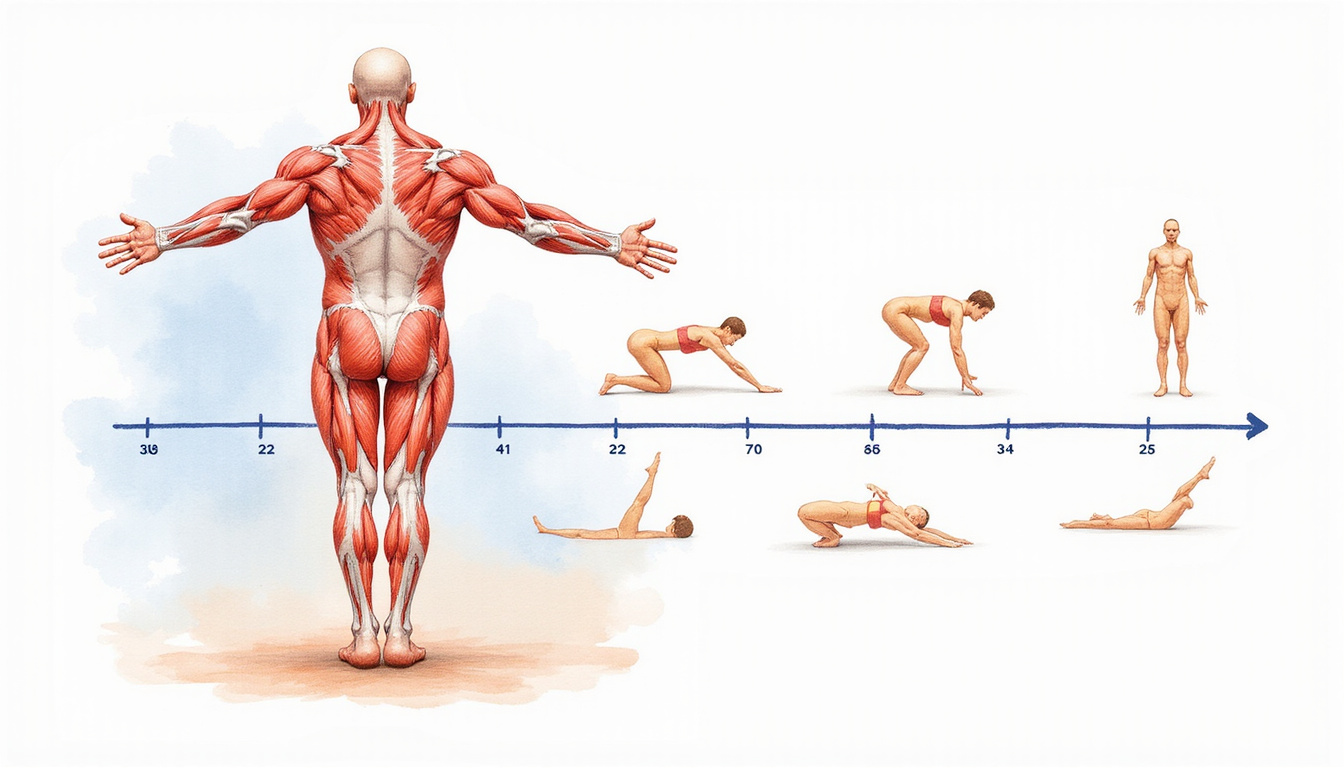
Lateral lunges (partial depth at first)
- Step to the side into a lunge while keeping the other leg straight.
- Sit your hips back, keep your chest up, and then return to standing.
- Start shallow and deepen the lunge as you feel more confident.
- Do 2–3 sets of 8–10 reps per side.
Copenhagen plank (adductor plank – modified)
- Lie on your side near a bench or sturdy chair.
- Place your top leg on the bench with the knee bent at 90 degrees.
- Support your body on your forearm and hold your torso off the ground, letting the lower leg relax.
- Hold for 10–20 seconds and repeat 3–5 times on each side.
Lateral shuffles and mini change-of-direction drills
- Start with slow, low-intensity side shuffles over a few meters.
- Progress to faster shuffles and add deceleration and acceleration as you gain strength.
Simple progression checklist before returning to full match play
Before you return to full matches, make sure you can:
- Jog and backpedal without groin discomfort
- Perform bodyweight squats and lateral lunges without pain
- Do 10–20 side shuffles in each direction with control
- Hit groundstrokes and serves in practice without inner-thigh twinges
- Complete a full warm-up and light hitting session without symptoms worsening
If you meet these points, your groin is more likely ready for live play. Still, increase match intensity gradually over several days, not in one go.
Off-court strategies to support groin strain recovery
Your muscles and connective tissues work best when your recovery environment is strong.
Consider these tips:
- Quality sleep: A good night’s sleep is one of the best recovery tools.
- Reasonable training volume: Avoid long matches, heavy gym work, and extra cardio on the same days while recovering.
- Warm-ups that fit tennis demands:
• A light jog or bike ride
• Dynamic moves like leg swings, hip circles, or walking lunges with rotation
• Short, progressive side shuffles and carioca
• Shadow split-steps and practice first steps
Many players also eat well, with enough protein, healthy fats, and micronutrients. Some add dietary supplements.
In the United States, supplements are regulated as foods, not drugs. They are not meant to diagnose, treat, cure, or prevent disease (source: FDA).
Before you add any supplement, especially if you take other medications or have health issues, speak with your healthcare professional.
Preventing the next groin strain on court
You cannot stop every awkward slide or lunge, but you can lower your risk with smart habits:
- Make lateral strength a non-negotiable part of your routine.
- Upgrade your warm-up: Replace static stretches with dynamic drills that match split-steps, shuffles, and changes of direction.
- Respect surface and footwear: Change gently between clay, hard, and grass courts, and check that your shoes still support your lateral moves.
- Build workload gradually: Increase court hours, match intensity, and conditioning slowly—especially at the start of a new season.
- Listen to early warning signs: A tight inner thigh when chasing a wide ball is a sign to adjust training before a full pull occurs.
FAQs about groin strain for tennis players
-
How do I know if my inner-thigh pain is a groin strain or just tightness?
Tightness feels like a general pull that eases with a warm-up. A groin strain often causes a sharp pain during moves like a lateral lunge or push-off, and you may feel tenderness along the inner thigh. A professional can help you decide. -
Can I keep playing tennis with a mild groin strain?
Some players can hit lightly with controlled moves. However, full-speed play and aggressive lateral moves may worsen the strain. If your inner thigh catches or hurts with split-steps, sprints, or lunges, it is best to rest and rehab. -
What are the best exercises to prevent groin strain from returning?
For many tennis players, a mix of adductor strengthening (side-lying adduction, Copenhagen planks), lateral lunges, controlled side shuffles, and a proper dynamic warm-up works well. The key is to keep these exercises in your routine all year, not only during rehab.
Why many savvy tennis players look to Regenerix Gold
As a tennis player, you know the high cost of downtime—missed matches, lost ranking points, and sometimes work or coaching income that suffers when you are hurt.
Medical visits, scans, and long recovery times can add up fast.
That is why many players take steps to support their joints and muscles before problems start.
Regenerix Gold is a dietary supplement made for tennis players who want to keep their joints and muscles strong.
It helps you move explosively, train hard, and feel ready for the next session.
It is for those who do not settle for just “getting by” but want an optimal life—competing, working, and staying active without limits.
Regenerix Gold is not meant to diagnose, treat, cure, or prevent any disease.
It should not replace advice from your healthcare professional.
If you invest in good gear, coaching, and fitness to stay ahead, then a premium supplement for joint and muscle support may help you avoid the high cost of being sidelined.
Regenerix Gold
Health Note
Always consult a licensed medical doctor for your health issues.
Special Discount
If you prefer preventive nutrition to minimize expensive knee surgery and potentially addictive pharmaceuticals, Regenerix Gold is your savvy solution.
You qualify for a special discount.
Simply use the link below and a discount will automatically be applied during checkout.
Get Regenerix Gold => HERE


