

If you ride long miles, chase KOMs, or push hard on crits, a hamstring strain feels like a sudden cut to your season.
Cyclists know quad burn, yet a hamstring strain hurts each downstroke, every sprint, and even when you unclip.
Good news: a smart plan can help you get back on the bike safe and strong.
This guide explains how American cyclists manage a hamstring strain, avoid training mistakes, and rebuild power while keeping joint and muscle health.
Why cyclists get hamstring strains in the first place
Cyclists do not strain hamstrings as much as runners do; however, when a strain comes, a clear pattern appears.
The strain often comes from an aggressive bike fit that stretches your leg at the bottom of the pedal stroke, a sudden spike in ride volume or intensity, long seated efforts in a big gear at low cadence, or weak glutes and core.
These factors force the hamstrings to work harder than they should.
On the bike, the hamstrings flex the knee and extend the hip when you pull up or transition over the top of the pedal circle.
When overloaded, tired, or tight, they become vulnerable—for example, during a hard sprint, a corner jump, or a climb out of the saddle.
Know the difference: twinge vs real hamstring strain
Cyclists often ride through small aches.
But a true hamstring strain makes each motion risky.
Watch out for a sharp pain at the back of your thigh during a sprint or a big gear effort.
You might feel or hear a “pop” at the time of injury.
Bending your knee against resistance, such as trying toe to your butt, can hurt.
Local tenderness near the hamstring or sit bone is another sign.
If you feel pain when walking, especially up stairs or when you try to lengthen your stride, take notice.
Severe pain, a visible dent, big swelling, or trouble walking means you should see a doctor right away.
For milder strains, follow the steps below to care for yourself and plan your training.
Tip 1: Respect the first 72 hours
The first few days set the tone for recovery.
Ease off the bike if pedaling causes more than mild pain.
Spin lightly only if it is totally pain-free.
Use cool packs on your sore spot for 10–15 minutes at a time, several times a day.
Avoid long, aggressive stretches that may irritate your healing muscle.
Walk gently if you can do so without limping.
Your job is to keep blood flow steady without triggering more pain.
Tip 2: Talk to a pro who understands cyclists
A sports physical therapist or sports medicine expert who knows cyclists well can help.
They check that you have a hamstring strain and not another injury.
They look at your strength, movement, and bike fit.
They give a step-by-step plan from basic muscle activation to sprint-level power.
They also tell you when it is safe to return to racing or intense training.
They may advise imaging or further tests if needed.
For more clinical details, see guidance from the American Academy of Orthopaedic Surgeons.
Tip 3: Use your bike wisely: the “green zone” rule
Many riders push too hard too soon.
Follow this rule:
• Green zone: Pain is 0–3/10 during and after a ride, with no pain increase next morning. This zone is safe.
• Yellow zone: Pain is 4–5/10 or it flares the next day. This zone tells you to ease back on intensity and duration.
• Red zone: Pain is above 5/10, or you limp or feel sharp pain with each pedal stroke. Stop and rest.
Begin with high cadence (90–95+ rpm), low to moderate resistance, flat terrain or a smooth trainer ride, and short sessions (20–40 minutes).
Keep most efforts seated; avoid sprints and tough climbs until you build a base of pain-free riding.
Tip 4: Fix your bike fit so it doesn’t happen again
Small fit errors that once felt fast may lead to injury later.
Check these points:
• Saddle height: Too high can cause your leg to overextend and overload the hamstring at the bottom of your stroke. Many cyclists do better with the saddle set a few millimeters lower than the maximum.
• Saddle setback: Too far back can increase hip flexion and tension in the hamstrings, especially when you are riding low.
• Crank length: Long cranks can add stress to your leg if you have limited mobility or a shorter inseam.
A session with a professional bike fitter, especially one knowledgeable about injuries, can help.
Explain exactly when and how the strain occurred.
Tip 5: Progress from activation to strength work
Your hamstrings must be both strong and coordinated.
A careful progression helps:
-
Early stage (low load, high control)
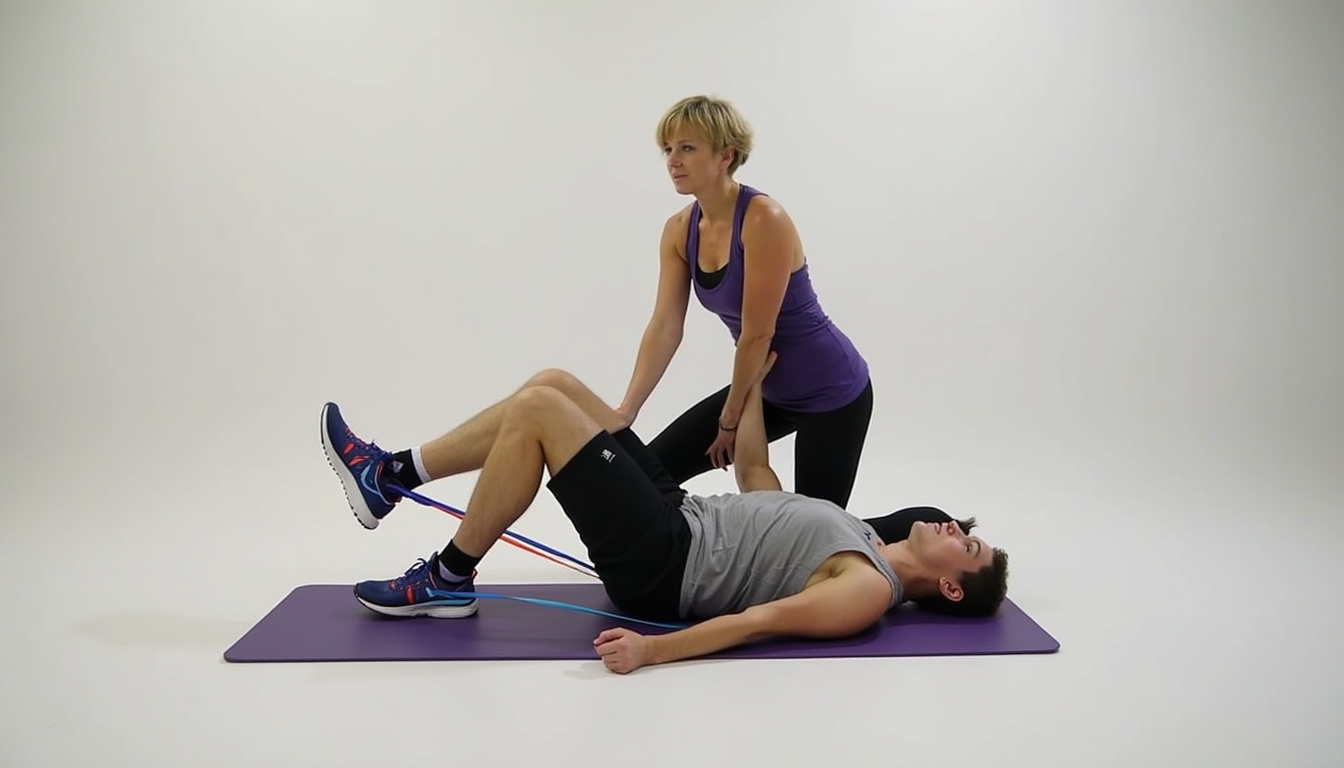
• Try isometric hamstring holds by gently pressing your heel into the floor while lying down.
• Do glute bridges, ensuring you squeeze your glutes and not overwork your hamstrings.
• Add core stability exercises such as dead bugs and side planks to keep your pelvis stable. -
Mid stage (moderate load, more movement)
• Do Romanian deadlifts with light weights.
• Practice hip thrusts.
• Try hamstring curls on a Swiss ball or use a light machine.
• Incorporate step-ups and split squats. -
Late stage (higher load with power and cycling specificity)
• Add heavier Romanian deadlifts if you can.
• Slowly work into Nordic hamstring curls as they are intense.
• Use single-leg bridges and single-leg deadlifts.
• On the bike, begin with short, controlled high-torque efforts (10–20 seconds in a big gear, but no full sprints) once cleared.
Only move to a new stage when you finish the current one without pain during the ride or the next day.
Tip 6: Stretch smarter, not harder
A tight hamstring can feel like it needs a long stretch, but very deep stretches may hurt more than help.
Instead, use short, gentle range-of-motion drills.
For example, do leg swings only as far as they feel comfortable, and try gentle knee bends.
Also add stretches for your hip flexors and glutes to ease tension off the hamstrings.
Save long hamstring stretches for later, after strength and tolerance improve.
If a stretch hurts sharply or leaves pain for hours, you have stretched too far.
Tip 7: Upgrade your off-the-bike recovery habits
Recovery off the bike is as important as training.
Focus on good sleep: 7–9 hours helps tissue heal.
Eat balanced meals with plenty of protein spread throughout the day.
Colorful fruits and vegetables help with antioxidants, and stay well-hydrated.
If you sit for long periods, take breaks every 30–60 minutes to walk and move lightly.
Many cyclists also add dietary supplements to support joint and muscle health.
Joint-support supplements may help keep cartilage, tendons, and muscles healthy.
Remember: supplements are not a substitute for professional medical advice.
Tip 8: Return to intervals and sprints with a plan
Do not jump from easy Zone 2 rides directly to all-out sprints.
A staged return might look like this:
- Tempo / Sweet Spot: Do short 5–10 minute efforts at moderate intensity with a smooth cadence.
- Sub-threshold / Threshold: Do longer, steady efforts while still avoiding sudden changes.
- Short accelerations: Try 5–10 second controlled bursts, letting the power build gradually.
- True sprints: Only attempt these when you can handle rapid changes and hard efforts without any hamstring pain the following day.
Keep a training log. Note if any hamstring pain occurs along with its duration, intensity, terrain, and your biking position. This log will help you adjust your training smartly.
Tip 9: Use cycling-specific warm-ups
Simply spinning for two minutes from your door is not enough, especially after an injury.
Before a hard session, do the following:
• Spin easy for 8–12 minutes, gradually increasing your cadence.
• Do 3–5 short cadence builds that last 20–30 seconds each while staying seated.
• Off the bike, do bodyweight squats, gentle leg swings, and glute activation (for example, mini-band walks if available).
These steps make sure you feel warm and mobile before moving to higher intensity.
Tip 10: Think long-term hamstring health, not just “back for next weekend”
Your goal is not only to finish one race, but to ride steadily over the years.
Build a lasting routine that includes regular strength work throughout the year.
Use gradual training loads rather than sudden, large spikes.
Have periodic bike fit check-ups when you change your saddle, shoes, or cranks.
Plan for active recovery rides instead of complete rest after hard sessions.
Cyclists who care for their bodies as if they were high-end gear tend to ride stronger and longer.
Hamstring strain recovery checklist for cyclists
Use this list to guide your recovery:
- [ ] Pain has reduced, and you can walk without limping
- [ ] Easy spinning causes no pain during the ride or the next morning
- [ ] You can do basic hamstring and glute exercises without pain
- [ ] Your saddle height and setback have been checked and adjusted
- [ ] You have reintroduced intensity slowly, with no pain the next day
- [ ] You are doing at least 2 strength sessions per week during your season, as allowed
How Regenerix Gold can support cyclists’ joint and muscle health
Cycling puts a lot of stress on your joints, tendons, and muscles, especially during hamstring strain recovery.
Even when you train smart, have a good bike fit, and work with professionals, some cyclists choose extra nutritional support.
Regenerix Gold is a premium joint and muscle support supplement built for riders who want to stay ready for action.
It is meant to support healthy joint function, maintain flexible movement, and deliver key nutrients to keep you riding.
It is not meant to diagnose, treat, cure, or prevent any disease, nor replace professional care.
Always consult a healthcare professional before you start any supplement, particularly if you have health issues, take medications, or are pregnant or nursing.
Regenerix Gold
For cyclists in America who ride high miles, protect their bikes like investments, and know that long-term health is essential against lost fitness and income, joint and muscle support is not a luxury but part of the plan.
Medical visits, lost work time, and days off the bike can cost a lot.
Supporting your body now through smart training and a supplement like Regenerix Gold helps you ride faster, smarter, and with more security.
If you are a rider who plans ahead for performance, finances, and staying in the pack instead of on the sidelines, consider adding Regenerix Gold to your daily routine.
FAQ: hamstring strain questions from cyclists
Q1: How long does a hamstring strain take to heal for cyclists?
Mild hamstring strains can feel better in 1–3 weeks.
A full return to top power and sprinting may take longer.
Recovery depends on the strain’s severity, your age, training load, and how well you follow the step-by-step plan.
Pushing too hard too soon can delay healing.
Q2: Can I ride through a hamstring strain if I just stay in Zone 2?
You can usually keep riding at an easy pace if your pain is mild, does not worsen during the ride, and does not flare up the next day.
If pain increases, if you start to change your riding style, or if pedaling becomes difficult, stop and talk to a pro.
Q3: How do I prevent another hamstring strain when I return to racing?
Focus on year-round strength work and monitor your training load.
Keep an eye on your saddle height and setback.
Always warm up thoroughly before hard efforts.
Building resilient hamstrings, glutes, and core—and supporting joint and muscle health with good nutrition and proper supplements—helps lower the risk of injury.
Health Note
Always consult a licensed medical doctor for your health issues.
Special Discount
If you prefer preventive nutrition to minimize expensive knee surgery and potentially addictive pharmaceuticals, Regenerix Gold is your savvy solution.
You qualify for a special discount.
Simply use the link below and a discount will automatically be applied during checkout.
Get Regenerix Gold => HERE


