

If you are a dedicated practitioner, you live in neutral spine. You use breath cues as if they were a second language. Yet you still clench during your Hundred. In these moments, Pilates for TMJ becomes a strong ally. Many American Pilates lovers grit their teeth. They suffer jaw tension, neck tightness, and headaches during roll-downs or teaser preps. Pilates is not a medical treatment and cannot diagnose, treat, or cure any condition. Smart and jaw-aware practice helps you move easier and reduces muscle discomfort around your jaw, neck, and shoulders.
Below is a practitioner-level guide to add TMJ-friendly strategies into your mat and apparatus work so your jaw may relax as much as your psoas.
Understanding TMJ Discomfort from a Pilates Perspective
“TMJ” refers to the temporomandibular joint itself. In the studio, clients express jaw discomfort. They report clicking, clenching, fatigue, or tension. This tension can rise to the temples or drop into the neck and shoulders.
From a movement view, three patterns appear:
- You brace your jaw during tough core work (such as the Hundred, teaser, or long stretch series).
- You over-recruit superficial neck and shoulder muscles. These muscles work instead of deep stabilizers during flexion and arm work.
- You hold your breath or use reverse breathing. This raises tension around the jaw and upper traps.
Pilates for TMJ does not mean doing separate “jaw exercises.” It means you use classical and modern moves. You restore alignment, balance muscle work, and lower neuromuscular tone along the kinetic chain.
Why Pilates for TMJ Makes Sense Biomechanically
Your jaw does not work on its own. When you cue “crown of the head to the ceiling” or “length through the back of the neck,” you affect jaw mechanics. The temporomandibular joint ties to these systems:
• Head and cervical alignment
• Ribcage organization
• Shoulder girdle stability
• Breathing patterns and tongue posture
When these systems work well, jaw muscles do not overwork to hold the head or stabilize movement. That is why Pilates for TMJ focuses on:
- Axial elongation and cervical decompression
- Balanced shoulder girdle organization (think serratus with lower traps, not just upper traps and levator)
- Diaphragmatic breathing that shifts the body from “fight or flight” into a calm, restorative state
Remember, none of this replaces professional care. If your jaw discomfort is persistent or growing, consult a healthcare provider. This may be a dentist, physical therapist, or another licensed professional (source: American Dental Association).
Foundational Setup: Neutral Spine, Neutral Jaw
Before you roll into Swan or strap up for Feet in Straps, spend 60 seconds checking in:
Jaw-Neutral Checklist (Supine or Seated)
• Tongue position: Rest your tongue lightly on the roof of your mouth behind the front teeth.
• Lips together, teeth apart: Think “soft lips, floating teeth.” You are not clenching; you are at rest.
• Throat space: Create space between the back of the tongue and the throat, like the start of a silent yawn.
• Cervical alignment: Lengthen the back of your neck. In supine, a small nod may help the base of the skull feel wide and heavy.
• Shoulder melt: Allow the humeral heads to settle back and down. Do not pinch your shoulder blades together.
Use this setup at the start of each session and before complex sequences. Soon, it becomes a default, jaw-friendly home base.
Gentle Mat-Based Pilates for TMJ-Friendly Practice
These low-load moves work as warm-ups, cool-downs, or on rest days. They focus on breath, head positioning, and dissociating jaw tension from core work.
1. Supine Diaphragmatic Breathing with Jaw Release
• Lie in constructive rest: knees bent, feet hip-width apart, pelvis neutral.
• Place one hand on your lower ribs and one on your lower abdomen.
• Rest your tongue lightly on the roof of your mouth. Keep lips closed; do not let the teeth touch.
• Inhale through your nose. Let your ribs widen laterally into your hand.
• Exhale slowly, like fogging a window. Let your jaw hang effortlessly from its hinge.
• Repeat for 8–10 slow breaths. Focus on releasing the masseter and muscles under the cheekbones as you exhale.
2. Pelvic Clock with Soft Jaw
• Stay in constructive rest. Keep the tongue and jaw set up.
• Imagine your pelvis as a clock: 12 o’clock at your navel, 6 o’clock at your pubic bone.
• Slowly rock from 12 to 6, then shift from 3 to 9, and do small circles.
• If you feel jaw tightening during harder moves, reduce the range of motion and reset your neutral jaw.
3. Head Floats with Deep Neck Flexor Focus
• Lie supine. Keep a neutral pelvis and let your arms rest at your sides.
• Gently engage your deep abdominals as if you were doing a beginner chest lift.
• Nod subtly without thrusting the chin, as if saying “yes.” Then, float your head 1–2 inches off the mat.
• Hold for 2–3 breaths. Keep a long back of the neck, a relaxed jaw, and the “teeth apart” cue.
• Lower your head slowly and with control.
• Complete 5–8 repetitions.
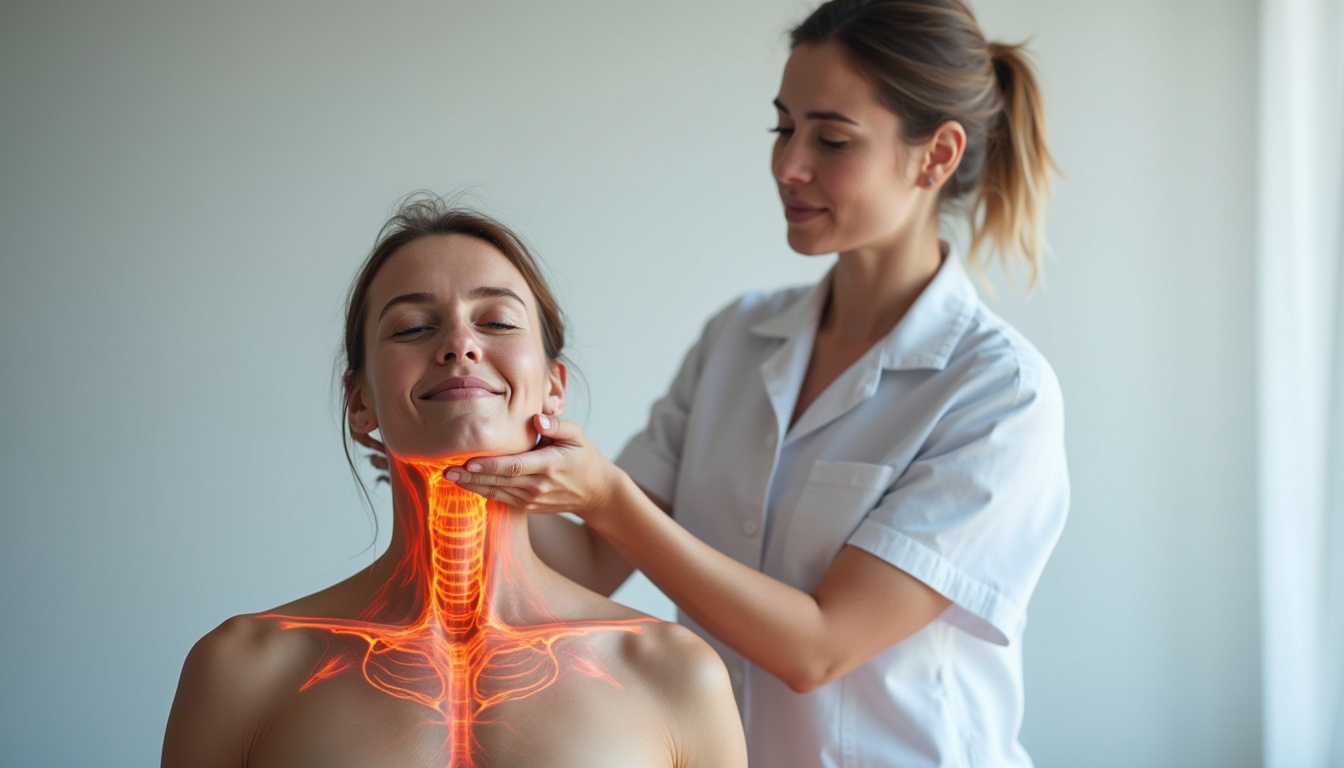
This shift takes work away from superficial jaw and neck bracing and moves it to deeper cervical support.
Apparatus Strategies: Reformers and Towers for Jaw-Safe Work
When you work on apparatus, it is easy to bite down when the springs become heavy. Use these strategies in your sessions:
Reformer Tips
• Footwork:
Use a “melting jaw” cue. As you extend the carriage, exhale lightly. Imagine the jaw softening instead of gripping.
Keep your tongue on the roof of your mouth to avoid clenching as the load increases.
• Hundred on the Reformer:
If you know you clench under core load, modify the head position. Start with your head down and maintain a neutral jaw.
Only lift your chest a little if you can keep “lips together, teeth apart” throughout the move.
• Long Stretch Series:
In plank-based work, see the head as part of the spine. The head should not lead or hang.
Cue yourself: “Press through your hands, broaden across your collarbones, and let your jaw move along without holding tension.”
Tower/Cadillac and Chair
• Arm Springs (Tower/Cadillac):
For supine or seated arm work, choose spring tension that does not force you to brace your jaw.
Keep the connection from your ribs to your hips and relax your throat.
• Push-Down on Wunda Chair:
Begin with lighter springs to avoid biting down during arm pushes.
Pair each push with a slow exhale. Consciously soften your cheeks and lips.
Integrating Pilates for TMJ Into Your Regular Programming
You do not need a separate “TMJ day.” Instead, add jaw-awareness to your usual moves.
• Do a jaw check at every level change.
Before moving from supine to seated or seated to standing, reset your tongue, teeth, and lips.
• Cue your breath with jaw release.
When you cue “exhale on exertion,” add, “let the jaw relax with the exhale” or “exhale as if sinking the tension out of your cheeks.”
• Reduce your load when jaw bracing occurs.
If you catch yourself clenching or grinding, lower your springs, reduce reps, or shift to unilateral moves to regain control without clenching.
• Use tactile feedback.
Rest your fingertips lightly in front of your ears during small jaw movements between sets. This helps you sense when the muscles over-engage.
Supportive Lifestyle & Recovery Practices for Jaw Comfort
Pilates for TMJ works best when part of a lifestyle that values recovery.
• Take regular movement breaks.
If you teach or sit at a desk all day, stand up each hour for 2 minutes. Do roll-downs, shoulder circles, and gentle neck nods.
• Optimize screen ergonomics.
Forward head posture may force jaw compensation. Keep screens at eye level and think “ear over shoulder.”
• Downshift in the evening.
Use wind-down rituals like guided breathwork, gentle mat sequences, or supportive restorative positions. These can lower overall muscle tension before sleep.
• Keep hydrated and eat well.
Hydration and nutrition support normal muscle function and speed recovery.
Always consult a qualified professional before making major lifestyle, nutrition, or fitness changes, especially if you have health concerns.
How a Joint & Muscle Support Supplement May Help Active Pilates Practitioners
Pilates lovers use their joints and muscles daily. Over time, this creates background stiffness or discomfort that may worsen jaw tension when the whole system feels overloaded.
Some active adults choose supplements that support:
• Normal joint mobility and comfort
• Healthy connective tissue
• Everyday muscle function and recovery
Any supplement you use should:
• Comply with U.S. supplement regulations
• Avoid making disease-related claims
• Be made by a company that follows quality and safety standards
• Fit your individual needs, goals, and any healthcare advice
Remember, supplements are not drugs. They do not diagnose, treat, cure, or prevent any disease. They work best as part of a comprehensive approach that mixes smart training, rest, and professional guidance.
Regenerix Gold
For Pilates practitioners who train and teach full schedules, maintaining comfortable, strong joints and muscles is a priority. Missed classes, substituted sessions, and studio time off add stress and lost income.
Regenerix Gold is a dietary supplement made to support healthy joints and muscles in active adults. While it does not diagnose, treat, cure, or prevent any disease, it is designed for those who want to move confidently and keep an optimal, active lifestyle. For Pilates practitioners, this means you can focus on refined cues, breath, and alignment instead of everyday discomfort.
Choosing a joint and muscle support supplement like Regenerix Gold is a proactive choice. It helps you avoid worries about healthcare costs, missed work, or being unable to keep up with the studio schedule. It is for smart, forward-thinking movers who plan for longevity, not just the next workout.
If you are adding Pilates for TMJ strategies and want extra support for your joints and muscles, talk with your healthcare provider to see if Regenerix Gold fits your program and goals.
FAQ: Pilates and Jaw Tension
1. Can Pilates help with jaw tension and TMJ-related discomfort?
Yes, Pilates can help with some muscular and postural issues that lead to jaw tension. Emphasize breath, cervical alignment, and shoulder organization. While Pilates for TMJ is not a medical treatment, many find that a smart, jaw-aware practice lessens daily tightness in the jaw, neck, and shoulders.
2. Which Pilates exercises are best for jaw and neck tension?
Start with gentle mat work. Try diaphragmatic breathing, pelvic clock moves, supported chest lifts, and shoulder mobility drills. On the Reformer, choose low-to-moderate tension footwork and mindful arm work. Keep focus on a relaxed jaw, long neck, and balanced shoulder girdle.
3. Is it safe to do Pilates with TMJ issues?
For many, it is safe—especially when you use a TMJ-friendly Pilates approach that lowers clenching and supports better head, neck, and shoulder mechanics. If your symptoms are severe, worsening, or interfere with daily life, consult a qualified healthcare provider first. Let your instructor know so they can adjust your program accordingly.
Health Note
Always consult a licensed medical doctor for your health issues.
Special Discount
If you prefer preventive nutrition to minimize expensive knee surgery and potentially addictive pharmaceuticals, Regenerix Gold is your savvy solution.
You qualify for a special discount.
Simply use the link below and a discount will automatically be applied during checkout.
Get Regenerix Gold => HERE


