

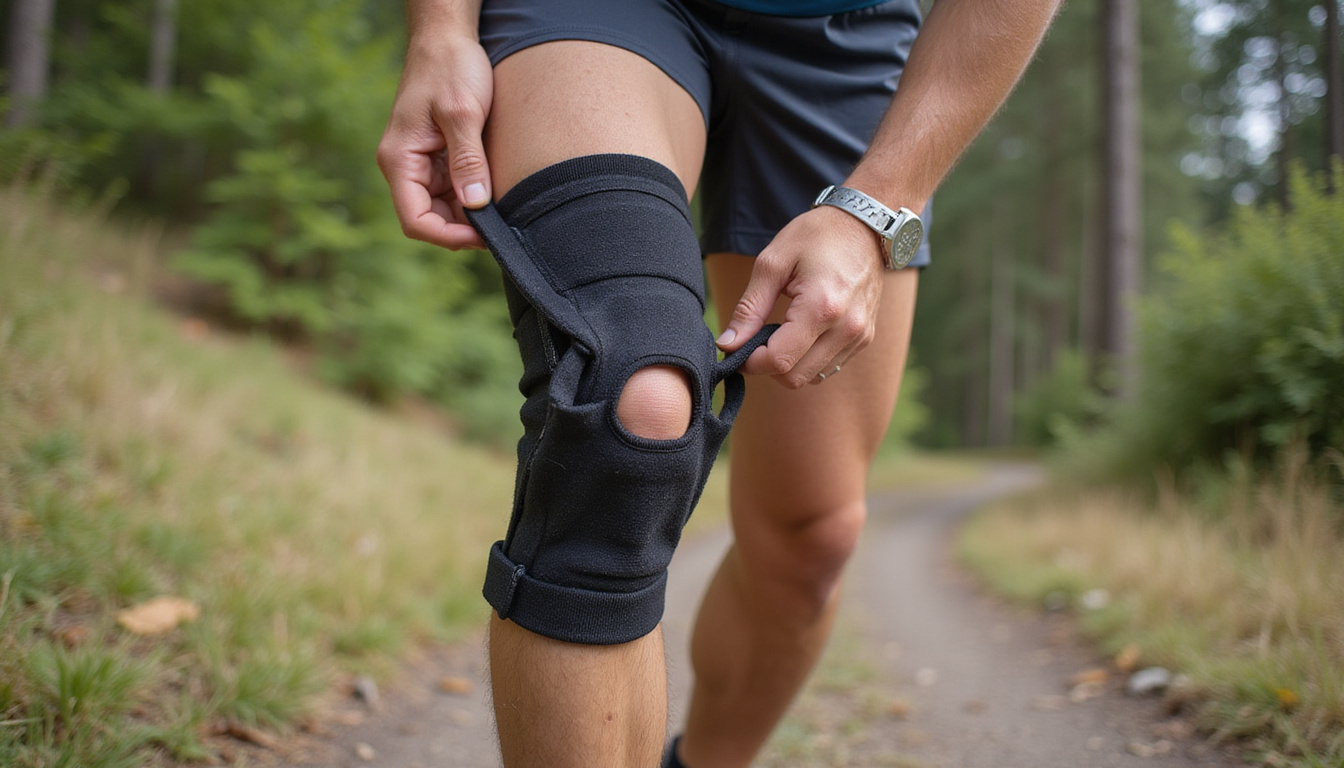
When you hike distant ridgelines, load elk quarters, or cover steep miles to find a hidden trout stream, your knees suffer. They bear the stress and start to hurt. Many hunters and hikers choose a hiking knee brace or knee support to stay in the game. Whether you step on loose shale, lose heavy elevation with a full pack, or push through dense brush, your joints and muscles take each step.
This guide shows you how to hike longer with less discomfort. It explains what to seek in a knee brace, how to wear one properly, and how a nutrition-based knee support like Regenerix Gold can work with your gear and training.
Why Knees Take a Pounding on the Trail
American hunters and hikers face terrain that goes beyond simple ups and downs. The land forces your knees to work hard. Consider these examples:
- You take long scree descents with a heavy pack.
- You move off-trail on side‑hills while chasing a call.
- You step over deadfall all day in dark timber.
- You climb hardpack or rocky switchbacks on your return.
Every downhill stride forces heavy loads on your knee. Your knee absorbs forces several times your body weight (source: AAOS). With an added 40–80 lb pack, your knees act as shock absorbers.
On the trail, you may feel:
- Achiness near the kneecap after long descents.
- Sharp twinges when stepping off ledges.
- Stiffness when you get out of the truck.
- A “wobbly” feeling on uneven ground.
A hiking knee brace or support will not erase these signs. Still, worn with smart training and good nutrition, it helps you stay upright with less soreness after a hike.
What a Hiking Knee Brace Can (and Can’t) Do
A knee brace works like other gear such as trekking poles or boots.
A good hiking knee brace can:
- Give gentle compression to lower stiffness or puffiness.
- Offer more stability on rocky or steep slopes.
- Help you feel secure when you carry a heavy pack.
- Remind you to move with better form so you do not slam your knee downhill.
A knee brace cannot:
- Diagnose, treat, cure, or prevent any medical issue.
- Replace proper conditioning, mobility, or a well‑fitting pack.
- Stop pain signals that your body sends.
If your knee pain continues or gets worse, you should first speak with a doctor or physical therapist before you rely on gear alone.
Types of Hiking Knee Braces for the Backcountry
When you shop online or visit a pro shop, you may see several styles of hiking knee braces:
-
Sleeve‑Style Compression Braces
- Neoprene or fabric sleeves that slide over the knee.
- Lightweight and low‑profile under hunting pants.
- Offer warmth, compression, and some position feedback.
-
Wraparound Braces with Straps
- Straps wrap above and below the knee.
- They are easy to adjust on the trail.
- They let you dial in compression where you need it.
-
Hinged Braces
- Hinges on the side add support against lateral movement.
- They are bulkier, heavier, and more visible.
- They are used for short periods under a professional’s guidance.
For many hikers and hunters, a simple compression-style brace is a good start unless a professional advises a more structured brace.
How to Choose a Knee Brace That Works in Real Terrain
When choosing a hiking knee brace, keep the field in mind. Ask yourself:
- Is the brace breathable? Will it trap sweat on hot days?
- Is the brace bulky? Can you wear it under your hunting pants or rain gear?
- Can you adjust it easily, even in low light or on rough ground?
- Is it durable? Will it withstand dirt, pine needles, and washings?
- Does it fit well? Too tight means numbness; too loose means it may slide when you step sideways.
Test the brace on stairs or hills with your boots and pack before you take it into the backcountry.
Technique: Reducing Knee Load Without Slowing Down
A hiking knee brace works best with smart movement. A few simple changes can lower knee stress:
- Shorten your stride on descents. Long steps force your knee to absorb more shock.
- Use your trekking poles like a four‑point stance. They help spread the load.
- Keep your knees soft, not locked. A slight bend absorbs shock.
- Angle your body on side‑hills. Face uphill and zig‑zag to stop your knee from collapsing inward.
- Take care with your footing when you have a heavy pack. Quiet, controlled steps are key.
Strength Training for “Pack-Ready” Knees
Healthy knees build strength long before you set out on a hunt. Start training now. Consider these simple moves (with professional clearance if needed):
- Step‑ups onto a stable box or bench.
- Split squats or lunges while holding a pack or dumbbells.
- Glute bridges and hip thrusts.
- Calf raises, double and single‑leg.
- Core work like planks or anti‑rotation presses.
Stronger hips, glutes, and core muscles ease the load on your knees when you climb steep paths or cross rough areas.
Nutrition-Based Knee Support: Why It Matters for Hunters and Hikers
Your knees are not just joints; they are living tissue that needs proper fuel. Many hunters and hikers focus on boots and gear but neglect nutrition for joints and muscles.
A nutrition-based knee support can add value to your backcountry plan, especially if:
- You cover many miles while scouting or training.
- You carry a heavy pack for long periods.
- You no longer feel that you are in your 20s but refuse to stop enjoying the wild.
This is where a supplement like Regenerix Gold can play a role in your kit.
Regenerix Gold: A Nutrition-Based “Knee Support” for the Long Haul
Regenerix Gold is a nutrition-based knee support. Many outdoorspeople use it to help maintain healthy joints and muscles. It is not medicine, it does not diagnose or treat conditions, and it does not replace professional care. Instead, it fits into a plan for those who want to keep moving.
Key benefits for dedicated outdoorspeople include:
- Doctors and physical therapists often recommend it as extra joint and muscle support.
- It has a decade of use and many positive reviews from users.
- It focuses on joint and muscle health for everyone from Midwest whitetail hunters to Western basin hikers and local trail wanderers.
Since it works from the inside out, Regenerix Gold can complement external supports such as a hiking knee brace, sturdy boots, and trekking poles.
If you are pregnant, nursing, on medication, or have other health issues, please talk to a healthcare provider before starting any supplement.
How to Stack Your Knee Strategy: Gear + Training + Nutrition
For longer, comfortable hikes, you need more than one solution. Think in layers, not a single fix.
Here is a simple stack to follow:
-
Base Layer – Professional Input
- If you have persistent or worsening pain, consult a doctor or physical therapist.
- Get personalized advice on your gait, squat form, and pack fit.
-
Layer 2 – Strength & Mobility
- Build your hips, glutes, and core with 2–3 short sessions each week.
- Keep in shape with flexibility exercises for your quads, hamstrings, calves, and hips.
-
Layer 3 – Smart Gear Choices
- Wear well‑fitted boots and insoles.
- Use trekking poles.
- Pick a comfortable, well‑adjusted pack.
- Choose a hiking knee brace that fits your terrain and style.
-
Layer 4 – Daily Nutrition Support
- Get enough protein, hydration, and whole‑food fats.
- Consider a joint and muscle support supplement like Regenerix Gold as part of your routine.
By combining these layers, you build a body and gear set that can handle more time in the field.
Using a Hiking Knee Brace on the Trail: Practical Tips
Follow these steps with your brace:
- Put it on over clean, dry skin before you start your hike.
- Adjust it snugly but do not cut off circulation. Watch for any tingling.
- If it bunches behind your knee during steep climbs, stop to fix it.
- Wash the brace as instructed to remove sweat and dirt.
- Consider using it only on heavy-pack days or long descents instead of on every flat walk.
FAQ: Hiking Knee Brace and Related Support
Q1: Do hiking knee supports really help on long descents?
A well‑fitted hiking knee support can bring stability and comfort. It is most helpful on steep, rocky descents with a loaded pack. It does not replace conditioning or medical advice but works well with strength work and good technique.
Q2: Should I wear a knee brace every time I hike?
Wearing a knee sleeve or brace on every outing is not necessary for everyone. Many hikers save it for heavy‑pack days, multi‑day trips, or steep missions. Ask a healthcare professional for advice if you are unsure.
Q3: Can I use a knee sleeve and a joint support supplement together?
Yes. A hiking knee brace gives you external support, while a supplement like Regenerix Gold supports joint and muscle health from within. They can safely work together, as long as you observe all usage guidelines.
Why Acting Now Matters More Than the Next Piece of Gear
If you read this, you count time by seasons. You remember when you hit that high‑country buck or when your knees began to fail on long pack‑out days.
Boots wear out, and optics upgrade. But if your joints and muscles fail, all the high‑end gear loses its value. You must keep up with your passion or risk sitting it out.
Investing in a good hiking knee brace, smart training, and nutrition-based support like Regenerix Gold is a bet on your ability to keep moving. You lower the worry of missed work or future medical bills. You gain the satisfaction of pushing one more ridge instead of watching from the sidelines.
Consider adding Regenerix Gold to your routine. Pair it with a well‑chosen knee brace and steady training. This balanced approach can help you stay in the high country, hike further with less pain, and continue the hunts and hikes that define who you are.
https://youtu.be/mGrH5UWFxUs?si=X9bScbG6dvejGkZf
Health Note
Always consult a licensed medical doctor for your health issues.
Special Discount
If you prefer preventive nutrition to minimize expensive surgery and potentially addictive pharmaceuticals, Regenerix Gold is your savvy solution.
You qualify for a special discount.
Simply use the link below and a discount will automatically be applied during checkout.
Get Regenerix Gold => HERE


