

If you run often, you have likely heard of IT band syndrome. You may have learned about it from your running friends or felt its sting yourself. That burning, sharp pain on the side of your knee, which appears around mile 3 to 6 and forces you to slow down, is the classic sign of IT band trouble. The good news is that you can calm the pain and stop it from returning with a few smart, simple changes.
This guide explains IT band issues in plain language and then shows you fixes you can follow. It also explains how a joint and muscle support supplement like Regenerix Gold can join your overall routine.
What is IT Band Syndrome, Really?
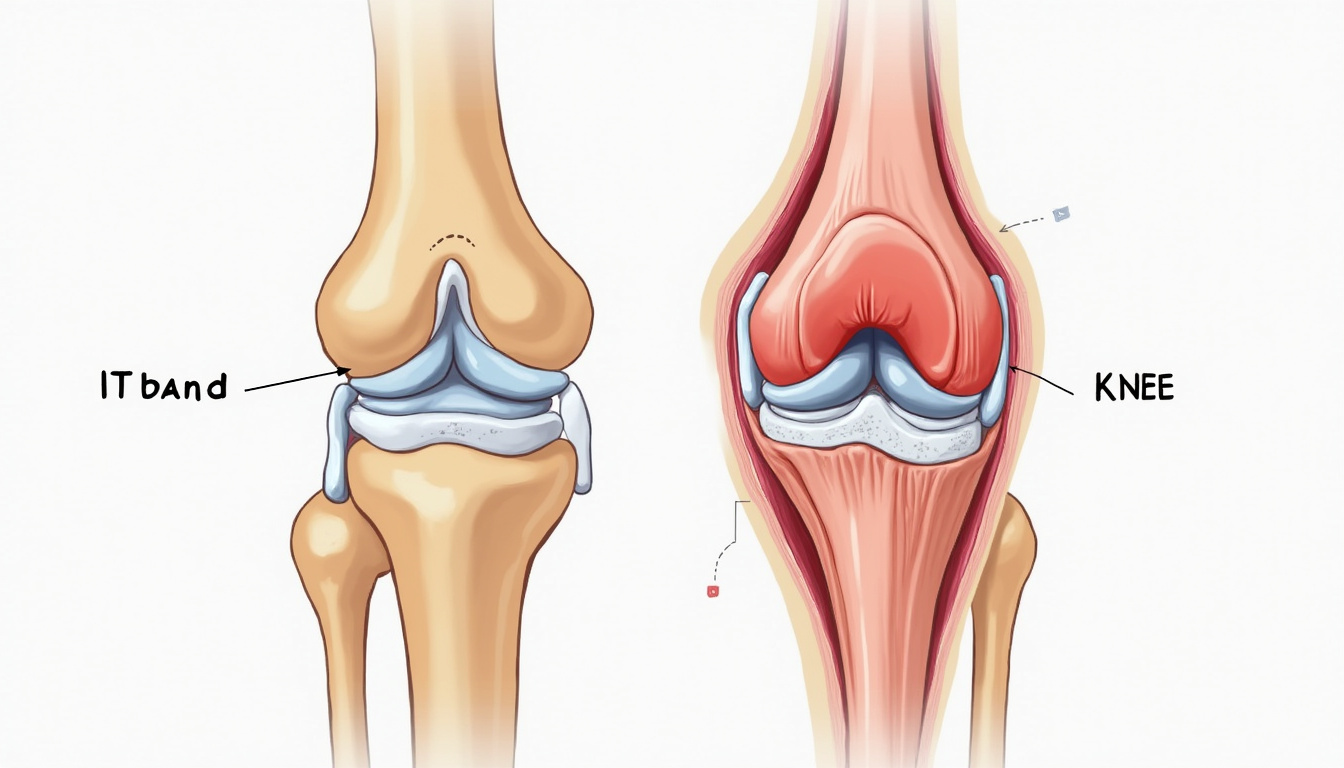
Your IT band is a thick band of tissue that runs from your hip down the side of your thigh and attaches near your shin. When runners mention IT band syndrome, they usually mean:
- A sharp or burning pain on the side of the knee
- Discomfort that worsens when you run—especially downhill or fast
- Pain that can change from a small annoyance to a run stopper
These issues do not come from tightness alone. They result from a mix of factors:
- Repeated friction at the side of the knee
- Too much load or quick increases in training
- Muscles in the hips, glutes, or core that do not work well
For many busy American runners, fitting in miles between work, kids, and life can create these problems.
Why Runners Get IT Band Syndrome
Most runners with IT band pain experience a mix of these factors:
1. Training Errors
• A sudden increase in weekly mileage
• Too many steep hill repeats or long downhills
• Running on roads with a constant slope that force one side to work harder
• A sharp jump in speed work without a strong running base
The IT band does not react well to sudden load. It needs a slow, steady increase in running.
2. Weak Hips and Glutes
When your glutes and hips do not work well, your knee may track inward with each step. This inward movement stresses the IT band. Many runners can put in long runs yet struggle with simple exercises that build single-leg strength.
3. Footwear and Form
• Old or mismatched running shoes
• Overstriding—landing too far in front
• Your feet crossing over the midline while running
No one factor alone causes IT band syndrome. But together, these issues overload the IT band.
Simple Fixes to End IT Band Pain Fast
If your outer knee hurts, you need relief quickly—but you also want to keep running. Here is a practical plan made for runners.
Step 1: Calm the Fire (Short-Term Relief)
At first, you must lower the irritation to keep training.
• Back Off, Don’t Quit
Replace some runs with low-impact alternatives like cycling, pool running, or the elliptical.
Cut your mileage by 30–50% for 1–2 weeks. Do this as long as the pain stays low and does not grow.
• Adjust Your Terrain
Avoid steep downhills and roads with strong slopes.
Choose flatter routes, a track, or a treadmill.
• Use Targeted Care
Apply ice to the painful area after running for short periods.
Gently stretch your glutes, hip flexors, and quads. Skip any aggressive “IT band stretches” that push your knee sideways.
If your pain is very strong, ongoing, or affects your daily life (such as walking or climbing stairs), ask a healthcare professional before running again.
Step 2: Rethink Your Strength Routine (The Real Fix)
The key to healing IT band syndrome is to build stronger, stable hips and legs. You do not need hours in the gym. Instead, work hard for 10–20 minutes, 2–3 times a week.
Try these exercises:
-
Side-Lying or Standing Hip Abductions
– Work your gluteus medius to stabilize your knee.
– Do 2–3 sets of 12–15 reps on each side. -
Clamshells or Banded Monster Walks
– Strengthen the sides of your hips.
– Move slowly to focus on quality, not speed. -
Single-Leg Bridges
– Strengthen your glutes and hamstrings and build hip stability.
– Do 2–3 sets of 8–12 reps for each leg. -
Step-Ups or Bulgarian Split Squats
– Build strength in each leg, similar to running.
– Use a small step and focus on proper form rather than heavy load. -
Single-Leg Balance Work
– Stand on one leg until you feel stable.
– As you improve, try closing your eyes or standing on a soft pad to boost balance.
You should feel your muscles work, not pain along your knee. If an exercise causes pain, lower the intensity or try something else.
Step 3: Fix the Silent Saboteurs (Form & Shoes)
You do not need a complete change of your running style; small tweaks help your IT band.
• Increase Cadence a Bit
Many runners benefit by increasing their step rate by 5–10% (for example, from 160 to about 168–176 steps per minute). This reduces overstriding and knee stress.
• Check Your Crossover
Imagine a straight line at the center of your treadmill. Your feet should land near that line, without crossing it. If your feet cross, widen your stance slightly.
• Examine Your Shoes
Replace your shoes every 300–500 miles.
If you recently switched models (for example, in drop, stack, or stability), and pain started soon after, try rotating back to your old shoes or ease into the new ones over a few weeks.
A sports physical therapist or a reputable running shop can give you more personalized feedback (source: American Academy of Orthopaedic Surgeons).
Where Regenerix Gold Fits in for Runners
Running with sore knees and hips is not just about local pain. It also affects your overall movement. Some runners choose a supplement to support their joints, muscles, and connective tissues along with smart training.
Regenerix Gold is made for active people—especially runners and joggers who log many miles. It is designed to support:
• Joint comfort during and after activity
• Muscle recovery after repeated impact
• Overall mobility, so you can keep training
This supplement is not a magic fix. It should complete your routine of smart training, good sleep, and a healthy diet.
<iframe width="560" height="315" src="https://www.youtube.com/embed/mGrH5UWFxUs?si=enLOx67aeklAOHfA" title="YouTube video player" frameborder="0" allow="accelerometer; autoplay; clipboard-write; encrypted-media; gyroscope; picture-in-picture; web-share" referrerpolicy="strict-origin-when-cross-origin" allowfullscreen></iframe>
Staying Within Safe, Smart Supplement Use
In the U.S., supplements like Regenerix Gold help support the normal structure and function of your body. They do not diagnose, treat, cure, or prevent any disease or condition. If you:
• Take medication
• Are pregnant, nursing, or have other health concerns
• Have ongoing pain that does not improve with rest and simple care
…talk with your healthcare provider before you start any new supplement, including Regenerix Gold.
Your Runner’s Action Plan for IT Band Syndrome
Here is a simple plan to follow for the next 4–8 weeks:
-
Reduce, But Don’t Stop, Running
Keep your easy runs if the pain is mild and does not worsen.
Avoid speed work, steep hills, and long downhills until the pain calms. -
Add Strength 2–3 Times per Week
Focus on exercises that build your glutes, hips, and single-leg strength.
Small, regular workouts work better than sporadic long sessions. -
Tweak Your Form Slightly
Increase your running cadence by 5–10%.
Keep your feet landing near the middle line.
Run on flatter routes while you heal. -
Upgrade Your Recovery Habits
Aim for 7–9 hours of sleep so your body can repair itself.
Eat enough protein, healthy fats, and fruits and vegetables.
Consider using a joint and muscle support supplement like Regenerix Gold if it suits you. -
Watch Your Symptoms
The pain should decrease over 2–4 weeks with these smart changes.
If the pain worsens or spreads, or if it begins affecting daily tasks, consult a professional.
FAQ: IT Band Syndrome and Running
1. Can IT band pain go away without stopping running?
Many runners can reduce intensity and volume instead of quitting and still ease their IT band pain. The pain must stay mild and not build during or after the run. If it spikes or lingers, you are overdoing it and need more rest or professional advice.
2. How long does IT band syndrome take to heal for runners?
Recovery times vary. With careful load management, hip and glute strengthening, and small changes to your form, many runners see improvement in 2–6 weeks. In severe or long-term cases, healing may take longer. Look at your progress overall from week to week, not just day to day.
3. What is the best way to prevent IT band flare-ups?
To help stop runner’s IT band problems, increase your mileage gradually; build hip and glute strength through regular exercises; rotate your shoes every few hundred miles; and avoid running on steep, cambered roads every day. A good routine that includes sleep, proper nutrition, and—in some cases—a joint support supplement can greatly reduce flare-ups.
Run Smarter, Not Just Harder—with Support on Your Side
For many runners, an IT band flare-up can ruin training plans and cost time off work. The runners who continue for the long run are those who listen to their bodies. They train intelligently, recover properly, and use every safe advantage they can find.
A simple strength routine, small tweaks in form, and proper recovery habits help a lot against IT band syndrome. If you care about your body as much as your running, support your joints and muscles from the inside out.
That is where Regenerix Gold comes into play. It is a premium joint and muscle support supplement designed for runners and joggers who want comfortable movement. It is also a smart option for anyone aiming to stay active and live well. In a world where missed days and costly treatments hurt both your training and your life, a well-made supplement is a smart, small investment.
If you want to avoid discomfort, protect your ability to run, and keep your body ready for the next challenge, consider adding Regenerix Gold to your daily routine as part of a safe, long-term training plan.
Health Note
Always consult a licensed medical doctor for your health issues.
Special Discount
If you prefer preventive nutrition to minimize expensive knee surgery and potentially addictive pharmaceuticals, Regenerix Gold is your savvy solution.
You qualify for a special discount.
Simply use the link below and a discount will automatically be applied during checkout.
Get Regenerix Gold => HERE


