

If you work hard but still feel that sharp ache or tight, “crunchy” feeling near your knees, you are not the only one. Many active people in America battle discomfort every time they squat, lunge, run, or use stairs. Well-chosen
knee stretches help your knees feel better during and after exercise. They work even more when you use smart nutrition for joint and muscle care.
This guide speaks to people who know what “grindy knees,” “locking,” or “stabbing twinges” feel like. It gives practical moves that work in real life.
Why tight tissues make your knees seem older than you are
When you say, “My knees are shot” after a workout, you do not mean that your joint is broken. You mean that the tissues around your knee are too tight, weak, or unbalanced.
People with tricky knees often say:
- The front of the knee feels “pulled” or “tugged” when you bend deeply.
- Your quads feel stiff and ropey after squats or running.
- Your hamstrings feel heavy and fight you when you try to straighten.
- Your hip flexors feel tight and make it hard to stand up straight.
- Your calves feel as hard as rocks when you walk down stairs.
All that tension forces the kneecap to move in odd ways. It also changes how forces pass through your knee. Soon, everyday tasks—like rising from the couch, getting into the car, or standing from the floor—start to feel like mini workouts.
Targeted
knee stretches help release tension in your quads, hamstrings, glutes, hip flexors, calves, and IT band. This helps your knee move as it should.
Principles of effective knee stretches for active people
Before you start any stretch, keep these basics in mind:
- Warm up first. Walk, cycle, or do light dynamic moves for 5–10 minutes so that your muscles are warm.
- No sharp pain. You may feel comfortable tension, but do not push into sharp, stabbing, or buckling sensations.
- Breathe and relax. Deep breaths help you relax and serve the stretch better.
- Progress gently. A little discomfort is fine. Grimacing is a sign you are pushing too hard.
- Be consistent. Five to ten minutes on most days work better than one long 45-minute session every two weeks.
If your knee pain is severe, becomes worse, or comes with swelling, locking, or giving way, talk with a healthcare professional before you change your routine.
1. Quad stretch: easing the “tug” on the kneecap
Tight quads are common among runners, lifters, and weekend athletes. Release the tension on the front of your thigh to get fast relief when bending your knees.
Standing quad stretch (with support)
- Stand next to a wall or chair for balance.
- Bend your right knee and grab your ankle or the back of your shoe.
- Pull your heel toward your butt gently. Keep your knees close together.
- Tuck your tailbone slightly and lift your chest; do not arch your low back.
- Hold for 20–30 seconds while you breathe steadily.
- Switch sides.
You should feel the stretch in the front of your thigh. Do not feel pinching around your knee. If your ankle feels too intense, use a strap or towel for more control.
2. Hip flexor stretch: opening up the “front of the hips” that affects knee form
Tight hip flexors force your body to put extra load on the knees, especially when you run or climb stairs.
Half-kneeling hip flexor stretch
- Kneel on a padded surface. Place your right knee on the pad and your left foot forward. Both knees should be at 90 degrees.
- Shift your hips gently forward. Do not let your low back arch.
- Squeeze your right glute a little. This makes the stretch stronger in the front of your right hip.
- Keep your torso straight. Do not lean forward.
- Hold for 20–30 seconds, then switch sides.
If your knee on the floor hurts, use extra padding or a folded towel.
3. Hamstring stretch: easing the pressure from the back of the knee
Tight hamstrings are a common cause when your knee feels “old.” This happens when you try to straighten your leg or hinge at the hips.
Supine hamstring stretch with strap
- Lie on your back. Extend both legs.
- Loop a strap, towel, or band around your right foot.
- With your right knee slightly soft, pull your leg toward you gently.
- Stop when you feel a stretch in your thigh. Do not shake or cramp.
- Hold for 20–30 seconds, then repeat on the left side.
It is common to see one side tighter than the other.
4. Calf stretch: easing troubles with stairs and downhill walking
Those “knife-like” twinges you feel on stairs or downhill often come from calf or ankle tightness.
Wall calf stretch
- Stand facing a wall. Place your hands on it at shoulder height.
- Step your right foot back. Keep your heel down and your toes straight ahead.
- Bend your front knee and lean into the wall. You should feel a stretch in the back calf.
- Keep the back leg straight and the heel on the ground.
- Hold for 20–30 seconds, then switch sides.
For a deeper calf stretch (targeting the soleus), bend the back knee a little while keeping your heel down.
5. Glute stretch: supporting the knee from the hip
If your glutes do not move well, your knees end up suffering during twisting or side movements.
Figure-4 glute stretch
- Lie on your back. Bend both knees and keep your feet flat on the floor.
- Cross your right ankle over your left thigh, just above the knee.
- Reach through and hold the back of your left thigh. Pull it gently toward your chest.
- Relax your head and shoulders.
- You should feel the stretch in your right glute/hip, not in your knee.
- Hold for 20–30 seconds, then switch sides.
If crossing your leg bothers your knee, ease the stretch or try a seated version on a chair.
6. IT band region release: easing the “outer knee” tightness
A common complaint is that “the outside of my knee feels like a tight band.” You cannot stretch the IT band itself, but you can ease the tension in the muscles around it.
Standing IT band side stretch
- Stand tall. Cross your right leg behind your left leg.
- Shift your weight onto your left leg.
- Reach your right arm overhead. Lean your upper body gently to the left.
- You should feel a stretch along the outer right hip and thigh.
- Hold for 20–30 seconds. Then switch sides.
Many active people add foam rolling of the outer thigh. This helps your knee feel less pulled sideways.
7. Dynamic knee stretches before sports
Before your workout or game, static stretching alone does not work best. Add some gentle dynamic moves that mirror how you use your legs.
Try this quick
pre-workout dynamic sequence:
- Do 10–15 bodyweight squats (keep them shallow if your knees are sore).
- Do 10 walking lunges on each leg (use small, controlled steps).
- Do 10–15 leg swings front-to-back on each leg (lightly hold a wall for support).
- Do 10–15 side-to-side leg swings on each leg.
- March in place for 20–30 seconds, lifting your knees to hip level.
These moves wake your muscles and lubricate your joints. Your knees will then be less shocked when you train.
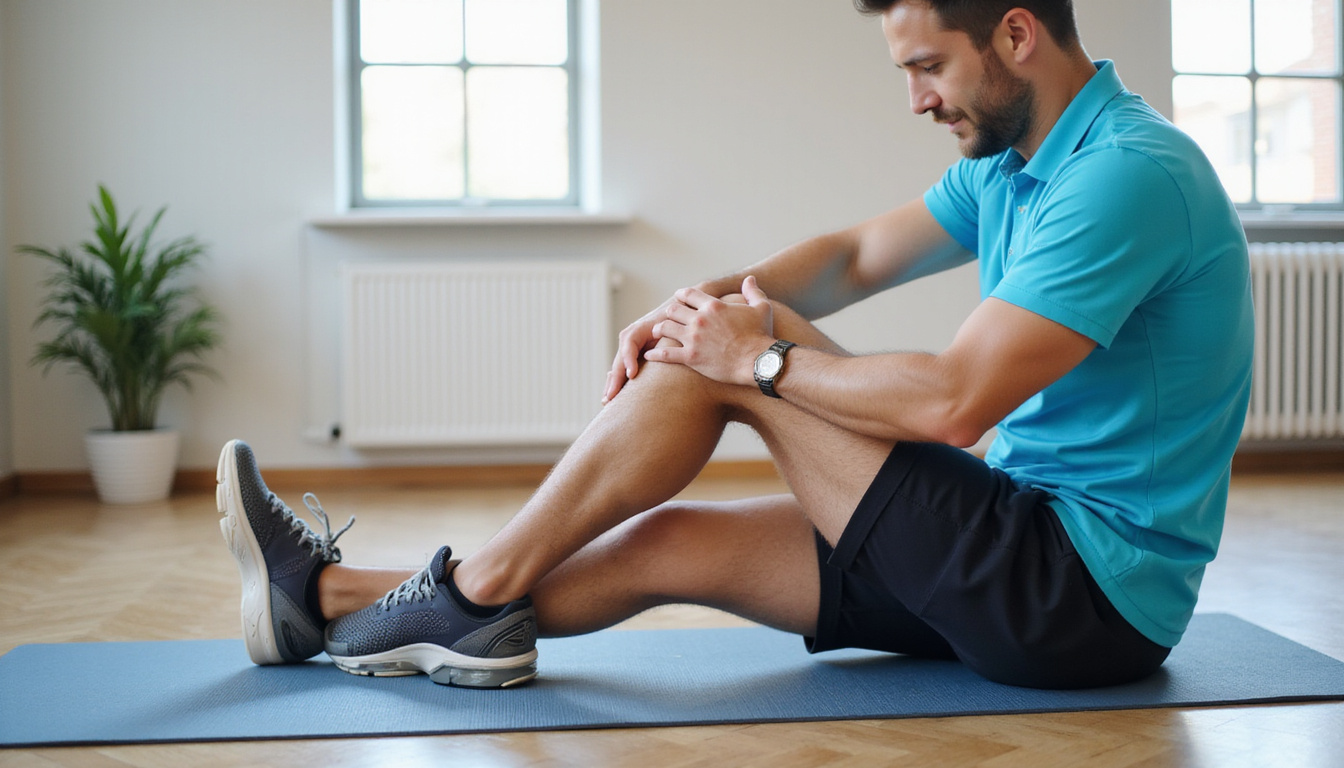
8. How often should you do knee stretches?
For most active adults with knee complaints, a simple routine might be:
-
On training days:
- Do 5 minutes of dynamic warm-up before you work out.
- Do 5–10 minutes of static stretches (like the ones above) afterward.
-
On rest or lighter days:
- Do 10–15 minutes of gentle stretching and mobility. This can be done while you watch TV or wind down.
Over time, many people notice less stiffness when they rise to stand, more comfort on stairs, and less nagging around the kneecap during everyday activities.
If discomfort continues or worsens despite regular stretching and smart training, see a healthcare professional such as a doctor or physical therapist.
Supporting healthy knees from the inside: nutrition and Regenerix Gold
Stretching and smart training fix the mechanical side of knee care. Many people in America train hard or stand on their feet all day. They also need good nutrition for joint and muscle health.
Regenerix Gold is a nutritional supplement for healthy knee joints and muscles. Doctors and physical therapists often recommend it. It fits a lifestyle that uses movement, proper form, and recovery.
Key points about Regenerix Gold:
- It supports joint and muscle health with nutrition.
- People have used it for over a decade. Reviews from around the world are positive.
- Many healthcare professionals recommend it along with stretching, strength work, and activity changes.
- It is a non-pharmaceutical option for people who want to support their knees while staying active.
Remember, supplements do not diagnose, treat, cure, or prevent any disease. They are not a substitute for professional medical care. If you have ongoing knee problems or take medication, talk with your healthcare provider before you start any new supplement.
Regenerix Gold
For more on joint health, review guidance from the National Institutes of Health. They offer advice on maintaining healthy joints and muscles through lifestyle, exercise, and nutrition (source: https://www.niams.nih.gov/health-topics/joint-health).
Putting it all together: a simple daily knee-care routine
Here is one way to combine knee stretches with joint support:
-
Pre-workout (5–8 minutes)
- Start with light cardio to warm up.
- Do dynamic squats, lunges, and leg swings.
-
Post-workout (8–12 minutes)
- Do the quad stretch on both sides.
- Do the hip flexor stretch on both sides.
- Do the hamstring stretch on both sides.
- Do the calf stretch on both sides.
- Do the glute stretch on both sides.
- Optionally, add the IT band side stretch.
-
Daily habits
- Stay in pain-free ranges during training.
- Wear proper footwear for your sport.
- Use nutrition strategies that support joint and muscle health. This may include a supplement like Regenerix Gold if it suits you.
Over weeks and months, this routine can help your knees feel less worn and more steady when life or sports call for a sprint, quick change of direction, or a long day on your feet.
FAQ: common questions about knee stretches
Q1: What are the best knee stretches for stiff knees after running?
A: Stretches that target the quads, hamstrings, calves, and hips work best after running. A standing quad stretch, wall calf stretch, and supine hamstring stretch form a good trio. Add a hip flexor stretch if the front of your hips feel tight.
Q2: How long should I hold knee joint stretches to feel a benefit?
A: Hold most knee stretches for 20–30 seconds and repeat them 2–3 times per side. Consistency is more important than long holds in one session.
Q3: Can knee cap stretches help with the “pulling” under the kneecap?
A: You cannot stretch the kneecap itself. However, stretching the surrounding muscles—especially the quads and hip flexors—often reduces that pulling feeling. Pair these stretches with proper form in squats, stairs, and daily movements. Consult a professional if the kneecap discomfort stays.
Take the next step: protect your knees, protect your lifestyle
If simple daily moves like getting off the couch, standing up from a chair, or playing with friends hurt your knees, waiting does not help. A daily routine of effective knee stretches, warm-ups, and smart training can transform your knees from liabilities to assets.
Many people in America worry about long-term medical costs or how knee issues affect their work. They support joint and muscle health with good nutrition. A trusted, doctor- and therapist-recommended option like
Regenerix Gold can be a part of this smart plan.
If you want to be the person who still moves well, trains hard, and rarely complains about “bad knees,” consider:
- Committing to the stretches in this guide for the next 30 days.
- Talking with your healthcare provider about whether adding Regenerix Gold fits your overall health plan.
- Treating your knees as the essential assets they are, instead of waiting until they force you to stop.
Your future self—one who climbs stairs easily, works comfortably, and joins last-minute games or hikes—will thank you for starting today.
Health Note
Always consult a licensed medical doctor for your health issues.
Special Discount
If you prefer preventive nutrition to minimize expensive knee surgery and potentially addictive pharmaceuticals, Regenerix Gold is your savvy solution.
You qualify for a special discount.
Simply use the link below and a discount will automatically be applied during checkout.
Get Regenerix Gold => HERE


