

If you feel a stab, a crunch, or a pulling sensation when you face stairs, you are not alone.
Many people in America quietly Google “knee support stairs” because they dread that familiar ache when they go up or down.
The stairs at home, the subway steps, and the office stairwell do not work automatically anymore.
They need planning, handrails, and sometimes a little prayer.
This guide is for you if:
- Your knees feel older than the rest of your body
- You avoid stairs or take one step at a time
- You worry that this will only get worse
You will learn simple daily moves, form fixes, and nutrition steps—including how Regenerix Gold fits in—to help you climb with more confidence and less discomfort.
Why Do Stairs Hurt Your Knees So Much?
Flat ground walking is one thing.
Stairs, however, are a different beast.
When you climb or descend, your knees bear several times your body weight.
If the muscles around your knees and hips do not work well, the load hits your knees.
Common complaints include:
- “My knee feels like it is grinding when I go downstairs.”
- “I must turn sideways on stairs because straight on hurts too much.”
- “I always grab the railing; I no longer trust my knees.”
These problems often link to:
- Weak or tight muscles in the hips, thighs, and calves
- Poor stair technique (small changes matter a lot)
- Joint stiffness after long sitting hours
- Excess load on the knees from body weight or carrying bags
You cannot change everything overnight.
You can, however, make small daily changes that build better knee support on stairs.
Rule #1: Fix Your Stair Technique First
Before you add exercises, check that you are not punishing your knees with every step.
Going Up the Stairs
Use this checklist every time you climb:
-
Lead with the stronger leg first
When one knee feels better, step up with that leg.
Then, bring the other leg to the same step.
Over time, alternate the leg that leads. -
Keep your knee over your toes
Do not let your knee cave inward or drift outward.
Keep your knee close to the line of your toes.
Think: “knee over second toe.” -
Push through your heel, not your toes
Pushing through your heel uses the big muscles in your hips and thighs.
This method stops your knee from taking all the strain. -
Use the rail as backup, not as a crutch
Hold it lightly for balance.
Do not pull yourself up with it unless you really need to.
Going Down the Stairs
Most people say that down is worse than up.
Try this method:
- Go slowly, one step at a time if you need to.
-
Lead with the more comfortable leg.
Step down with that leg first and then bring the other leg to the same step. -
Lean slightly forward from the hips instead of leaning back.
Leaning back can lock or strain your knees. -
Soften your knees slightly on each step.
Do not slam your leg straight down.
These adjustments reduce pressure on your knees right away, especially if you have used poor form for years.
Simple Daily Moves to Support Your Knees on Stairs
These moves help if you already feel discomfort.
They are gentle and joint-friendly.
They build strength and control for everyday situations.
Try to do them most days of the week.
Important: If any move causes sharp or sudden pain, stop and see a licensed healthcare professional.
1. Supported Sit-to-Stand (Mini Stair Trainer)
This move mimics climbing stairs in a safe, controlled way.
- Sit on a firm chair with your feet flat and hip-width apart.
- Scoot toward the edge of the seat.
- Lean slightly forward from your hips.
- Press through your heels and stand up.
- Slowly lower yourself by using your legs; do not just plop back down.
- Use your hands on your thighs or the armrests if you need support.
Start with:
- 1–2 sets of 8–10 repetitions
- Rest 30–60 seconds between sets
When this becomes easier, use a lower chair surface to mimic a deeper step.
2. Step-Up to Knee Drive (Low Step)
This exercise trains knee support in a low-risk way.
- Use a very low step or sturdy platform (start at 6–8 inches).
- Place one foot on the step.
- Lean forward slightly and press through your heel to step up.
- As you stand tall, lift the opposite knee a few inches if you feel comfortable.
- Step back down slowly and with control.
Start with:
- 6–8 repetitions per leg
- 1–2 sets
Over time, you may increase the step height slightly.
Only do this if it remains comfortable.
Avoid any movement that feels like grinding or catching.
3. Wall Slide Mini Squats
This move spreads the load between your hips and knees.
- Stand with your back against a wall.
- Place your feet about one step forward from the wall and keep them hip-width apart.
- Slide down just a few inches, as if doing a mini squat, while keeping your knees over your toes.
- Hold for 3–5 seconds, then slide back up.
Begin with:
- 1–2 sets of 8–10 gentle repetitions
If you feel sharp pain in the front of the knee, reduce the depth of your slide.
4. Straight-Leg Raises (Knee “Armor” Exercise)
This move strengthens the muscles that stabilize your knee.
- Lie on your back with one leg bent (foot on the floor) and the other leg straight.
- Tighten the front of the thigh of the straight leg.
- Slowly lift that leg about 12 inches off the floor.
- Hold for 2–3 seconds, then lower slowly.
Start with:
- 8–12 repetitions per leg
- 1–2 sets
You should feel muscle fatigue in the thigh, not sharp pain in the knee.
5. Calf and Hamstring Stretch (Anti-“Tight Rope” Feeling)
Tight calves and hamstrings can pull on your knees when you climb stairs.
Calf Stretch (Against Wall):
- Stand facing a wall.
- Place one foot behind you with the heel on the ground.
- Lean into the wall until you feel a gentle stretch in your calf.
- Hold for 20–30 seconds; then switch legs.
Hamstring Stretch (Using a Towel or Strap):
- Lie on your back.
- Keep one leg straight and bend the other.
- Loop a towel around the foot of the straight leg.
- Gently lift the leg until you feel a mild stretch behind the thigh.
- Hold for 20–30 seconds; then switch legs.
Do 1–2 rounds per leg daily.
How to Use Home Stairs as Part of Your Exercise—Safely
When your knees feel a bit better, you can use real stairs as exercise.
Try this short “knee support stairs” routine 3–4 times a week:
-
Warm Up
- March in place for 2 minutes.
- Do 10 supported sit-to-stands.
-
Stairs
- Climb one flight at a comfortable pace while lightly using the rail.
- Descend slowly, one step at a time if needed.
- Rest at the bottom for 1–2 minutes.
- Repeat 2–3 times as you can tolerate.
-
Finish with calf and hamstring stretches.
Do not rush.
Focus on smooth, controlled moves.
Build trust in your knees again.
Nutrition and Joint Support: Where Regenerix Gold Fits In
Good exercise and proper movement are key.
Many people with knee and stair issues also choose nutritional support.
That is where Regenerix Gold helps.
It is a nutrition-based solution that supports your joints and muscles.
This supplement seeks to give you:
- Comfortable, flexible joints
- Strong, resilient muscles that handle stairs and daily life
- Long-term support instead of a quick fix
Why People with Stair-Related Knee Discomfort Consider Regenerix Gold
-
Nutrition-focused:
It supports joint and muscle health from the inside.
It does not just mask pain from the outside. -
Recommended by healthcare pros:
Many doctors and physical therapists suggest it as part of a plan that includes exercise and good movement. -
Proven track record:
It has helped people for over a decade.
Users worldwide share positive reviews.
They report feeling more comfortable while moving and climbing.
While no supplement can diagnose, treat, cure, or prevent any disease, there is strong general evidence that the right joint nutrition, along with an active lifestyle, can help with joint comfort and function (source: NIH Office of Dietary Supplements).
If you:
- Feel every step in your knees
- Worry about long-term joint issues and medical bills
- Want to stay active for work, family, and independence
Then adding a joint-support supplement like Regenerix Gold to your routine may be a smart and proactive move.
Use it alongside the exercises and stair techniques you have learned.
Daily Knee-Friendly Checklist for Stairs
Use this quick list to help your knees every day:
- [ ] Warm up your legs with light marching or walking before long stair climbs
- [ ] Lead with your more comfortable leg and use the rail as needed
- [ ] Keep your knees lined up with your toes so they do not collapse inward
- [ ] Share the work among hips, thighs, and calves
- [ ] Do 5–10 minutes of strengthening and stretching most days
- [ ] Support your joints and muscles with smart nutrition like Regenerix Gold
- [ ] Listen to your body and rest if your knees feel angry rather than just tired
Video: Learn More About Regenerix Gold
Regenerix Gold
FAQ: Knee Support for Stairs
1. What is the best knee support for stairs if my joints hurt when I go up and down?
The best support comes from a mix of:
- Proper stair technique (keeping the knee over the toes, moving slow and controlled)
- Strengthening exercises for the hips, thighs, and calves
- Stretching exercises for tight muscles
- A nutritional approach with a supplement like Regenerix Gold
Many use these methods together.
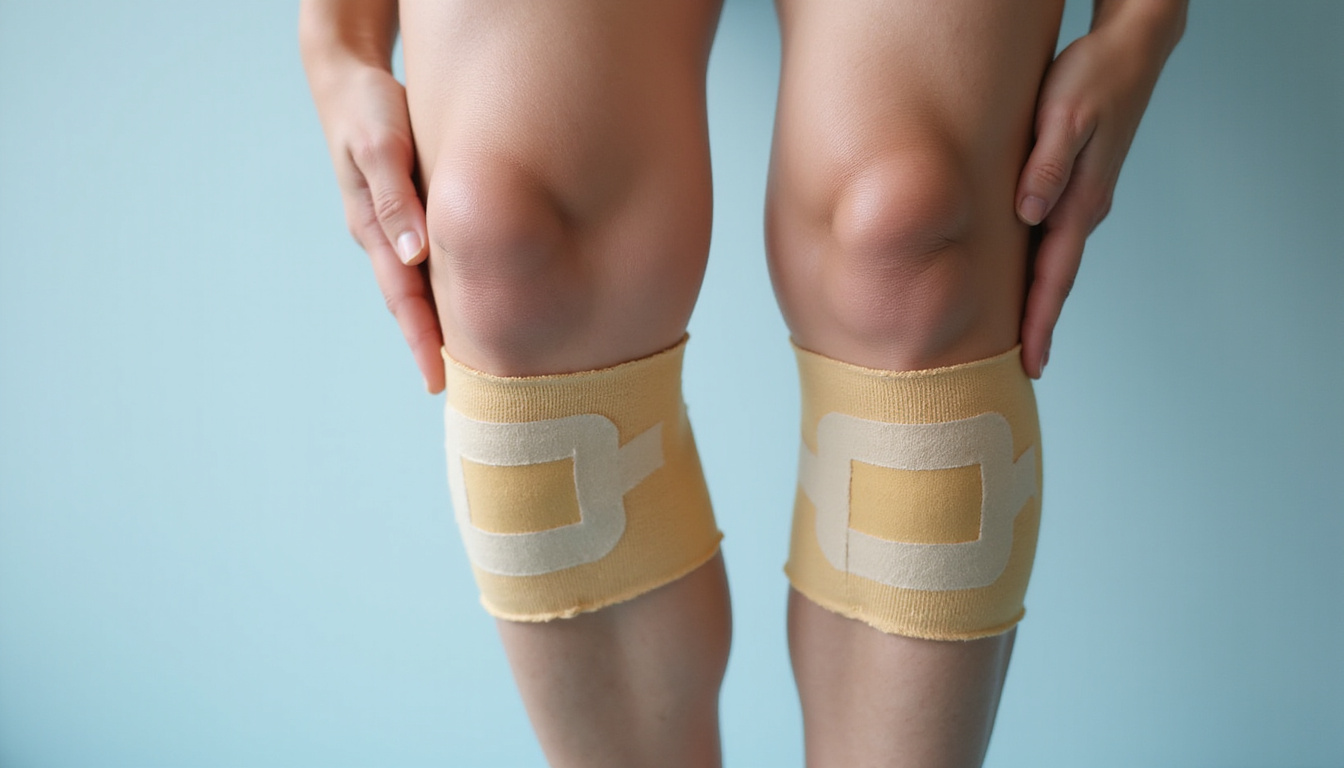
Braces or sleeves may give short-term relief, but they work best when combined with these strategies.
2. How can I improve knee strength for stairs without making matters worse?
Begin with low-impact and controlled moves such as supported sit-to-stands, low step-ups, straight-leg raises, and wall mini-squats.
Keep the movement small and pain-free.
Progress slowly and support your joints with a nutritious supplement like Regenerix Gold.
If your knee feels sharp, unstable, or gives way, speak with a healthcare provider before pushing further.
3. Are there natural ways to help with knee pain on stairs aside from medication?
Yes. Many manage knee discomfort by:
- Using better stair form and pacing
- Doing daily strengthening and stretching
- Managing body weight to ease the load on joints
- Using ice or heat as advised by a professional
- Supporting joints and muscles with nutrition, like a supplement such as Regenerix Gold
Always talk to a healthcare professional before changing medications or adding new supplements.
Take the Next Step: Give Your Knees a Chance to Catch Up with Your Life
If stairs now feel like a test you keep failing, you do not have to suffer until it gets worse.
You can change your story today by:
- Using the stair techniques in this guide every time you climb.
- Doing the simple strengthening and stretching moves most days.
Consistency matters more than intensity. - Supporting your joints and muscles from the inside with a nutrition-based supplement like Regenerix Gold.
This product has been trusted for over a decade and is recommended by doctors and physical therapists around the world.
When you do nothing, each year the steps feel steeper.
The rail becomes more necessary and worry grows about future medical costs or missing work.
Invest in your joint health now.
Daily movement and smart nutritional support can be far less expensive than later, more serious interventions.
Getting a bottle of Regenerix Gold and making it a part of your routine shows that you are proactive about keeping your knees and muscles ready for the stairs that life throws at you.
Health Note
Always consult a licensed medical doctor for your health issues.
Special Discount
If you prefer preventive nutrition to minimize expensive knee surgery and potentially addictive pharmaceuticals, Regenerix Gold is your savvy solution.
You qualify for a special discount.
Simply use the link below and a discount will automatically be applied during checkout.
Get Regenerix Gold => HERE


