
line dance stretches: Unlock Faster Footwork, Stronger Legs, Better Balance
by Zestora on Dec 23, 2025

If you live for the next wall, the next restart, and the next big line dance party, you know one thing: your body is your best partner.
Smart line dance stretches save you. They let you glide through a three‑hour social or stumble after the first high‑energy track. For American line dancers who drill choreography, travel to workshops, and pound the floor each weekend, joint and muscle care is not extra. It is how you dance longer, stronger, and with more balance.
Below is a clear, dance‑focused guide built for line dancers. These are people who count in 8s, mind floorcraft, and feel “improver” right in their calves.
Why Line Dancers Need Their Own Stretching Game Plan
Line dancing is not casual stepping. It is active movement.
It makes you turn, pivot, shift weight, and move sideways. It calls for rock steps and syncopated moves. It forces you to change direction at every wall.
Such work leaves your hips tight, your knees sore, your ankles stiff, and your low back aching before the last dance even rings out.
Targeted line dance stretches do more. They help you:
• Warm up core muscles before class or socials.
• Build stability for spins, pivots, and balance holds.
• Soothe tired joints and muscles after long events.
• Keep footwork smooth and quick as you grow from beginner to advanced.
The goal is simple. You do not stretch like a gymnast. You stretch like a smart line dancer who keeps moves smart and body safe.
Warm-Up vs Cool-Down: Don’t Mix Them Up
Many dancers enter the hall cold. They sink into long static stretches and then feel stiff on the floor.
Before you dance:
Use dynamic, movement‑based stretches. They wake up muscles and joints.
After you dance:
Hold slow, gentle stretches. They help muscles recover from floor work.
Think of it like this:
• Warm‑up = “Get ready to move”
• Cool‑down = “Let your body recover”
Each part connects closely with your overall dance stretches.
Pre-Dance Dynamic Line Dance Stretches (5–10 Minutes)
Do these stretches before class, socials, or workshops. Do them at the back of the hall while the DJ sound-checks.
1. Dynamic Calf & Ankle Prep (for shuffles, stomps, and heel switches)
Tight calves and stiff ankles weigh down fast footwork.
How to do it:
• Stand face‑to‑wall. Put your hands on the wall for light support.
• Step one foot back. Keep both feet pointing forward.
• Pulse gently forward and back. Feel the calf load and release.
• Roll the ankle gently: lift your back heel and trace small circles.
• Repeat 10–12 pulses and rolls on each side.
This set readies your ankles for stomps, swivels, and quick weight shifts.
2. Hip Circles for Turn Transitions
Smooth hip motion guides spins and pivots.
How to do it:
• Stand with feet a bit wider than hip‑width.
• Let your knees soften.
• Draw big, slow circles with your hips: front, side, back, side.
• Do 8 circles clockwise; then 8 circles counterclockwise.
Think of it as waking up your pivot. Your hips lead your spins.
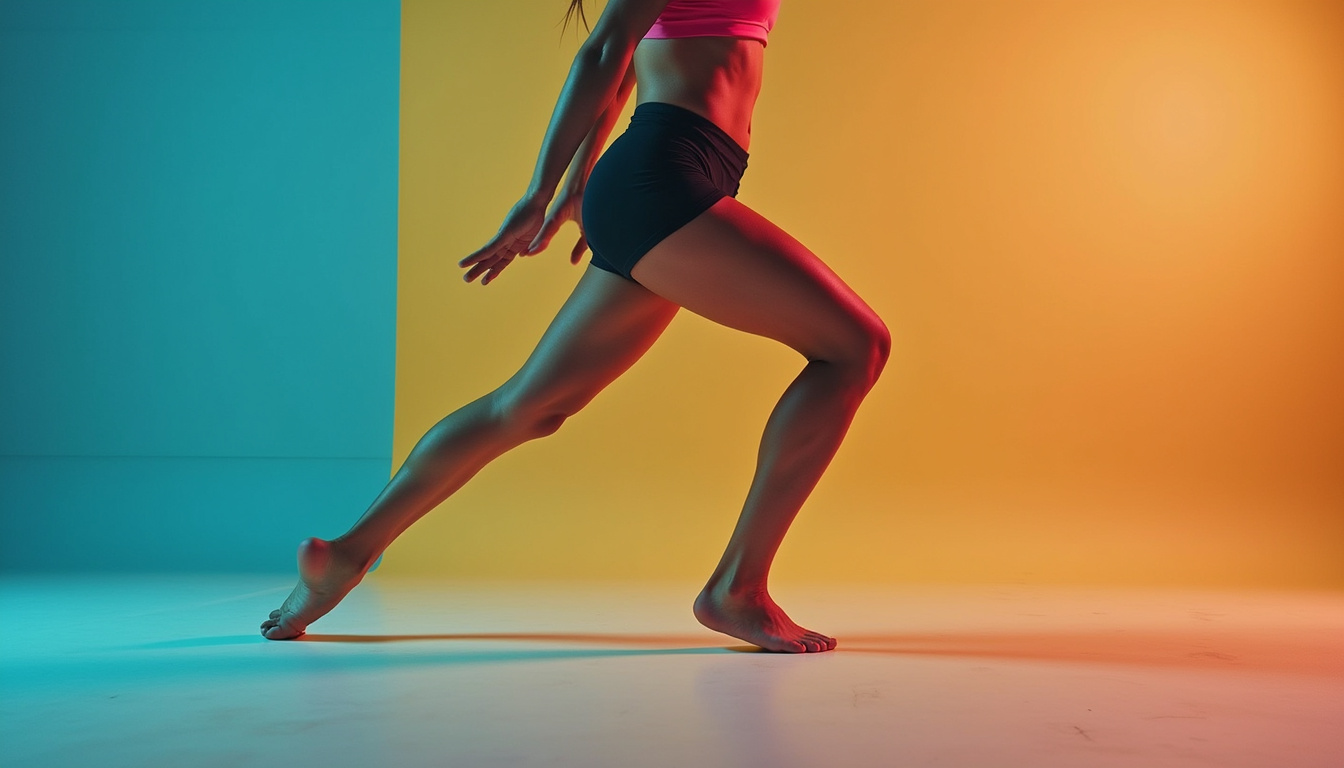
3. Walking Lunges with Reach (for stronger legs and better balance)
Your quads and glutes drive each sit, rock, and lunge.
How to do it:
• Step forward into a lunge. Keep the front knee over your ankle.
• Raise both arms overhead. Reach slightly back to open your hips.
• Push off the back foot. Move into the next lunge.
• Do 8–10 lunges in a steady pace.
Keep the pace slow and the form controlled.
4. Dynamic Hamstring Sweep (for crisp kicks and flicks)
Tight hamstrings can interrupt your kick.
How to do it:
• Place one heel just forward. Keep toes up and the front knee soft.
• Hinge at your hips. Sweep both hands down toward the front foot.
• Return slowly to standing. Switch feet, and repeat.
• Do 10–12 sweeps while alternating legs.
This move readies your hamstrings for kick‑ball‑changes and quick flicks.
5. Torso Rotations (for wall changes and upper‑body flow)
Your upper body leads turns and shows you the proper wall.
How to do it:
• Stand tall with feet under hips. Cross your arms at chest or hold them out at shoulder height.
• Rotate your torso to the right; then to the left. Let your hips stay mostly forward.
• Do 15–20 rotations lightly.
Your torso and hips connect closely during these rotations.
Post-Dance Cool-Down Line Dance Stretches (5–10 Minutes)
These stretches protect your joints and help your recovery. Do them after your last dance, when the lights come on.
1. Standing Quad Stretch (for long nights of shuffles and stomps)
How to do it:
• Stand near a wall or chair for balance.
• Bend one knee and lift the heel toward your seat.
• Hold your ankle. Gently pull the heel closer, keeping knees together.
• Tuck the pelvis a bit to stretch the front thigh.
• Hold for 20–30 seconds on each leg. Breathe slowly.
This stretch comforts your knees after repeated stepping.
2. Calf Stretch at the Wall
How to do it:
• Face a wall. Place hands at shoulder height.
• Step one foot back; keep the heel down and toes forward.
• Lean forward until you feel the stretch in the back calf.
• Hold for 20–30 seconds. Then bend the back knee for a lower‑calf stretch.
• Switch sides.
This stretch is great after fast footwork and heavy stomps.
3. Seated Hamstring Stretch (for kicks and sweeps)
How to do it:
• Sit on a chair or the stage edge.
• Extend one leg forward with the heel on the floor. The knee stays straight but soft.
• Hinge at your hips, and lean forward until you feel the back of your thigh stretch.
• Hold for 20–30 seconds on each side.
Keep a long back instead of rounding your spine.
4. Figure‑4 Hip Stretch (for hip comfort during long events)
Repeated side moves can tighten outer hips.
How to do it (seated):
• Sit tall on a chair.
• Cross one ankle over the opposite knee. Place the crossed ankle just above the knee joint.
• Press the lifted knee gently downward. Hinge forward until you feel the outer hip stretch.
• Hold for 20–30 seconds, then switch sides.
This stretch eases hips after long weekends of workshops and socials.
5. Gentle Lower‑Back Stretch
How to do it:
• Lie on your back on a mat or carpet.
• Bring both knees gently toward your chest. Hug them slowly.
• Rock side to side with ease.
• Hold for 30–45 seconds. Breathe deeply.
Move slowly. Do not force or bounce. Your lower back should feel relief.
Balance & Stability Drills for Line Dancers
Better balance clears up spins, gives stronger holds, and cuts down on missteps.
Try these drills twice a week after stretching:
-
Single‑Leg Stand (barefoot if safe)
• Stand on one leg; lift the other slightly off the floor.
• Hold for 20–30 seconds on each leg.
• Make it harder by turning your head or closing one eye. -
Heel‑to‑Toe Line Walk
• Walk in a straight line. Place each heel right in front of the toe.
• Focus on posture. Move slow and controlled.
• Do 2–3 passes across the room. -
Slow Motion Grapevine
• Do a basic grapevine. Move right and left at half speed.
• Shift weight slowly with deep control.
• Do 4–6 passes.
These drills build balance by keeping each step close and connected.
How Often Should Line Dancers Stretch?
If you dance often—in classes, socials, or workshops—make stretching part of your routine.
Try this plan:
• Before every session: Do 5–10 minutes of dynamic stretches.
• After every session: Do 5–10 minutes of cool‑down stretching.
• On non‑dance days: Do 2–3 short sessions that work hips, calves, hamstrings, and balance.
The key is consistency. Gentle, regular stretching boosts joint flexibility and muscle readiness, especially when you clock many floor hours.
Supporting Your Joints and Muscles Beyond Stretching
Stretching is strong support, but it is only one part of care.
Many American line dancers also do this:
• Stay well‑hydrated at socials and events.
• Wear shoes that support and fit the dance floor.
• Cross‑train with light strength work like squats, bridges, and core exercises.
• Consider evidence‑based supplements that help joint and muscle health.
Supplements do not replace training, rest, or medical advice. Some ingredients help joint comfort and mobility (source: National Institutes of Health – Office of Dietary Supplements).
Remember:
• In the U.S., dietary supplements are not for diagnosing, treating, curing, or preventing any disease.
• Talk with a healthcare professional before you add a new supplement. This is especially true if you take medications or have health issues.
Regenerix Gold: A Supplement for Line Dancers Who Want to Keep Dancing Hard, Smart, and Long
You travel for events. You stay for every last dance. You refuse to sit out unless the DJ stops the music. You invest time, travel, workshops, and gear. That is the life you choose. Regenerix Gold supports that life.
Regenerix Gold is a dietary supplement for adults. Its goal is to help healthy joints and muscles, so you can dance at full intensity. Whether you master advanced choreography, teach classes, or out‑dance younger partners at socials, Regenerix Gold joins your routine.
While Regenerix Gold is not a treatment for any medical condition and does not diagnose, cure, or prevent any disease, many dancers add it to their routine alongside:
• Smart warm‑ups and cool‑downs
• Consistent line dance stretches
• Balanced nutrition and hydration
• Adequate rest between heavy dance weekends
When dance is part of your identity, you protect your joints and muscles as a long‑term strategy. Medical bills, missed gigs, or lost workdays can cost a lot. Supporting your body helps both your dancing and your wallet.
Dancers choose Regenerix Gold because they feel like the “pros.” They care for their bodies as much as they learn new choreography. If you know the best floors, the best instructors, and the best events, it makes sense to choose the best care for your joints and muscles.
Regenerix Gold
FAQ: Line Dance Stretches and Joint Support
Q1: What are the best line dance stretches for beginners?
Begin with gentle calf stretches, hamstring stretches, hip circles, and a simple quad stretch after class. Add a short dynamic warm‑up—like walking lunges and ankle circles—before dancing. Start easy and build up as your body adapts.
Q2: How long should I hold line dancing stretches after a long social?
Hold most cool‑down stretches for about 20–30 seconds per muscle group, one to two times each. Breathe slowly and avoid bouncing. If you dance for several hours, give yourself 5–10 minutes before leaving the hall.
Q3: Can supplements help support my joints for line dancing?
Supplements like Regenerix Gold join your joint and muscle care routine. They are not medications and do not diagnose, treat, cure, or prevent disease. Combined with proper stretches, good footwear, and rest, a supplement can support your active life. Always consult a healthcare professional before adding any supplement.
Health Note
Always consult a licensed medical doctor for your health issues.
Special Discount
If you prefer preventive nutrition to minimize expensive knee surgery and potentially addictive pharmaceuticals, Regenerix Gold is your savvy solution.
You qualify for a special discount.
Simply use the link below and a discount will automatically be applied during checkout.
Get Regenerix Gold => HERE


