
trucker ergonomics: Proven cabin adjustments to banish chronic back pain
by Zestora on Dec 23, 2025

Out on the road, driving many miles, your back, neck, and shoulders soon speak up.
Trucker ergonomics sets up your cab so your body pays less for each mile.
If you feel stiff when you climb out, or wake up sore in the sleeper, or if you pop pain pills to finish your shift, adjusting your ergonomics helps a lot.
Below is a practical guide for truckers.
It shows how to set up your rig, move smarter, and support your joints and muscles.
All advice fits the real world.
Why trucker ergonomics matters more than you think
Driving a big rig is not simply sitting.
You face:
• A constant road vibration
• Long periods with few moves
• Twists to check mirrors
• Climbing in and out
• Yanks and cranks with freight
Over time, these add up.
They can cause:
• A stiff, aching lower back when you leave the cab
• Tight neck and shoulders after long days
• Numb hands or legs from poor circulation
• Sore hips and knees after long runs
Trucker ergonomics sets your cab as an “office on wheels.”
Your body stays strong and neutral.
This reduces strain on joints, muscles, and your spine.
Dialing in your seat: Your primary “tool” on the road
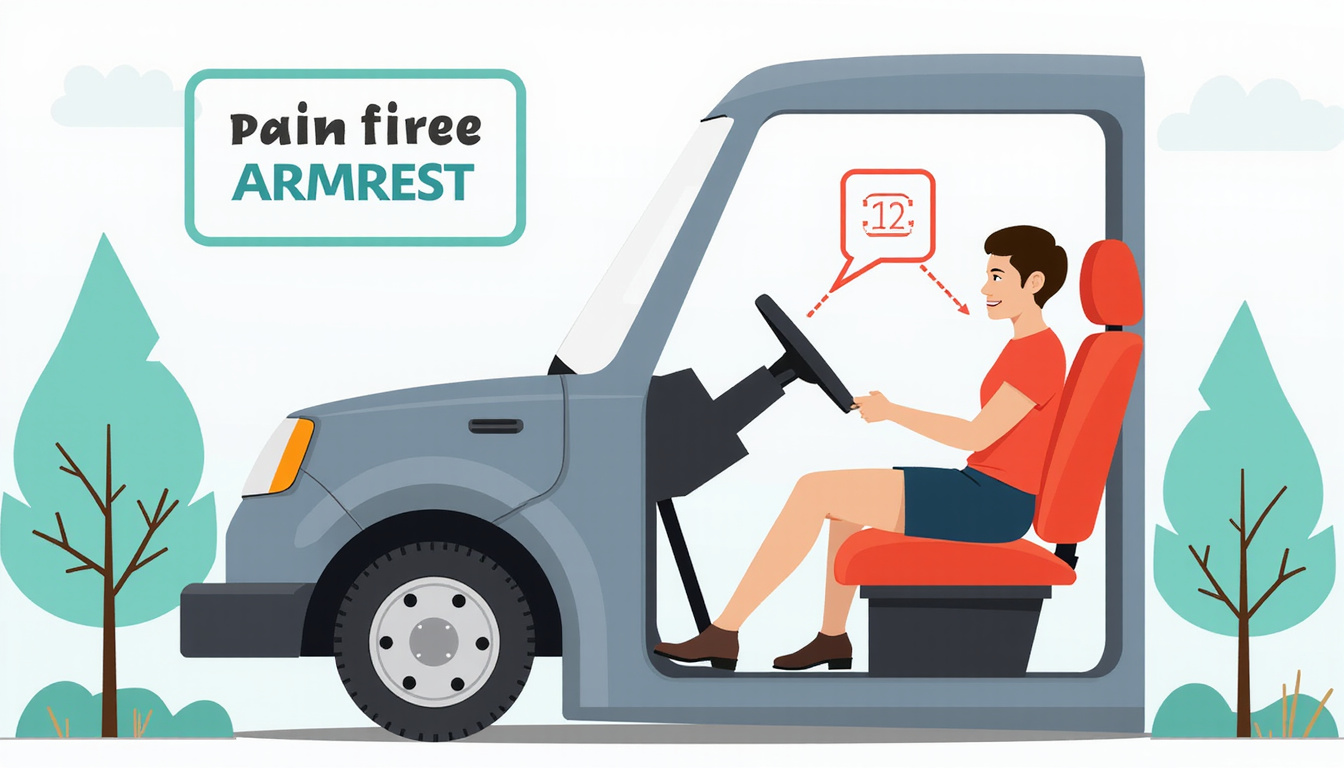
If you sit 8–11 hours a day, spend 5–10 minutes each shift to set up your seat.
Do it step by step.
1. Seat height: Start with your hips
• Keep your hips a bit higher than your knees.
This keeps your lower back in a natural curve.
• Let your feet rest well on the pedals.
They should not point too far down or force your calves to tighten.
• See the road and gauges without bending or stretching.
If your seat does not reach these points, add a firm cushion or wedge to adjust your angle.
2. Seat distance: No reaching for the pedals
• With the clutch or brake pressed, keep a small bend in your knee.
Do not lock it straight.
• Stay close to your seat back.
No need to slide forward just to reach a pedal.
If your back slides away to work the clutch, move the seat up.
Think “hip glued to the backrest.”
3. Backrest angle and lumbar support
• Set your backrest to let your upper body lean slightly back—a 100–110° angle.
It is not upright like a board.
• Let your lower back rest fully on the seat with its small natural curve.
• Adjust built‑in lumbar support so it hugs the curve of your lower back.
No built‑in support? Roll a small towel or use a slim lumbar pillow at your belt line.
Wheel, mirrors & controls: Stop driving in a “reach”
When your seat is right, adjust the steering wheel, mirrors, and other controls.
Many aches come from small, constant reaching.
Steering wheel position
• Hold the wheel with elbows in a relaxed bend.
They should not lock or press into your ribs.
• Keep shoulders down and back.
They should not lift toward your ears.
• Rest your shoulders against the seat while you turn.
If you lean forward, tilt or move the wheel closer instead of leaning your whole upper body.
Mirror setup to protect your neck
• Adjust mirrors so you see what you need with a small head move.
• Set important mirrors (driver side, hood mirrors) for a quick, clear glance.
• If you crane your neck to the right often, change the passenger mirror angle or add a wide‑angle mirror if allowed.
The right mirror angles reduce neck and upper‑back strain.
Controls and frequently used items
Think of what you grab every 5–15 minutes:
• The shifter
• Your ELD device
• The radio or CB
• HVAC controls
• Your drink bottle
Place these items within a short, relaxed arm’s reach.
This keeps you from twisting or leaning forward.
Mount your ELD and phone in line with your natural view—not down near your knees or far to the side.
Smart habits in the seat: Micro‑moves that protect your back
Even with perfect ergonomics, staying still hurts.
Use small “micro‑moves” to keep your joints and muscles happy.
Use breaks as maintenance stops for your body
At every stop, when safe, try to:
• Walk a short lap around your truck
• Roll your shoulders and neck gently
• Stretch your hips by placing one foot on a step and leaning forward
• Stand tall and reach your hands overhead slowly
Even 3–5 minutes of movement a couple of times in a shift makes a difference.
In‑seat micro‑moves while rolling
When safe, try these simple moves:
• Gently tilt your pelvis forward and backward to move your lower back
• Squeeze your shoulder blades together for a few seconds
• Press your lower back into the seat, then relax
• Change your sitting position every 20–30 minutes
These small resets help you avoid staying frozen in one posture.
In and out of the cab: Climbing smart, not just tough
Many truckers feel pain not only when driving, but also when they jump down or deal with landing gear.
Three points of contact—every time
• Use three points of contact each time.
That means two hands and one foot or two feet and one hand.
• Avoid jumping off the steps.
Jumping shocks your knees, hips, and spine.
• Face the truck when climbing down.
Climb like a ladder, not by spinning to the side.
Bracing for pulls and cranks
When you crank dollies, pull fifth‑wheel pins, or tug on hoses, do this:
• Plant your feet wide for balance.
• Keep the object close to your body.
Do not hold it out at full arm’s length.
• Turn using your feet, not by twisting your waist with planted feet.
Move as a unit.
Let your feet, hips, and shoulders turn together.
This saves your lower back.
Bunk setup: Recover while you sleep
Your sleeper is your recovery zone.
A bad mattress or pillow can make back pain last longer.
Mattress and topper choices
If you wake up stiff or sore, try to:
• Choose a medium‑firm mattress.
Too soft makes you sink; too hard creates pressure points.
• Add a quality foam or latex topper to boost a weak factory mattress.
• Sleep on your back or side instead of flat on your stomach.
Sleeping on your stomach stresses your neck and lower back.
Pillow height and support
• Use a pillow that keeps your neck in line with your spine.
Do not let it bend too much up or down.
• If you sleep on your side, use a thicker pillow to fill the gap between your shoulder and head.
• If your lower back bothers you, place a small pillow under your knees when you lie on your back.
Small tweaks in your bunk help you wake up ready to move again.
Supporting your joints and muscles from the inside
A smart cab and good movement are the pillars of trucker ergonomics.
Many drivers also add support with nutrition and quality supplements.
These supplements do not replace a proper cab setup or regular movement.
Still, many truckers choose products that:
• Support joint comfort and flexibility
• Help maintain healthy cartilage and tissue
• Offer antioxidants to buffer physical stress
• Are easy to take on the road
Remember: In America, dietary supplements are not meant to diagnose, treat, cure, or prevent any disease.
If pain or symptoms persist, talk with a health professional.
Simple daily checklist for better trucker ergonomics
Here is a quick checklist to use at the start of each shift:
1. Seat height – Keep hips slightly above knees, feet flat, and pedals in easy reach.
2. Seat distance – With pedals pressed, keep knees slightly bent, and stay close to the backrest.
3. Backrest & lumbar – Use a slight recline, support your lower back, and avoid any gap.
4. Steering wheel – Let your elbows relax and your shoulders stay down against the seat.
5. Mirrors – Adjust so you need only small head moves to see your hot spots.
6. Controls – Keep the shifter, ELD, radio, and drink within easy, relaxed reach.
7. Break plan – Plan when and where you will walk and stretch.
8. Sleeper check – Ensure your mattress, topper, and pillow let you recover well.
Tape this checklist to your dash until it becomes second nature.
FAQ: trucker ergonomics and back comfort on the road
Q1: What is trucker ergonomics and why does it matter?
Trucker ergonomics sets up your cab, seat, steering wheel, mirrors, and habits to keep your body in a strong, neutral position.
It helps reduce everyday aches and stiffness.
It makes it easier to keep logging miles year after year.
Q2: How can I improve truck driver posture without buying a new seat?
Even with the seat you have, you can improve posture by:
• Lifting your hips slightly above your knees (using a firm cushion if needed),
• Bringing the seat closer to the pedals so you do not reach,
• Adding a small lumbar roll at your belt line, and
• Adjusting the steering wheel and mirrors so you can sit back instead of leaning forward.
Q3: Are there tools or accessories that help with semi truck ergonomics?
Yes.
Many drivers use:
• Firm seat cushions or wedges,
• Portable lumbar supports,
• Anti‑fatigue floor mats for outside the cab, and
• Upgraded mattresses or toppers for the sleeper.
Some also add high‑quality dietary supplements for joint and muscle health.
These supplements support healthy cab setup and habits rather than replace them.
Why Regenerix Gold fits the smart trucker’s toolkit
You invest in quality fuel, good tires, and preventive maintenance.
Your body is your number‑one asset on the road.
When back, joint, or muscle pain takes you out of the driver’s seat, lost loads and medical bills hurt more than a blown turbo.
Regenerix Gold is a dietary supplement made for drivers who want healthy joints and muscles.
It is for those who:
• Stay ahead of joint and muscle wear‑and‑tear from long hours,
• Want to pass physicals and protect their livelihood, and
• Choose to be proactive rather than wait for pain to limit them.
Choosing a quality supplement like Regenerix Gold does not make you weak.
It shows you respect your body as much as your rig.
While Regenerix Gold is not meant to diagnose, treat, cure, or prevent any disease, it can be part of a plan that includes good ergonomics, movement breaks, and solid sleep—helping you live and drive well, mile after mile.
Regenerix Gold
Health Note
Always consult a licensed medical doctor for your health issues.
Special Discount
If you prefer preventive nutrition to minimize expensive knee surgery and potentially addictive pharmaceuticals, Regenerix Gold is your savvy solution.
You qualify for a special discount.
Simply use the link below and a discount will automatically be applied during checkout.
Get Regenerix Gold => HERE


