

If you feel ankle pain after a long night of line dancing, you are not alone. You dance with two-steps, grapevines, and pivots. Your ankles get stressed, and the pain grows closer with each move. You may be new or a seasoned leader. Your ankles warn you by twinging and aching. With smart shifts in your habits and a few joint-support moves, you can ease the pain and keep moving with the music.
This guide speaks to American line dancers. You love the floor, yet you notice musculoskeletal signs and ankle discomfort.
────────────────────────────
Why line dancing challenges your ankles
Line dancing seems smooth, but your ankles work hard. Each move connects tightly with another, and stress builds fast.
Common reasons for ankle pain:
• Repetitive pivots and turns
Each sharp turn sends rotation stress through your ankle.
• Side-to-side shuffles
Grapevines and sailor steps test your ankle’s side strength.
• Stop-and-go impacts
Quick stomps and kick-ball changes hit your joints on hard floors.
• Long sets with little rest
Back-to-back dances build up joint tension.
• A mismatch of floor and shoes
Dancing on concrete in worn boots strains your ankles.
All these factors lead to pain that feels like:
• Soreness on the ankle’s inner or outer side
• Tightness in the calf or Achilles after dancing
• A heavy or unstable ankle during fast turns
• Mild swelling after long nights on the floor
Your body uses these signs as a signal. It tells you that it is time to dance smarter and recover better.
────────────────────────────
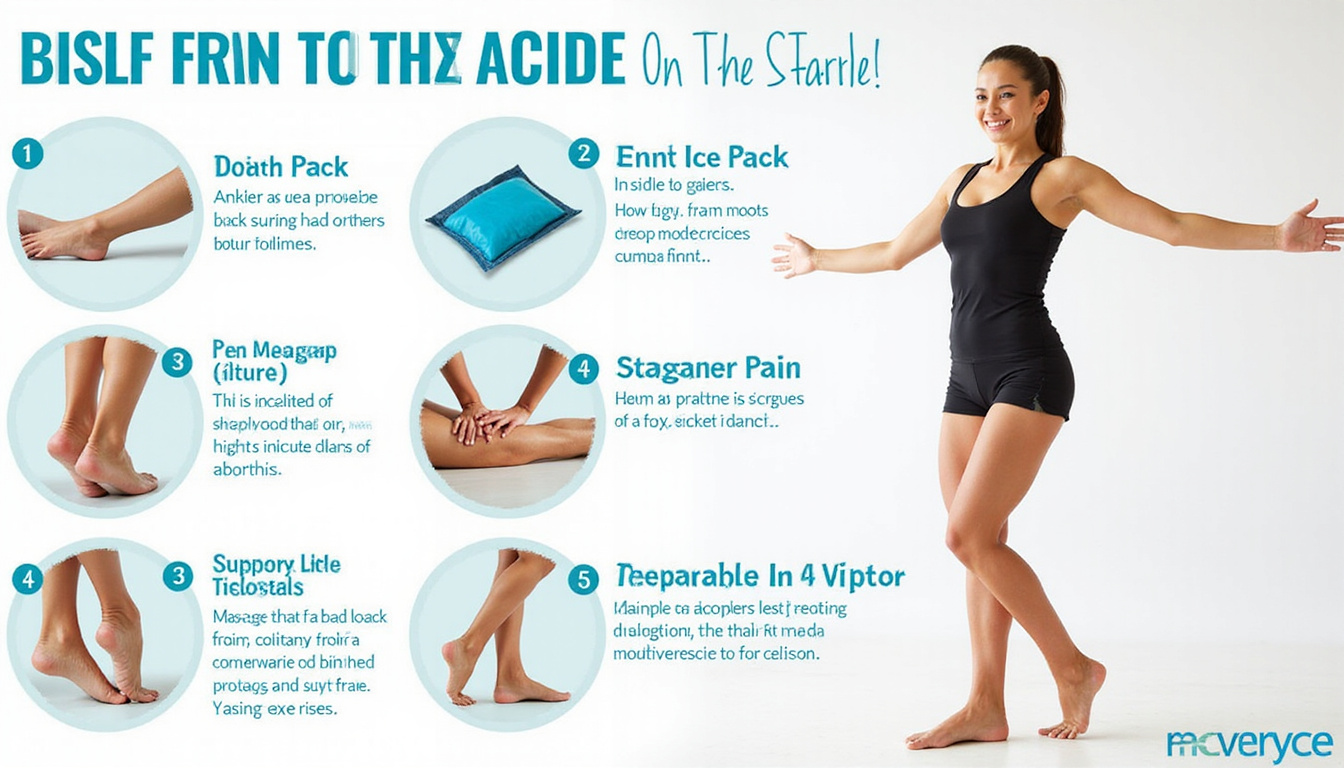
Quick relief after a night on the floor
When the DJ ends the last song and your ankles throb, relief is a must. Use these dance-specific moves to calm the pain:
1. Cool down like a pro
Many dancers rush to the car after the final chorus. Instead, take 5–10 minutes to ease off:
• Walk gentle laps around the floor.
• Turn your ankles slowly in circles.
• Point and flex your toes comfortably.
• Stretch your calves at the wall with bent or straight knees.
• Gently roll your foot on a ball or water bottle.
These steps shift your body from dance mode and ease morning stiffness.
2. Use temperature wisely
Choose what helps your ankle the best:
• A cool pack wrapped in cloth for 10–15 minutes helps when the ankle feels puffy or hot.
• A warm compress or soak later helps relax tight muscles.
Do not put ice or heat on bare skin or use them too long.
3. Elevate and rest
If your ankles feel heavy after hours on the floor:
• Prop your feet on a pillow or couch.
• Raise your ankles above heart level for a short while.
• Change your sitting position often.
A bit of gentle rest can do a lot without stopping dance life.
────────────────────────────
Smart prevention: keep your ankles dance-ready
Prevent pain from becoming a part of your night. Think of these steps as cross-training for the honky-tonk.
Choose dance-friendly footwear
Your boots are like links in a chain that supports you through every step. Look for shoes that:
• Fit snugly around the heel and midfoot to prevent slipping.
• Provide moderate cushioning for shock absorption.
• Have a smooth sole that lets you pivot without harsh twists.
• Offer a reasonable heel height to balance support and comfort.
If you love your current boots, consider adding a low-profile support insole. This helps without crowding your toes.
Warm up properly before dancing
Jumping into a fast line is like starting a car in winter. A quick 5-minute warmup can prepare your body:
• March in place, then move side-to-side.
• Do gentle ankle circles in both directions.
• Lift your heels slowly and tap your toes lightly.
• Try a few practice steps at a slow speed.
This routine readies your joints and muscles for the night ahead.
Strengthen ankle-support muscles
Strong muscles work like nearby guards for your ankle joints. Try this mini routine a few times a week:
-
Single-leg balance
Stand on one leg for 30 seconds, then switch. Add slight head turns to challenge yourself. -
Calf raises
Rise slowly on your toes, pause, and lower slowly. Aim for 2–3 sets of 10–15 reps. -
Resistance work with a band
Loop a band around your forefoot. Pull your foot inward and outward and then point and flex it. Do this with control. -
Mini side lunges
Step to the side, bend your knee slightly, and push back to center. Make sure your ankle stays aligned.
A few minutes of strength work gives your ankles better stability on the floor.
────────────────────────────
Technique tweaks that protect your ankles
How you dance makes a big difference in your joint health.
Soften your stomps and drops
Keep your style and protect your feet by:
• Landing with your toes then heel or bending your knee softly.
• Emphasizing hip and upper body movement to reduce impact on the foot.
Pivot from the hips
Avoid forcing pivots solely with your ankle. Instead:
• Start a turn with your hips and core muscles.
• Let both feet lift and replant gently.
• Take a small resetting step on slippery floors.
This method reduces stress on your ankle and makes your moves look smooth.
Respect your limits
Your body tells you when to take a break. Try:
• Sitting out one dance every few songs if your ankles hurt.
• Alternating between high-impact moves and softer, gliding steps.
• Choosing footgear wisely across the night for more comfort.
A smart pace keeps you dancing for years.
────────────────────────────
How joint-support supplements may help
Some dancers also use joint-support supplements. These may help with:
• Everyday joint comfort
• Cartilage and connective tissue support
• Muscle recovery after heavy dancing
The National Institutes of Health notes that some ingredients support joint function if paired with a healthy lifestyle and proper dance habits (source: NIH Office of Dietary Supplements).
Keep in mind:
• Supplements are not drugs and do not cure diseases.
• Results vary from person to person.
• They work best with sound training, good technique, and proper recovery.
• Consult your healthcare provider before using any new supplement.
When choosing a supplement, look for:
• Clear labels and clinically studied ingredients
• Manufacturing standards that ensure safety
• Brands that focus on supporting joint and muscle health without making disease claims
────────────────────────────
FAQ: Line Dancing Ankle Pain and Joint Support
Q1: What can I do about ankle pain during long socials?
A1: Pace your dancing. Warm up, choose supportive boots, and slip in quick breaks for ankle circles and calf stretches. Consult a pro for more support with training and nutrition if needed.
Q2: How do I prevent ankle pain on hard floors?
A2: Use boots with shock absorption, soften your stomps, and pivot from your hips instead of twisting your ankle. Warm up before dancing and cool down after.
Q3: Are supplements helpful for ankle and foot issues?
A3: Supplements cannot fix poor technique or overuse. They work best alongside quality training, recovery habits, and proper movement. Always choose reputable products and discuss them with your healthcare provider.
For more answers about joint support, you may watch this brief FAQ video:
https://youtu.be/mGrH5UWFxUs?si=X9bScbG6dvejGkZf
────────────────────────────
Why many serious line dancers choose Regenerix Gold
If you know each restart and tag on the dance floor, you also know these facts:
• Missing dances because of joint pain cuts into the life you love.
• Time off due to injury means lost work time.
• Chronic joint issues can lead to high medical expenses.
That is why many dancers use every smart tool available: proper shoes, suitable floors, strength training, and sometimes a high-quality joint-support supplement.
Regenerix Gold is for active dancers who want to:
• Support comfortable and healthy joints and muscles
• Stay active so they can enjoy every dance
• Be proactive in their joint care
This supplement is not a cure or a magic bullet. It does not diagnose, treat, or prevent disease. Instead, it fits into a broader strategy for dancers who wish to be ready on the floor every night.
If your dancing matters and you want to protect your long-term well-being, speak with your healthcare provider about adding Regenerix Gold to your routine. This way, while others worry about tomorrow’s pain, you will own the floor at every “5-6-7-8.”
https://youtu.be/mGrH5UWFxUs?si=X9bScbG6dvejGkZf
Health Note
Always consult a licensed medical doctor for your health issues.
Special Discount
If you prefer preventive nutrition to minimize expensive knee surgery and potentially addictive pharmaceuticals, Regenerix Gold is your savvy solution.
You qualify for a special discount.
Simply use the link below and a discount will automatically be applied during checkout.
Get Regenerix Gold => HERE


