
Pilates for chronic pain: Gentle routines that reduce daily discomfort
by Zestora on Dec 23, 2025

For many studio regulars and home practitioners,
Pilates for chronic pain becomes more than cross-training: it is a way to survive.
When your back flares after roll-downs, your hips protest at each lunge, or your neck seizes during Hundred,
you see that “no pain, no gain” does not fit a Pilates class.
You need a smart, gentle approach that respects your nervous system, calms irritated tissues,
and lets you move without worsening pain the next day.
This guide speaks to Pilates practitioners in America.
You love your practice, yet you face ongoing musculoskeletal discomfort—whether in your back, hips, shoulders, knees, or almost everywhere.
You want to train safely and sustainably.
Why Pilates can help with ongoing musculoskeletal discomfort
When you approach Pilates thoughtfully for chronic pain, it shows strength in these ways:
- Neutral alignment and precision:
You stack your head, ribs, and pelvis; keep your knees tracking over your second toes; and balance weight on the feet’s tripod.
This close connection reduces extra strain on irritated joints and soft tissues. - Deep stabilizer activation:
You engage the transverse abdominis, multifidi, pelvic floor, and scapular stabilizers.
This improves control segment by segment and stops overuse of large muscle bracing. - Controlled loading and tension modulation:
You use springs, body weight, and props to set the load and range of motion.
This prevents you from “muscling through” pain when your body is already on alert. - Breath-led movement:
You use lateral and posterior-lateral breathing patterns to ease tension in the neck, jaw, low back, and hip flexors.
This simple pairing helps reduce common hot spots for daily discomfort.
Remember, Pilates does not treat medical conditions and cannot replace professional care.
Yet it forms a strong movement foundation that supports joint comfort, mobility, and strength when used with a qualified health provider.
Key principles when using Pilates for chronic pain
When Pilates helps you manage ongoing pain, the usual rules change.
Performance becomes secondary to self-regulation.
1. Prioritize nervous system safety over intensity
Your goal is not to force your core to burn.
Your goal is to show your system that movement is safe.
• Avoid sudden or ballistic moves.
• Choose slower tempos and reduce reps.
• Use long and easy exhales to lower tension.
If pain increases during or after class, see that as information.
It tells you to reduce load, range of motion, or exercise complexity.
2. Train in the “Goldilocks” zone
Think of three zones:
• Too easy: Nothing happens—you feel no fatigue or challenge.
• Too much: You brace, hold your breath, and pain grows.
• Just right: You feel engaged but safe; any discomfort stays mild, does not become sharp or linger.
Stay in the “just right” zone.
Respect your edge without pushing past it.
3. Replace “no pain, no gain” with “no flare, more gain”
In pain-aware Pilates:
• Soreness after a session is acceptable if it fades within 24 hours and is not the same pain as before.
• Increase difficulty gradually by changing one variable at a time (springs, reps, range, or speed—but not all together).
• Track post-class symptoms using a simple log so you and your instructor can spot patterns.
Foundational alignment tweaks that protect sensitive joints
When you use Pilates for chronic pain, small changes in technique make a big difference.
Neutral spine that actually feels neutral
If “neutral spine” feels forced and your back hurts, then it is not truly neutral for you.
Try these steps instead:
• Lie on your back (supine) and let your pelvis be heavy while allowing your ribs to relax downward.
• Accept a small, comfortable natural curve in your lower back.
• Do not force the ribs down or press your lumbar spine flat.
Neutral should feel natural and sustainable.
Head, neck, and shoulder friendliness
When you feel chronic discomfort in the neck or shoulders, chasing a big range or perfect C-curve is risky.
• Keep your head down during abdominal work if lifting it strains your neck.
• Use a towel, ball, or small cushion behind your head if you tend toward a forward head posture.
• Think of heavy shoulder blades sliding gently into your back pockets instead of forcing the shoulders down.
Hip and knee comfort cues
For sensitive hips, knees, or SI joints:
• Narrow your stance to hip-width or even closer.
• Stay within small hip flexion ranges if deep flexion causes discomfort.
• Use a small pillow or ball between your knees during bridging or side-lying moves for better alignment.
A gentle mat sequence: Pilates for chronic pain, 20–25 minutes
Use this sequence as a template that you can adjust when your body flares.
Work on a comfortable mat.
Stop or change any move that worsens your symptoms.
1. Breath and body scan (2–3 minutes)
• Lie on your back with your knees bent and feet flat on the floor.
• Place your hands on your lower ribs.
• Inhale so your breath expands your sides and back; exhale softly through pursed lips.
• Notice where your head, ribs, pelvis, and feet make contact with the floor.
There is no need to change anything yet.
2. Pelvic clocks → small bridges (4–5 minutes)
Pelvic clocks:
• Imagine your pelvis as a clock face.
• Gently rock from the 12 (pubic bone) to the 6 (tailbone), then from 3 to 9 (side to side).
• Keep the movement small and pain-free.
This motion lubricates your joints rather than serving as a workout.
Small bridges:
• Exhale and gently engage your low abdominals.
• Lift your pelvis only until your rib cage still touches the mat.
• Inhale at the top, then exhale as you roll down slowly, vertebra by vertebra.
Perform 6–8 repetitions, keeping within a comfortable range.
3. Marching in neutral (3–4 minutes)
• Lie on your back in a neutral pelvic position.
• On an exhale, lift one leg to a tabletop position while keeping your pelvis steady.
• Inhale as you lower the leg with control and alternate sides.
• If comfortable, try alternating toe taps from the tabletop.
Perform 8–12 controlled repetitions.
This exercise strengthens deep stabilizers without forcing excessive flexion.
4. Side-lying hip series (5–6 minutes)
• Lie on your side with your head supported, hips stacked, and knees slightly forward.
• Keep a small open space under your waist so that it does not collapse.
Choose 2–3 exercises from these options:
• Clamshells: Use a small range of motion and focus on starting with the glutes.
• Leg lifts: Lift the top leg so that it stays in line with your hip; keep the toes slightly down and heel raised a bit.
• Small circles: Move in a pain-free circular pattern.
Perform 2 sets of 8–10 repetitions on one side and then switch.
5. Quadruped stability (4–5 minutes)
On your hands and knees:
• Place your wrists under your shoulders and knees under your hips; pad your knees if needed.
• Lightly engage your lower abdominals to support your lower back.
Try these progressions:
- Single arm reach: Slide one hand forward along the mat, then return it. Alternate sides.
- Single leg reach: Slide one leg back with the toe on the floor; if you feel steady, lift it slightly off the floor.
- Opposite arm/leg reach ("bird dog"): Only perform this if the previous moves feel very comfortable.
Aim for 6–8 slow repetitions on each side, while staying stable and pain-free.
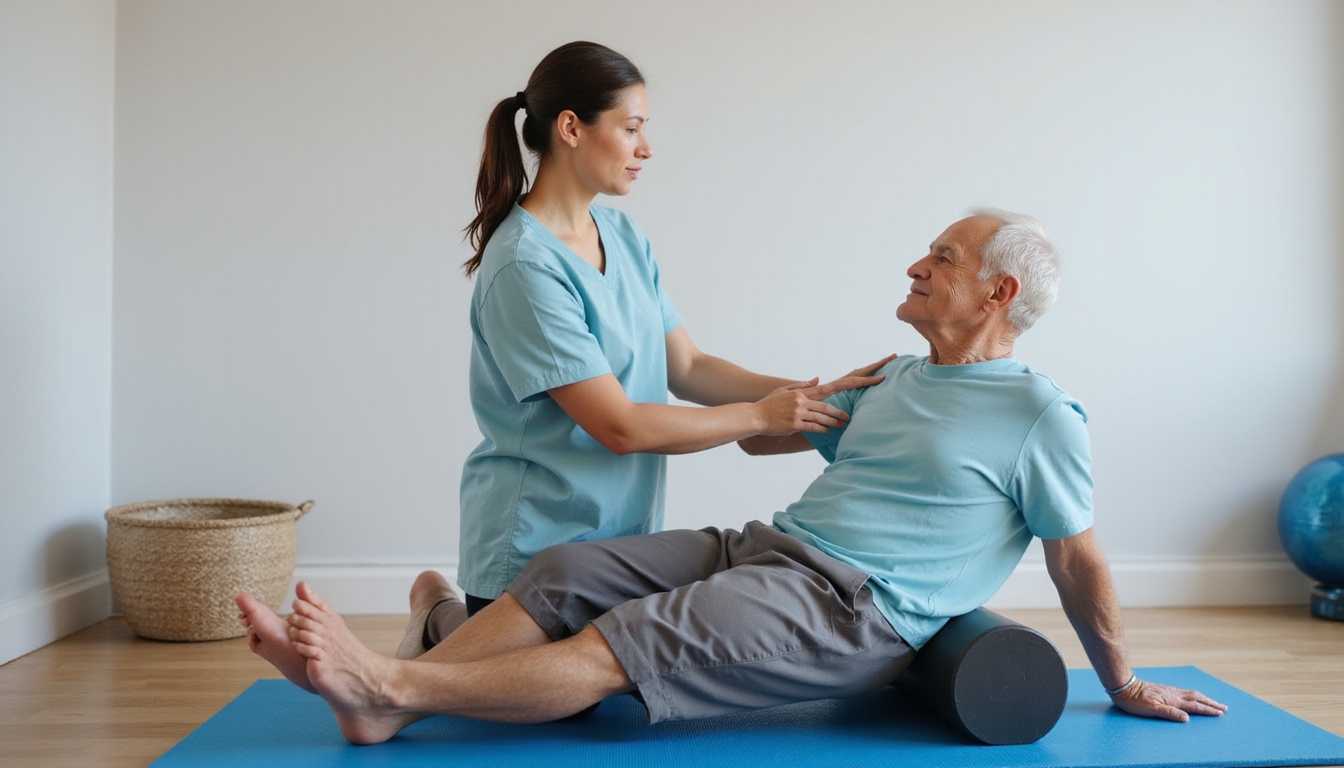
6. Supported spine stretch (3–4 minutes)
• Sit with your knees bent or use a block if your hamstrings pull on your back.
• Place your hands on your thighs.
• Inhale and sit tall; exhale, let your chin nudge gently, and lengthen the back of your neck.
• Imagine your rib cage rolling back off a wall to form a soft C-curve without collapsing.
• Inhale to sit up again.
Perform 6–8 gentle repetitions.
Focus on easing and lengthening rather than how far you can reach.
7. Constructive rest / closing scan (2–3 minutes)
• Lie on your back; keep your legs bent or support them on a chair.
• Breathe deeply into the back of your ribs.
• Feel for areas that now feel more open and grounded.
• End with 3–5 slow and comfortable breaths.
Common Pilates moves to modify when you’re pain-sensitive
You do not need to abandon your favorite Pilates moves when you work with chronic pain.
You simply need smarter dials and levers.
Consider modifying these moves:
• Hundred: Do it with your head down, legs in tabletop or feet on the floor, and reduced breath counts.
• Roll-up: Replace with a half roll-down, use support, or keep your legs bent and limit your range.
• Teaser: Switch to a bent-knee preparation or supine leg lowers with a neutral spine and head down.
• Swan/extension work: Use smaller ranges, add more support under the ribs, and avoid forcing large backbends.
• Side bends/twists: Focus on growing tall and use a small twist range so you do not pinch or jam a joint.
A skilled instructor can offer “pain-aware options” without making you feel out of place.
How to talk to your Pilates instructor about your discomfort
Many practitioners hold back from sharing their issues because they fear being “that client.”
Being open with your instructor is the best way to stay safe.
Tell your instructor:
• Which areas hurt (for example, “my low back cannot flex past 90 degrees”).
• Which moves or positions tend to trigger pain (such as long periods of kneeling, full roll-ups, or loaded rotations).
• Your current goals: keeping flare-ups in check, maintaining mobility for work, continuing to teach, or staying active with family responsibilities.
Ask for:
• Clear advice like “if this feels uncomfortable, try this instead.”
• Permission to skip or dial down an exercise without needing extra explanation.
• Occasional technique check-ins on moves like bridging, planking, or leg work.
A good Pilates teacher will welcome this openness; it helps them keep you safe and moving forward.
Supporting your Pilates practice with lifestyle and smart supplementation
Managing musculoskeletal discomfort means caring for more than just your Pilates class.
It is about a full recovery ecosystem:
• Quality sleep that truly restores you.
• Staying well-hydrated and eating nutrient-dense meals.
• Incorporating gentle walks or cycling between sessions.
• Adding thoughtful supplements to support joint and muscle health.
Some adults choose targeted supplements with ingredients that support healthy joints, mobility, and muscle function.
In the U.S., dietary supplements are regulated differently from medications.
They are meant to support the normal structure and function of the body, not to diagnose or cure diseases (source: FDA).
If you think about adding a joint or muscle-support supplement to your Pilates-for-pain toolkit, look for products that:
• Clearly list all ingredients and dosages.
• Do not claim to treat or cure diseases.
• Are produced by companies that focus on quality control and testing.
• Fit well with your healthcare professional’s advice, especially if you are pregnant, nursing, on medications, or have other conditions.
FAQ: Pilates for ongoing discomfort and joint support
Q1: Is Pilates good for chronic back and hip pain?
Pilates can help when you modify classes to protect sensitive areas.
Focusing on a neutral spine, deep core support, glute activation, and careful ranges of motion can ease strain.
Work with a teacher who knows pain-aware progressions, and check with a healthcare professional if your pain is new, severe, or changing.
Q2: How often should I do Pilates for chronic pain relief?
For many, 2–4 gentle sessions per week work best.
This mix may include studio classes, private sessions, and short home routines.
The key is to stay consistent without triggering flare-ups.
If pain spikes after every session, reduce the intensity, allow more rest days, or simplify the moves.
Q3: Can I combine Pilates for chronic joint pain with supplements?
Many practitioners pair Pilates with joint-support supplements to help with comfort, flexibility, and muscle recovery.
Always discuss new supplements with your healthcare professional to ensure they are right for you and will not interact with any medications.
Remember, supplements support normal body function and should not replace medical care.
Why savvy Pilates practitioners look to Regenerix Gold for support
If you read this far,
you are not just a “drop-in once a month” member.
You think ahead and want to keep moving without costly downtime, extra imaging, or missed teaching days when your body “checks out” again.
That is the idea behind Regenerix Gold—a premium supplement made for adults who want to support healthy joints and muscles.
It helps you keep moving, training, teaching, and living on your terms.
Though it does not diagnose, treat, cure, or prevent disease,
Regenerix Gold works with your movement-focused lifestyle.
It supports the building blocks that let you enjoy Pilates without interruptions.
Instead of waiting for discomfort to force costly interventions,
choose a proactive approach that matches your high standards:
smart Pilates programming, careful recovery, and a joint-and-muscle-support supplement trusted by those who view their bodies as durable, professional-grade equipment rather than disposable hardware.
If you invest early and wisely, rather than overpaying later in missed workdays, medical bills, or skipped classes,
consider adding Regenerix Gold to your daily routine alongside your mat, reformer, and trusted studio.
Regenerix Gold
Health Note
Always consult a licensed medical doctor for your health issues.
Special Discount
If you prefer preventive nutrition to minimize expensive knee surgery and potentially addictive pharmaceuticals, Regenerix Gold is your savvy solution.
You qualify for a special discount.
Simply use the link below and a discount will automatically be applied during checkout.
Get Regenerix Gold => HERE


