

Logging your weekly miles is hard enough when you must track each twinge in your knees. If you run or jog in the U.S. and you feel soreness, stiffness, or that “uh-oh” feeling on descents, you may have thought about a knee brace. You want a brace that helps your run while you avoid feeling like you strapped a plastic bucket to your leg.
This guide shows you how to choose a knee brace. It matches your training, body, and goals so you can chase PRs and enjoy every run.
─────────────────────────────
Why Runners Reach for a Knee Brace
Runners and joggers seek a knee brace when:
- Your knees feel cranky after hill repeats or long runs
- You note discomfort around or behind the kneecap
- You raise weekly mileage or return after a break
- You feel “wobbly” or unstable when you corner or run on uneven terrain
A well-chosen brace does not fix your knee by magic. Instead, it can:
• Make you feel secure and supported
• Remind you to keep good form
• Improve comfort during and after runs
• Support your knee as you build strength and mobility
See a knee brace as a training tool instead of a magic cure. It works with strength work, mobility, smart programming, good shoes, and recovery.
─────────────────────────────
The Main Types of Knee Brace Runners Use
Knowing the main kinds makes choice easier. As runners, we care about comfort, weight, and breathability along with support.
1. Compression Sleeves
These are stretchy sleeves that slide over your knee.
Best for:
• Mild discomfort or achiness
• Long, easy runs and everyday jogging
• Runners needing light compression and warmth
Pros:
• Slim design that fits well under tights or joggers
• Breathable and comfortable
• Helps ease the “heavy leg” feeling after long efforts
Cons:
• Gives minimal structural support
• Can slip if the size is not right
• Does not handle significant instability
─────────────────────────────
2. Patella (Kneecap) Support Braces
These include patella straps under the kneecap and patella-stabilizing sleeves with a ring around the kneecap.
Best for:
• Runners with front knee discomfort on stairs or downhills
• Those who feel the kneecap is not tracking smoothly
Pros:
• Targets the kneecap area without bulk
• Many runners feel comfortable on speedwork and hills
• Lightweight and fits easily in a gym bag
Cons:
• Must be correctly positioned – not just thrown on anywhere
• Tight straps can dig in if worn too long or too tight
─────────────────────────────
3. Hinged Knee Braces
These braces have metal or plastic hinges on each side of the knee to reduce wobbling sideways.
Best for:
• Runners returning after significant instability needing extra support
• Joggers who feel unsafe on uneven terrain
Pros:
• Provides strong support around the joint
• Gives a confident feeling while you run
Cons:
• Bulky and may become too warm during long runs
• Can rub or chafe if not perfectly fitted
• Best used for walks and early rehab, not high-mileage runs
─────────────────────────────
4. Wraparound and Adjustable Braces
These designs have an open front or back and secure with Velcro straps.
Best for:
• Runners who need to fine-tune tightness
• Runners whose knee size changes (for example, with swelling)
Pros:
• Fit you can adjust to your liking
• Easier to put on when you cannot slide a sleeve over your leg
• Tightness can be adjusted for each workout
Cons:
• Straps may create pressure points
• Velcro may wear with repeated use
─────────────────────────────
How to Pick the Right Knee Brace for Running
Do not grab the first “sport” brace in sight. Instead, consider these factors.
─────────────────────────────
1. Define Your Running Situation
Ask:
• How many miles and what intensity do you run?
• Do you run on roads, or on trails, hills, and stairs?
• Where is the discomfort—front of the knee, side, deep inside, or general soreness?
Rules of thumb:
• Mild, general achiness → Use a compression sleeve
• Front knee discomfort → Try a patella strap or patella-stabilizing sleeve
• Instability or wobbliness → Ask a professional if a hinged brace fits your case
─────────────────────────────
2. Choose the Right Level of Support
Runners must balance support with mobility. Too much support may change your stride.
Picture support levels like shoe cushioning:
• Light support: A basic sleeve for easy runs, recovery jogs, and long runs with extra hold
• Moderate support: Sleeves with side stays, straps, or patella buttress for speed sessions, hills, and moderate discomfort
• High support: Hinged or heavily structured braces for brief movements, initial rehab walks, and daily living
A moderate brace is a good “middle lane” if you are still building strength around your knee.
─────────────────────────────
3. Dial In Comfort: Fabric, Breathability, and Chafing
Runners notice discomfort after mile three. Look for:
• Moisture-wicking fabric—neoprene may feel warm, whereas newer blends breathe better
• Flat seams or seamless design that reduce friction
• A proper length: Longer sleeves roll less but may add heat, while shorter ones breathe better
• Soft, tapered edges that avoid tourniquet-like lines
When running in heat, choose breathable and light fabrics.
─────────────────────────────
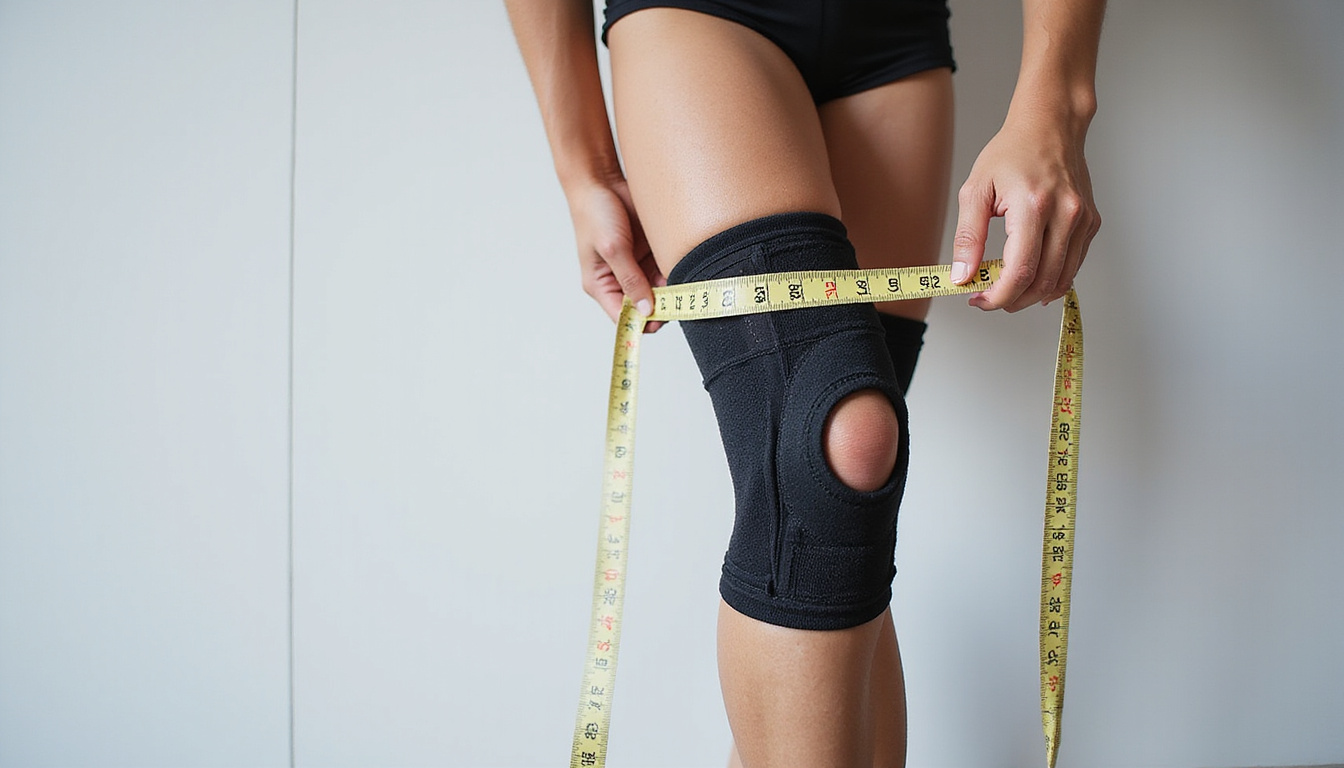
4. Get Sizing and Fit Right
Most runners make errors with sizing.
• Measure your leg as the brand advises (above, across, and below the knee)
• Do not rely only on T-shirt size; your leg shape is uniquely yours
• Aim for a snug fit—you should slip two fingers under the edge
• Test a few steps and bend your knee; there must be no pinching
If the brace slides or the straps feel too tight, try a different size or style.
─────────────────────────────
5. Think About How It Works With Your Running Gear
Check how the knee brace fits with your gear:
• Running tights or shorts: A sleeve under tights feels different from one on bare skin
• Socks and calf sleeves: Avoid overlaps that add bulk
• Shoes and orthotics: Consider how extra correction fits into your biomechanics
When racing, test your complete setup—brace, socks, and shorts—at a tempo or trial run before race day.
─────────────────────────────
How and When to Use a Knee Brace in Your Training Week
View your knee brace as a tool, not a constant crutch.
Many runners find a good rhythm by:
• Using the brace for key workouts like tempo runs, hills, or long runs where impact is high
• Going without it on easy days so your muscles do their work naturally
• Putting it on during active recovery if your knee feels sore
You might also combine the brace with:
• Warm-ups that include leg swings, squats, and lunges
• Glute and hip strengthening exercises
• Calf and hamstring stretching for extra mobility
An approach based on load management, strength work, and supportive gear works better than gear alone (source: American Academy of Orthopaedic Surgeons, https://orthoinfo.aaos.org).
─────────────────────────────
Common Mistakes Runners Make With Knee Braces
Watch out for these common errors:
• Relying on a brace in place of working on form or strength
• Tightening too much, which may cut circulation and cause numbness
• Wearing it continuously so that your body stops stabilizing naturally
• Ignoring worsening discomfort; see a professional when pain continues
• Choosing the cheapest option that does not hold up to your miles
─────────────────────────────
Quick Checklist: What to Look For in a Runner-Friendly Knee Brace
When you shop, confirm that the knee brace:
• Is designed for sports or running use
• Has breathable, moisture-wicking fabric
• Uses flat seams or has a seamless design to lower chafing risk
• Fits true to measurements taken around your knee
• Provides support without hindering your stride
• Stays in place during squats, lunges, and short jogs
• Is easy to wash and dries fast
• Does not add bulky layers under your running gear
Test a few options on short runs before you make a long-run commitment.
─────────────────────────────
How Supplements Like Regenerix Gold Fit Into the Picture
Gear works on the outside. Nutrition and recovery work on the inside.
Many runners add a joint and muscle supplement to support:
• Daily joint comfort during high-mileage weeks
• Recovery from ongoing impact and pounding
• Overall musculoskeletal health for long-term movement
This is why many try Regenerix Gold as part of a full strategy with a knee brace, strength work, smart programming, and recovery. Remember:
• Supplements do not diagnose, treat, cure, or prevent any disease
• Effects differ between individuals
• Consult a professional before beginning any supplement, especially if you have health concerns, are pregnant, nursing, or take medications
Runners use supplements like another tool—like foam rolling or mobility work—to keep joints and muscles healthy while they continue chasing goals.
─────────────────────────────
Regenerix Gold
─────────────────────────────
FAQ About Knee Braces for Runners
-
Is a knee brace good for running long distance?
A knee brace can help with long-distance runs if you choose the right style and fit. Many distance runners opt for a light compression sleeve or patella support that gives comfort and stability. However, work on strength, form, and gradual mileage increases is also key. -
What kind of knee support is best for jogging?
For most casual joggers, a breathable compression sleeve or patella-support brace works best. These options offer light-to-moderate support without bulk, so your stride stays natural and comfortable. -
Should I wear a knee brace while running or only after?
Some runners use a knee support during runs—especially in workouts and long runs—while others choose to wear it afterward for light compression. If you suddenly rely on it too much or your discomfort worsens, talk with a professional for advice.
─────────────────────────────
Run Smart, Spend Less Time on the Sidelines
You put in the miles. You plan your workouts. You pick your shoes. Now, give your joints the same care. A good knee brace can help make your runs feel more controlled and comfortable. This means you can avoid cutting workouts short or bailing on long runs due to knee pain.
Savvy runners use more than just gear. They plan for the long term. The cost of missed races, doctor visits, and time off adds up fast. That is why many performance-minded runners and budget-conscious joggers use smart training, targeted strength work, and a thoughtful supplement routine.
Choosing a quality joint and muscle support supplement like Regenerix Gold can be a smart move. It signals that you treat your body as an asset, protecting your ability to work and race.
Pair a well-chosen knee brace with a smart supplement routine that includes Regenerix Gold to keep stacking miles, support healthy joints and muscles, and enjoy an active life with fewer worries about one bad step or a training block.
Health Note
Always consult a licensed medical doctor for your health issues.
Special Discount
If you prefer preventive nutrition to minimize expensive knee surgery and potentially addictive pharmaceuticals, Regenerix Gold is your savvy solution.
You qualify for a special discount.
Simply use the link below and a discount will automatically be applied during checkout.
Get Regenerix Gold => HERE


