
Pilates for tendonitis: Gentle Routines That Boost Healing and Strength
by Zestora on Dec 30, 2025

Pilates for tendonitis works as a low-impact way to help your recovery. It keeps you on the mat and off the sidelines. If you practice Pilates in the U.S. and feel tendon soreness—whether in your Achilles, rotator cuff, elbow, hip flexors, or hamstrings—you are not alone. Many dedicated movers feel a tug or burn in their tendons after years of roll-ups, teasers, hundreds of repetitions, and reformer work. The good news is that smart modifications, tendon-friendly sequencing, and good recovery habits usually allow you to practice while your body heals.
Understanding Tendon Irritation in Pilates Bodies
Tendons serve as strong links between muscles and bones. In Pilates, they work hard during low-impact moves. Irritation can occur when:
- You quickly jump into advanced moves (think teaser variations, heavy springs, or jumpboard),
- You push too far with ballistic stretching,
- Or you repeat the same patterns without proper recovery or strength balance.
Common tendon hot spots in Pilates include:
- Achilles and plantar area (from footwork, tendon stretch, jumping)
- Patellar and quadriceps tendons (from squats, lunges, standing leg work)
- Hamstring tendons near the sit bones (from forward folds, splits, high bridges)
- Rotator cuff and biceps tendons (from weight bearing on your hands and straps work)
- Forearm tendons (from gripping handles, props, devices)
Only a licensed healthcare professional can diagnose these issues. Still, you can adjust your Pilates routine to ease strain and support comfortable movement.
Core Principles When Using Pilates for Tendonitis
Before you start any routines, follow these core principles. They help you use Pilates wisely instead of worsening your tendon issues.
1. Pain is information, not a goal
In a tendon-sensitive phase, do not push through discomfort. You want:
- Zero to mild discomfort during movement
- No extra soreness 24 hours later
Any sharp, pinching, or burning pain is a sign to modify, reduce load, or stop that move.
2. Prioritize mid-range, not end-range
Tendons get more irritated at extreme stretches. Stay in a comfortable middle range, especially for:
- Hamstring stretches (keep a slight knee bend)
- Calf stretches (soften your ankle angle)
- Shoulder stretches (avoid forcing overhead or too much rotation)
3. Load gradually, not aggressively
Tendons work best with steady, progressive loading. In Pilates:
- Use lighter springs and higher repetitions at first
- Then move to moderate resistance and a slow, controlled pace
- Avoid sudden jumps in intensity (for example, heavy plyometric jumpboard after basic footwork)
4. Respect recovery and cross-training
Many Pilates fans rely only on the studio. When tendons show irritation, mix in light walking, gentle cycling, or simple off-mat work to give your tendons a rest from repeated patterns.
A Gentle Mat Sequence: Pilates for Tendonitis in the Lower Body
This sequence suits people with lower-leg or knee-tendon irritation (in the Achilles, calf, patellar, or hamstring areas). Always get a professional’s clearance before exercising, especially if your symptoms change.
Centering and Breath (2–3 minutes)
• In hook-lying, place your feet hip-width apart and bend your knees so your spine stays neutral.
• Breathe laterally or postero-laterally into your rib cage.
• On the exhale, gently engage deep abdominals and the pelvic floor, as if you zip up snug pants at 30–40% effort.
This core connection helps unload nearby structures, including tendons around your hips, knees, and ankles.
Supported Bridge Prep (Glute Focus)
• Begin in hook-lying.
• Inhale to prepare, then exhale.
• Gently imprint your lower back on the mat and roll your spine into a small bridge.
• Drive through your heels and activate your glutes—not your low back.
• Keep the range small; a full bridge is not needed.
Do 8–10 reps. Focus on even weight in both legs, no hamstring cramp, and a smooth, segmental roll in both directions.
Heel Slides and Marching (Hip Flexor & Core)
• From hook-lying, slide one heel along the mat until your leg extends, then slide it back. Aim for 8–10 reps per leg.
• Then, do small marches: lift one foot a few inches off the mat and lower it slowly.
• Keep your pelvis steady, as if balancing a glass of water on your lower belly.
This move builds core and hip stability without heavy tendon strain.
Tendon-Friendly Hamstring Work
Instead of a deep static hamstring stretch:
• Lie on your back with one knee bent. Loop a strap or towel around the ball of your other foot.
• Gently extend your knee to feel a light hamstring stretch. Stop before you feel tendon discomfort.
• Gently oscillate your leg for 10–15 pulses within a small range.
Avoid locking your knee. Stay clear of an extreme end-range.
Gentle Calf and Achilles Loading
• While on your back, keep feet hip-width apart and knees bent.
• Lift and lower your heels slowly, keeping your foot balls on the mat. (A mini “relevé” on the mat.)
• Focus on smooth control.
If you are cleared to stand:
• Stand facing a wall or barre.
• Do double-leg calf raises within a comfortable range. Lift for 2 counts and lower for 3–4 counts.
• Start with 8–12 reps and 1–2 sets every other day if you feel no flare-up.
This controlled loading helps build tendon strength.
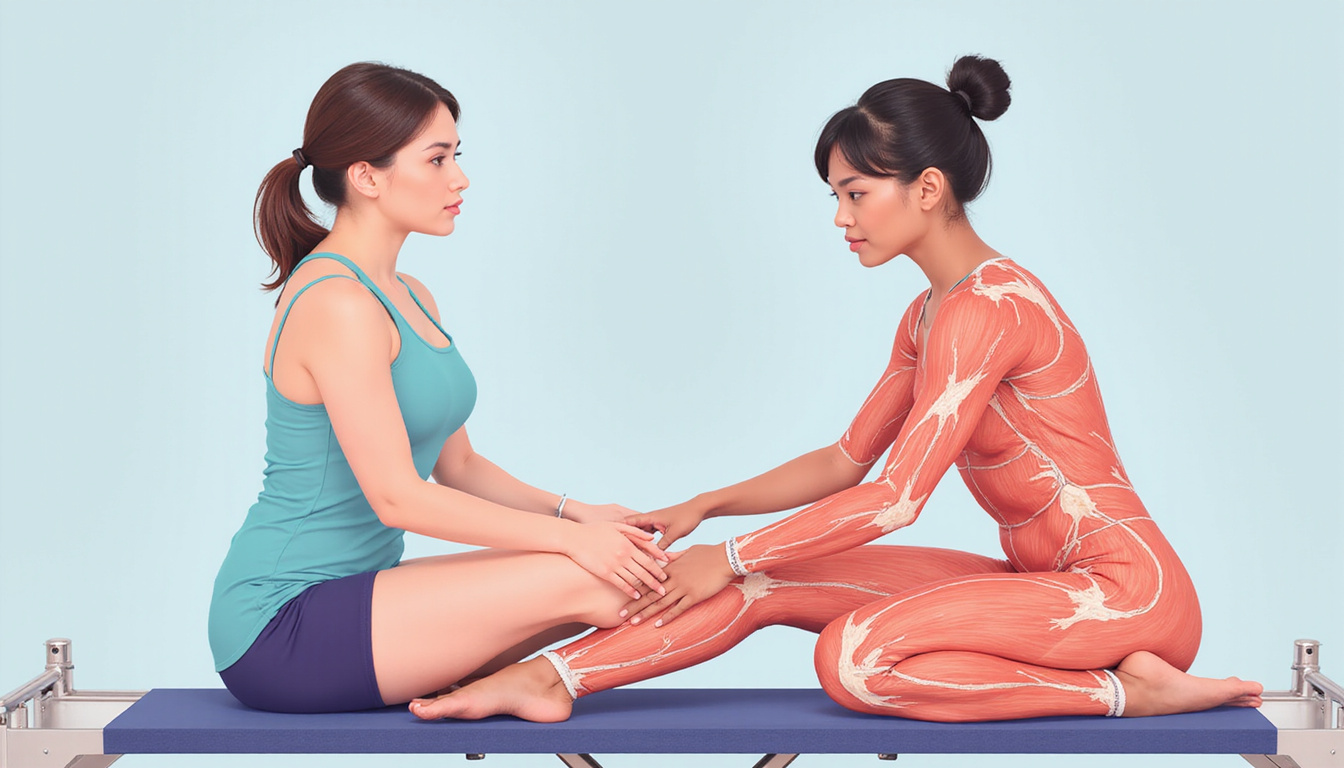
Upper-Body Focus: Pilates for Tendonitis in the Shoulders and Elbows
If your rotator cuff or elbow tendons are irritated from plank work or long stretch series, follow these tips.
De-Loaded Arm Arcs
• Lie on your back with a neutral spine and arms reaching toward the ceiling.
• Inhale and slowly lift your arms overhead as far as you can while keeping rib control.
• Exhale and return your arms without dropping or snapping them.
• Repeat 8–10 times.
This move practices shoulder work without heavy tendon load.
Sidelying Arm Circles
• Lie on your side with your bottom arm supporting your head and your knees bent.
• Extend your top arm forward at shoulder height.
• Slowly draw controlled circles in a pain-free range, 6–8 per direction.
• If you feel well, add a light hand weight or small ball for more load later.
Modified Quadruped (Hands & Shoulders)
If you tolerate some weight-bearing:
• Start on all fours with your hands under your shoulders and knees under your hips.
• Widen your hands slightly and gently push the mat away as if sliding your shoulder blades.
• Rock back slightly toward your heels.
• Avoid painful angles and full planks until your tendon feels better.
Reformer and Apparatus: Smart Spring Choices for Tendon Care
When you use Pilates for tendonitis on the reformer or other equipment, think like a physical therapist:
- Footwork: Choose moderate springs and comfortable foot positions. Avoid extreme turnout or ankle bending if your Achilles or knee tendons hurt.
- Leg Springs: Keep the tension light to moderate. Do not go into full splits or deep hamstring stretches.
- Jumpboard: Pause jumping until your tendon symptoms are steady and calm.
- Arm Straps: Use lighter springs and shorter moves. Focus on controlling your shoulder blades before adding load.
Red Flags: When to Pause and Get Help
Stop immediately and seek help if you notice:
- Sudden, sharp pain or a “pop” in a tendon area
- Visible deformity, big swelling, or an inability to bear weight or move a joint
- Pain that worsens quickly or stops you from sleeping or doing daily tasks
In the U.S., a licensed healthcare provider—such as a physical therapist or physician—can evaluate your tendon problems. The American Academy of Orthopaedic Surgeons offers more info about tendon issues (source: https://orthoinfo.aaos.org).
Supportive Lifestyle Habits for Tendon-Friendly Pilates
Pilates for tendonitis works best with a tendon-supportive lifestyle:
- Gradual Training Load: Increase your intensity or volume slowly. Avoid weekend-warrior jumps.
- Smart Footwear: Use supportive shoes outside the studio, especially if you feel foot or Achilles discomfort.
- Movement Variety: Combine Pilates with walking, gentle cardio, and light strength work to avoid overusing the same patterns.
- Rest & Sleep: Allow enough sleep and rest days for tendon repair.
- Nutrition & Hydration: Eat a balanced diet with enough protein, fluids, and essential nutrients. Supplements, if used, should add to—not replace—a healthy lifestyle.
Where a Joint & Muscle Support Supplement Can Fit In
Many experienced Pilates practitioners in America seek non-drug ways to support joint comfort and muscle function. A high-quality supplement for joint and muscle health may help when you combine it with:
- Regular, well-designed Pilates sessions
- Tendon-friendly loading and mobility work
- Good sleep, nutrition, and stress management
Dietary supplements in the U.S. are not meant to diagnose, treat, cure, or prevent any disease. They support normal body structure and function. Always read labels and consult a healthcare professional if you are pregnant, nursing, using medications, or have underlying health concerns.
FAQ: Pilates, Tendons, and Recovery
Is Pilates good for tendon pain?
Many people find modified Pilates helps maintain movement, blood flow, and strength near irritated tendons. By choosing mid-range moves, controlled loading, and avoiding painful angles, Pilates for tendonitis can help you stay active. Always discuss new or changed routines with your healthcare provider.
Which Pilates exercises should I avoid with tendon issues?
This depends on the tendon involved, but try to avoid:
- High-impact jumpboard work
- Deep static stretches that pull on the affected tendon
- Heavy resistance at extreme ranges
- Long-held weight-bearing moves (like full planks) if your shoulder, elbow, or wrist tendons feel irritated
Choose controlled moves, comfortable ranges, and low-to-moderate resistance instead.
How often can I do Pilates while my tendon is irritated?
Many practitioners do gentle, modified Pilates 2–4 times per week. The key is that the tendon should not flare up after sessions. If soreness increases the next day, lower the intensity, volume, or frequency. Consult a professional to adjust your routine if needed.
Why Savvy Pilates Practitioners Choose Regenerix Gold
If movement is central to your life—whether teaching clients, keeping a full class schedule, or practicing daily—you know tendon discomfort disrupts your routine. Missing classes means lost income, weakened conditioning, and sometimes bigger problems with higher medical bills.
Many discerning Pilates practitioners look for smart, legal, and science-based supports without harming their values. Regenerix Gold is made for adults who want to support healthy joints and muscles so they can keep working and living actively. It is aimed at those who know that staying strong, mobile, and resilient is not a luxury but a form of self-respect, sound judgment, and even financial prudence.
If you are serious about using Pilates for tendonitis in a smart and proactive way—by pairing clear movement with thoughtful recovery—consider adding Regenerix Gold to your daily routine, along with a balanced diet and lifestyle. As always, speak with your healthcare professional before starting any new supplement if you have health issues or take medications.
Regenerix Gold
Health Note
Always consult a licensed medical doctor for your health issues.
Special Discount
If you prefer preventive nutrition to minimize expensive knee surgery and potentially addictive pharmaceuticals, Regenerix Gold is your savvy solution.
You qualify for a special discount.
Simply use the link below and a discount will automatically be applied during checkout.
Get Regenerix Gold => HERE


