
Shoulder arthritis: Proven Pain Relief Strategies Your Doctor Won't Tell
by Zestora on Jan 01, 2026

If you’re a former athlete in America, you feel that deep ache in your shoulder. You ask, “Is this just wear and tear, or is it shoulder arthritis?” You are not the only one. You played D1 ball, you ground it out in the minors, you spent long hours in the weight room, or you pushed hard in rec leagues. Your shoulder now shows a mileage count that most weekend warriors cannot imagine.
This guide explains what is happening in your shoulder. It shows why standard advice may fail ex-athletes and tells you what you can do today. You will support joint comfort and function without feeling benched from life.
What Shoulder Arthritis Really Feels Like for Former Athletes
Medical texts list shoulder arthritis for the general public. They miss the details that ex-athletes notice.
If you logged thousands of throws, serves, swings, presses, or tackles then you know the drill:
• You feel a deep ache inside the joint after lifting, throwing, or sleeping on that side.
• You feel a sharp, catching pain when you move your arm overhead or behind your back (when serving, snatching, or fastening a bra).
• You feel a warm, angry joint after a hard day.
• You experience a loss of smooth, athletic range; your arm no longer glides as it did.
• You hear a loud, crunchy grind or pop when you rotate or press.
These signs point to shoulder arthritis or a joint that has seen too much wear. For former athletes, the issue builds up over time. Years of training, competing, and overusing one side of your body add up.
Why Standard Shoulder Arthritis Advice Often Fails Former Athletes
Most doctors serve patients with a sedentary lifestyle. Their playbook does not match your active past under heavy barbells or on the field. You may have heard advice like this:
• “Just rest and take some over-the-counter pain meds.”
• “Stop lifting heavy.”
• “You’re not 20 anymore. Lower your expectations.”
That advice may work for someone who never pushed their body. For you, a former athlete:
• You trained through discomfort.
• You have a high body awareness and you know when something feels off.
• You do not want to retire your lifestyle; you only want to say goodbye to the constant pain.
What you need is a performance-minded method. You need strategies that respect your athletic past, your drive to stay active, and your desire for long-term joint health.
Biomechanics 101: Why Your Shoulders Feel “Old” Before the Rest of You
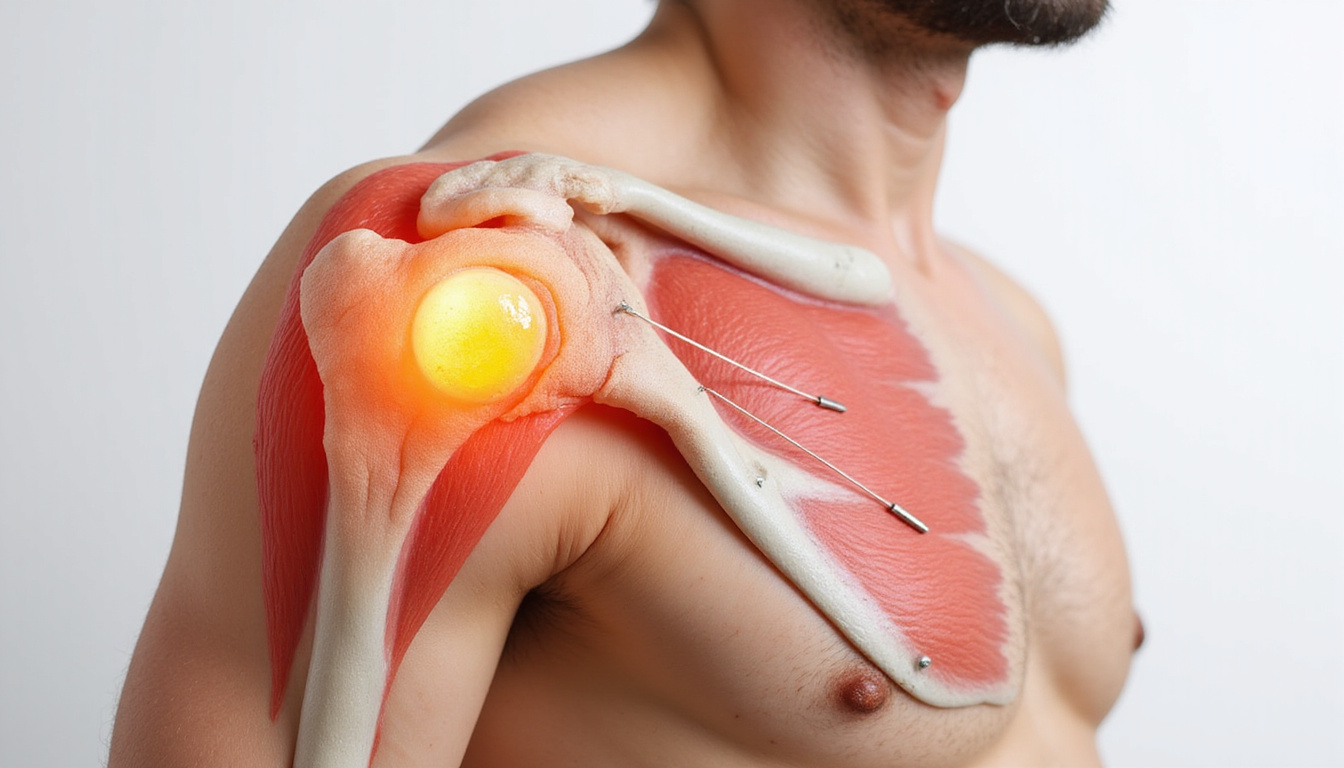
Your shoulder is the most mobile joint. It is also one of the least stable. Years of overhead moves, contacts, and repetitive patterns cause a perfect storm for shoulder arthritis and joint wear.
Ex-athletes face these common issues:
• Muscle imbalances – A dominant anterior chain (chest/front delts) overpowers your upper back and rotator cuff.
• Limited mid-back mobility – This forces the shoulder to work harder.
• Scapular dyskinesis – Your shoulder blade fails to glide smoothly.
• Old, half-healed injuries – You returned to play too soon and never rebuilt your foundation.
Repeated stress from poor mechanics wears the joint down. Your peers might be the same age and feel fine, but your shoulder shows higher mileage.
Proven, Athlete-Tested Strategies to Ease Shoulder Arthritis Discomfort
These practical tactics come from performance-minded doctors and athletes. They work even if many doctors do not insist on them.
1. Dial in “Smart” Load Instead of Going Cold Turkey
You are not built for absolute rest. The trick is smart, strategic loading:
• Swap heavy barbell bench presses for neutral-grip dumbbell or floor presses.
• Replace kipping pull-ups with strict ring rows or band-assisted pull-ups.
• Switch overhead barbell presses for landmine or half-kneeling presses.
Your aim is to keep the muscles firing while lowering joint stress. Train around the irritation rather than ignore it.
2. Treat Your Scapula Like a Teammate, Not a Bystander
You have strong prime movers but weakened stabilizers. When your shoulder blade does not work properly, the shoulder joint suffers.
Add 5–10 minutes of scapular work to your warm-up:
• Wall slides
• Scap push-ups
• Prone Y, T, and W raises
• Serratus punches with a light band
This work feels simple, but it sets you up to press, pull, and rotate with better form and less grind.
3. Own Your Rotator Cuff, Don’t Just “Prehab” It
You may remember band work from your playing days. Now, your rotator cuff deserves its own training block.
Aim for 2–3 sessions per week:
• Sidelying external rotations with a light dumbbell
• Standing external/internal rotations with bands
• Full can raises (thumbs up, at 30° forward)
• Low-load, long-duration isometrics
The goal is not to exhaust the muscles; it is to build endurance and control, keeping the shoulder stable.
4. Mobilize Above and Below the Shoulder
Stiffness in the mid-back, ribcage, or neck forces your shoulder into bad positions.
Focus on these:
• Thoracic spine mobility – Foam roller extensions, open books, and quadruped T-spine rotations.
• Gentle chest and lat stretches – Wall pec stretch and child’s pose with a side reach.
• Neck and upper trap resets – Controlled nods, gentle side bends, and deep breathing drills.
This work clears space for smoother shoulder movement.
5. Respect Recovery Like It’s Game Day
In your younger days, you recovered quickly. Now, shoulder arthritis means recovery must be taken seriously.
Focus on these recovery pillars:
• Sleep – Your body needs consistent, good sleep.
• Stress management – Chronic stress can increase pain and tension.
• Post-session cool-down – Light band work, breathing drills, and gentle movement instead of stopping cold.
Recovery is where your body adapts both from training and from changes made to your joint health.
Nutrition & Supplement Strategies for Shoulder Joint Support
Diet and supplements do not erase shoulder arthritis. But they can be part of an athlete-grade recovery plan.
Eat Like You’re Still in Season (Just Smarter)
You no longer need massive bulking calories. Instead, focus on:
• Adequate protein for muscles and connective tissue repair.
• Colorful fruits and vegetables for antioxidant support.
• Healthy fats from fish, nuts, seeds, and olive oil.
Balanced nutrition helps your body repair joint tissues and manage daily wear.
How a Targeted Joint & Muscle Supplement Can Help
Many former athletes look for a supplement that is made to:
• Support joint comfort
• Promote healthy cartilage and connective tissues
• Aid muscle recovery after training
• Help maintain an active, high-performance lifestyle
Regenerix Gold is one such joint and muscle supplement. It is used by those who support healthy joints through proper training, smart recovery, and nutrition. Remember, in America any supplement is not meant to diagnose, treat, cure, or prevent any disease. Always speak with your healthcare provider before you add a new supplement, especially if you take medications or have health concerns.
Think of it as a part of your gear. It will not replace your hard work but can give you a strategic edge to keep moving well.
Training Blueprint: Weekly Shoulder-Friendly Game Plan
This friendly game plan helps many former athletes deal with shoulder arthritis discomfort while staying active:
-
2–3 Strength Days (Upper/Lower Split)
• Upper days: Neutral-grip presses, rows, landmine work, band pull-aparts, and cuff work.
• Lower days: Squats, hip hinges, lunges, and sled pushes. -
2–3 Low-Impact Conditioning Days
• Use a bike, incline walk, ski erg, or a light rower if your shoulder permits. -
Daily 10-Minute “Shoulder Hygiene”
• Perform scapular drills, thoracic spine mobility work, and band external rotations. -
1–2 Active Recovery Days
• Try light mobility work, walking, easy swimming, or water exercises.
You are no longer training to please a coach or land a roster spot. You train to keep the advantages you built as a youth. You work hard to stay active without letting your shoulder control your life.
FAQ: Shoulder Arthritis & Former Athletes
-
How do I know if my shoulder pain is from arthritis or something else?
You might face layered issues like old strains, joint wear, and overuse. If you feel a persistent deep ache, stiffness, or a grinding sound when you move, these could be signs of shoulder arthritis. Only a healthcare professional can give a proper diagnosis. If pain limits your daily life or sleep, get it checked. -
Can I still lift weights if I have arthritis in my shoulder?
In many cases, yes. Modified lifting can help. Focus on controlled, pain-free movement. Choose exercises that use neutral grips, landmine work, rows, and cuff training. Always discuss your plan with a healthcare provider or qualified strength coach, especially if your doctor has taught you about joint wear or arthritis. -
What can help relieve shoulder joint pain from arthritis long-term?
Long-term relief comes from combining several strategies:
• Improve movement mechanics and posture
• Build rotator cuff and scapular strength and endurance
• Adjust training volume and intensity
• Support joint health with good nutrition, sleep, and a targeted supplement
No single tool fixes everything. But a consistent, performance-minded strategy makes a difference over time.
Regenerix Gold
Call to Action: Stay in the Elite Club of Former Athletes Who Still Move Like Pros
You did not spend years grinding in the weight room, on the court, or on the field only to slow down in midlife because of shoulder pain. You know that the best athletes continually invest in their bodies.
If you want to train hard and feel like yourself, while staying smart about your long-term health, consider adding Regenerix Gold to your routine. This joint and muscle supplement is for former athletes who support healthy joints and muscles. It also fits a lifestyle that values proper training, smart recovery, and good nutrition.
Talk with your healthcare provider about whether Regenerix Gold is right for you. Then design your plan the way you designed your game plan: with intelligent training, smart recovery, focused nutrition, and a supplement stack made for those who expect more from their body than most.
Health Note
Always consult a licensed medical doctor for your health issues.
Special Discount
If you prefer preventive nutrition to minimize expensive knee surgery and potentially addictive pharmaceuticals, Regenerix Gold is your savvy solution.
You qualify for a special discount.
Simply use the link below and a discount will automatically be applied during checkout.
Get Regenerix Gold => HERE


