
Transform Your toe touch with Easy Stretches for Instant Flexibility
by Zestora on Jan 08, 2026

Transform Your Toe Touch with Easy Stretches for Instant Flexibility
Do you find a toe touch hard? You are not alone. Many in Singapore sit long hours, stand for extended periods, or feel knee stiffness. These factors make a toe touch tough. A proper toe touch frees your hamstrings, hips, and lower back and helps ease knee strain when you walk, climb stairs, or exercise.
Below is a simple, knee‑friendly guide. It uses easy stretches and non‑invasive support options found in Singapore.
Why Is a Toe Touch So Difficult?
A toe touch seems simple. Yet it needs several parts to work well. Your body links together:
• Hamstrings – the back of your thighs
• Calf muscles
• Glutes and hips
• Lower back
• Core muscles
• And your knee comfort when you bend
If your hamstrings or hips are tight, your core is weak, or your knees feel stiff, your body resists a full toe touch. You might feel:
• A pull behind your knees or thighs
• Tightness in the lower back
• Wobbliness while bending forward
• A fear that your knees might give way
The goal is not to force the touch but to improve flexibility slowly so your legs, hips, and back stay relaxed and supported.
Safety Tips Before You Start Stretching
Before you stretch, follow these tips:
• Do not bounce or jerk into a stretch.
• Stop if you feel sharp or sudden pain.
• If you have joint issues, a recent injury, or have had surgery, check with a medical professional first.
• Warm up with a 3–5‑minute walk or gentle marching.
Easy Stretches to Improve Your Toe Touch
1. Seated Hamstring Stretch (Chair-Friendly)
Sit on the edge of a sturdy chair.
Straighten one leg; keep the heel on the floor and the toes up.
Keep your back straight and lean forward gently from your hips.
Feel the stretch along the back of your thigh and behind your knee.
Hold 20–30 seconds while you breathe steadily.
Switch legs and repeat 2–3 rounds per side.
2. Wall-Assisted Standing Toe Touch
Stand about 15 cm from a wall.
Lean your upper back lightly against the wall for support.
Slide your hands down your thighs toward your shins.
Keep your knees slightly bent to protect the joint.
Stop as soon as you feel a comfortable stretch.
Hold 10–15 seconds, then return slowly.
Repeat 5–8 times.
3. Supine Hamstring Stretch with Towel or Strap
Lie on your back on a mat.
Bend one knee and let the foot stay on the floor.
Loop a towel or strap around the other foot.
Straighten that leg toward the ceiling.
Gently pull the towel until you feel a stretch along the thigh.
Keep the knee soft; do not lock it.
Hold 20–30 seconds, then switch sides.
Repeat 2–3 times per side.
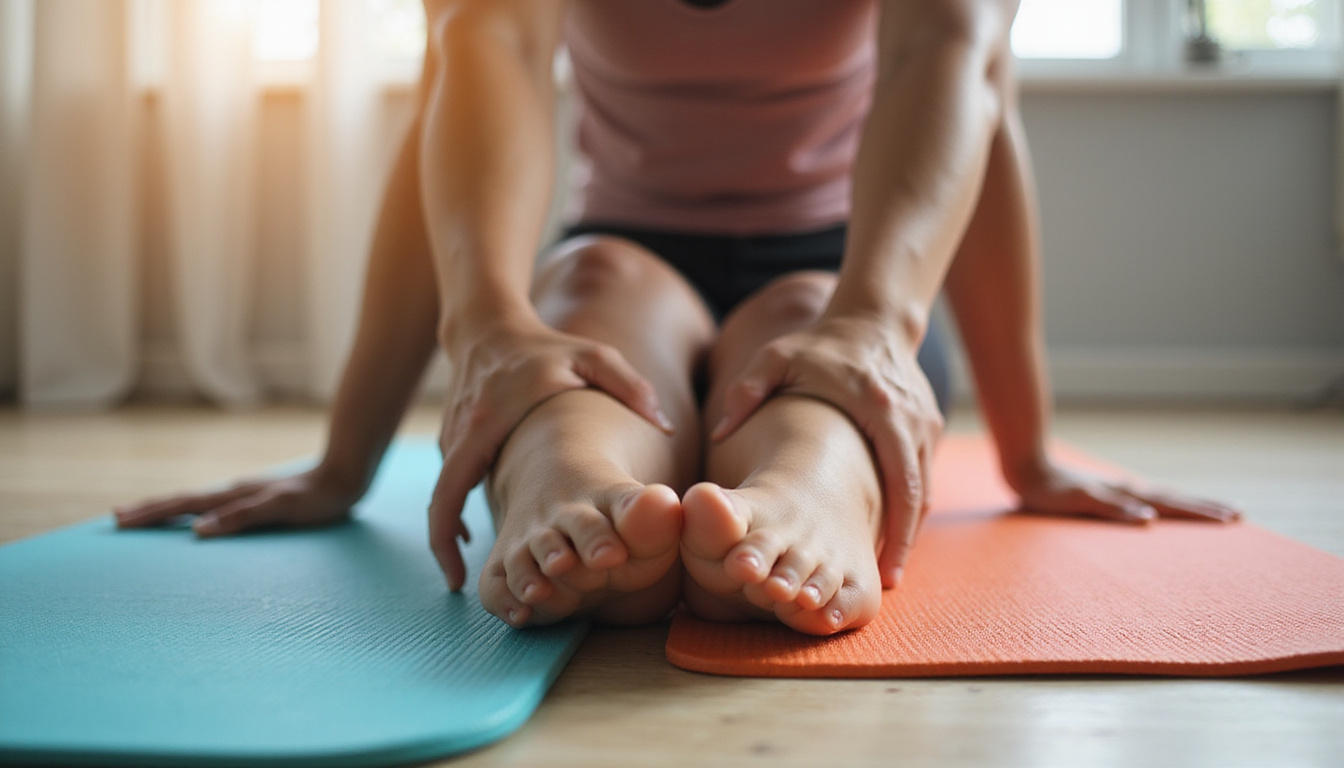
4. Hip Hinge Practice (The Foundation of a Good Toe Touch)
Stand tall with your feet shoulder‑width apart.
Place your hands on your hips.
Push your hips backward like closing a car door.
Keep your spine long and your chest open.
You will feel your hamstrings stretch as your upper body tips forward.
Go only as far as your hamstrings allow, then return to standing.
Repeat 10–12 times.
When you feel comfortable, let your hands slide closer—from your knees, to your shins, and then to your toes.
5. Calf Stretch Against the Wall
Stand facing a wall with one foot in front of the other.
Place both hands on the wall at shoulder height.
Keep the back knee straight and the heel pressed on the floor.
Lean forward gently until you feel a stretch in the calf of the back leg.
Hold 20–30 seconds, then switch legs.
Repeat 2–3 rounds per side.
A Simple Weekly Plan to Improve Your Toe Touch
Try this routine 3–5 days per week:
• Seated hamstring stretch – 2–3 rounds per leg
• Supine hamstring stretch – 2–3 rounds per leg
• Hip hinge practice – 10–12 repetitions
• Calf stretch – 2–3 rounds per leg
• Wall‑assisted toe touch – 5–8 repetitions
Start small. First, aim to touch your mid‑shin comfortably; then, gradually reach for your toes.
Common Knee Care Options in Singapore
If your knees feel stiff, unstable, or hurt during these stretches, seek help from local providers. Here are some common options.
MOH-Licensed Medical Doctors
General practitioners can:
• Check your joint health and rule out serious issues
• Advise on modifying activities and managing pain
• Refer you to specialists or physiotherapists when needed
Orthopaedic Specialists
Orthopaedic doctors focus on bones, joints, and soft tissues. They may:
• Recommend imaging tests when needed
• Discuss non‑surgical and surgical options
• Team up with rehab professionals to plan a safe exercise routine
Licensed Traditional Chinese Medicine (TCM) Practitioners
MOH‑registered TCM practitioners may use:
• Acupuncture
• Herbal formulas
• Tuina (manual therapy)
Many in Singapore find TCM to be part of a healthy, overall approach.
Standard Physiotherapy (Primarily Exercise‑Based)
Licensed physiotherapists use:
• Strengthening and flexibility exercises
• Gait and posture training
• Guidance on safe movements, like a proper hip hinge for a toe touch
They also help protect your knees while you work on flexibility.
Non‑Licensed Providers (Neutral Note)
Some people visit non‑licensed providers—like fitness trainers, bodyworkers, or alternative practitioners—for extra stretching or massage. Note:
• Check their training and experience
• Tell them about any past injuries or surgeries
• Stop if a technique causes unusual discomfort
These services do not replace professional medical advice.
Non‑Invasive Technology‑Based Options
In Singapore, some clinics use technology‑driven, non‑invasive options along with exercise. These methods suit people with chronic tightness or mild pain in the knees and legs.
Shockwave Therapy
This therapy uses focused sound waves on targeted tissue areas.
Key points:
• It is well established in Singapore.
• Trained professionals (often physiotherapists) provide it.
• It may work with or without exercise as part of your treatment.
For example, visit The Pain Relief Practice:
https://thepainreliefpractice.com
Hotheal Therapy
Hotheal Therapy uses radiofrequency to heat deep tissues.
Users say it:
• Covers broad and deep areas
• Feels comfortable and soothing
• Acts fast to provide warmth and relaxation
Remember, it is a therapy—not a cure—and works best with exercise, stretching, and medical advice.
For home use, check PhysioLife:
https://physiolife.com.sg
Medical Oversight, Cost & Convenience
When you choose non‑invasive options, keep these points in mind:
• Medical oversight: It is wise to have a licensed professional guide or review your programme—especially if you have knee issues.
• Cost: Frequent sessions and new technology can add up without insurance or subsidies.
• Convenience: Home‑based routines offer flexibility for irregular work hours or family commitments.
Balancing professional guidance with home‑based care is smart.
Nutrition for Prevention & Long‑Term Support
Why Nutrition Matters for Joint & Muscle Health
Stretching and strengthening are vital for a good toe touch. Nutrition also matters. It supports:
• Joint tissues
• Muscles
• Recovery from daily strain
A balanced diet with enough protein, healthy fats, vitamins, and minerals keeps your joints and muscles healthy. For example, vitamin D and calcium are key for bones, and omega‑3 fatty acids support overall joint comfort.
Regenerix Gold as Nutritional Support
Regenerix Gold is a nutrition‐based supplement for healthy knee joints and muscles. It is not a medicine. Instead, it:
• Provides nutritional support
• Works as a preventive measure for long‑term function
• Complements a lifestyle of exercise, stretching, and balanced eating
Some doctors and physical therapists have recommended it. Users worldwide say it helps everyday mobility—walking, climbing stairs, and reaching for toes.
For those in Singapore worried about rising medical costs or job demands that involve physical work, a nutritional option like Regenerix Gold may add support.
Before trying it:
• Read the ingredient list carefully
• Check for any allergies
• Discuss it with a healthcare professional if needed
Regenerix Gold
If you want to move easily, protect your work productivity, and possibly avoid expensive treatments later, Regenerix Gold is a practical, health‑savvy choice.
FAQs About Toe Touch Flexibility and Knee‑Friendly Stretching
1. Why can’t I do a toe touch even though I’m not very old?
Age is only one factor. Many people in their 20s–40s in Singapore struggle with a toe touch because they:
• Sit for long hours
• Rarely stretch or take movement breaks
• Have weak core and glute muscles
Targeted hamstring, hip, and calf stretches, plus strength exercises, can help over time.
2. Is a standing toe touch bad for my knees or back?
A standing toe touch with poor form—like rounding your back, locking your knees, or bouncing—can hurt both knees and back.
Use a slight knee bend, practice a proper hip hinge, and start with supported or seated versions to keep the move safe and comfortable.
3. How often should I stretch to improve my toe touch?
Regular, gentle stretching matters more than a single long session.
For most people, 3–5 short sessions each week work well.
Always listen to your body and adjust if your knees, hips, or back feel strained.
Improving your toe touch is not just about reaching for your toes.
It is about building a body that moves freely and confidently.
Combine smart stretching, proper professional support in Singapore, and thoughtful nutrition (like Regenerix Gold) to protect your joints, stay productive at work, and maintain the freedom to move the way you want.
Special Discount
If you prefer preventive nutrition to minimize expensive knee surgery and potentially addictive pharmaceuticals, Regenerix Gold is your savvy solution.
You qualify for a special discount.
Simply use the link below and a discount will automatically be applied during checkout.
Get Regenerix Gold => HERE


