
exercise modification: Simple swaps to eliminate knee pain and boost results
by Zestora on Jan 08, 2026

If your knees feel sore when you walk, climb stairs, squat at the gym, or even stand up from your office chair, you’re not alone. Many people in Singapore quietly “tahan” knee discomfort and just cut back on activity. The right exercise modification strategies can often reduce stress on your knees, help you move more comfortably, and still let you make progress with strength, fitness, and weight management.
Below is a practical, Singapore-focused guide on how to tweak common exercises, where to seek help locally, and how to support your knees long term.
Why Exercise Modification Matters for Your Knees
Exercise modification simply means adjusting the way you move so that:
- Stress on sensitive joints is reduced
- You can still train strength, stamina, and balance
- You don’t keep irritating the same painful areas over and over
For many people, especially those in HDB estates or office jobs who walk a lot, stand in MRT queues, or sit long hours, smart modifications can be the difference between:
- Dreading stairs vs. being able to take them comfortably
- Skipping workouts vs. enjoying regular exercise
- Constant nagging knee discomfort vs. manageable, improving symptoms
If pain is severe, sudden, or linked to a fall or accident, see a medical professional promptly. But if you’re dealing with mild to moderate discomfort or “old injury” feelings, these adjustments may help you exercise more comfortably.
Principles of Knee-Friendly Exercise Modification
Before we go into specific swaps, keep these key principles in mind:
-
Pain is information, not a test of character
Mild tightness or “working” sensations can be normal. Sharp, catching, or worsening pain usually means “adjust or stop”. -
Modify range of motion first
Often you can keep the same exercise but move through a smaller angle:- Shallower squats
- Not bending the knee as deeply when climbing or lunging
-
Reduce load and speed
Lower the weight, slow down, or remove impact first, then gradually build back up as your knees tolerate more. -
Choose joint-friendly surfaces and footwear
- Avoid long workouts on hard concrete, if possible
- Use cushioned, supportive shoes
- Consider indoor tracks, parks, or gyms instead of pure pavement runs
-
Strength and control around the hips and core protect the knees
Strong glutes, hamstrings, and core muscles help your knees track better and absorb more force.
Everyday Moves: Simple Swaps for Singapore Daily Life
Walking & Commuting
-
If long walks cause discomfort
- Swap from brisk long-distance walks to shorter but more frequent walks.
- Mix in escalators or lifts for some stair segments instead of full flights.
- Use overhead bridges with ramps rather than only stairs where there’s a choice.
-
On public transport
- If standing in a moving bus or MRT irritates your knees, lightly bend both knees and keep weight evenly distributed. Avoid locking the knees straight.
Stairs at Home or Work
- Use the handrail to offload some bodyweight.
- Try a step-by-step pattern if both knees feel sensitive:
- “Good leg up first” on the way up;
- “Bad leg down first” on the way down.
- When carrying groceries, split loads into two lighter bags instead of one heavy bag pulling you off balance.
Sitting, Standing & Office Work
- Adjust your chair so your hips are slightly higher than your knees. This reduces deep bend stress when standing up.
- When standing from a chair:
- Bring your feet slightly back under you, lean forward from hips, and push through your heels.
- Use armrests for support if needed; this is a valid exercise modification, not “cheating”.
Gym & Workout Swaps: Train Hard, Not Hurt
Squats
If full squats hurt your knees:
- Limit depth to a pain-free range (e.g., half squat).
- Use a bench or box behind you and lightly tap before standing up again.
- Widen stance slightly and turn toes out a bit to find a more comfortable angle.
Try this:
Barbell back squat → Goblet squat to a box with lighter weight and controlled tempo.
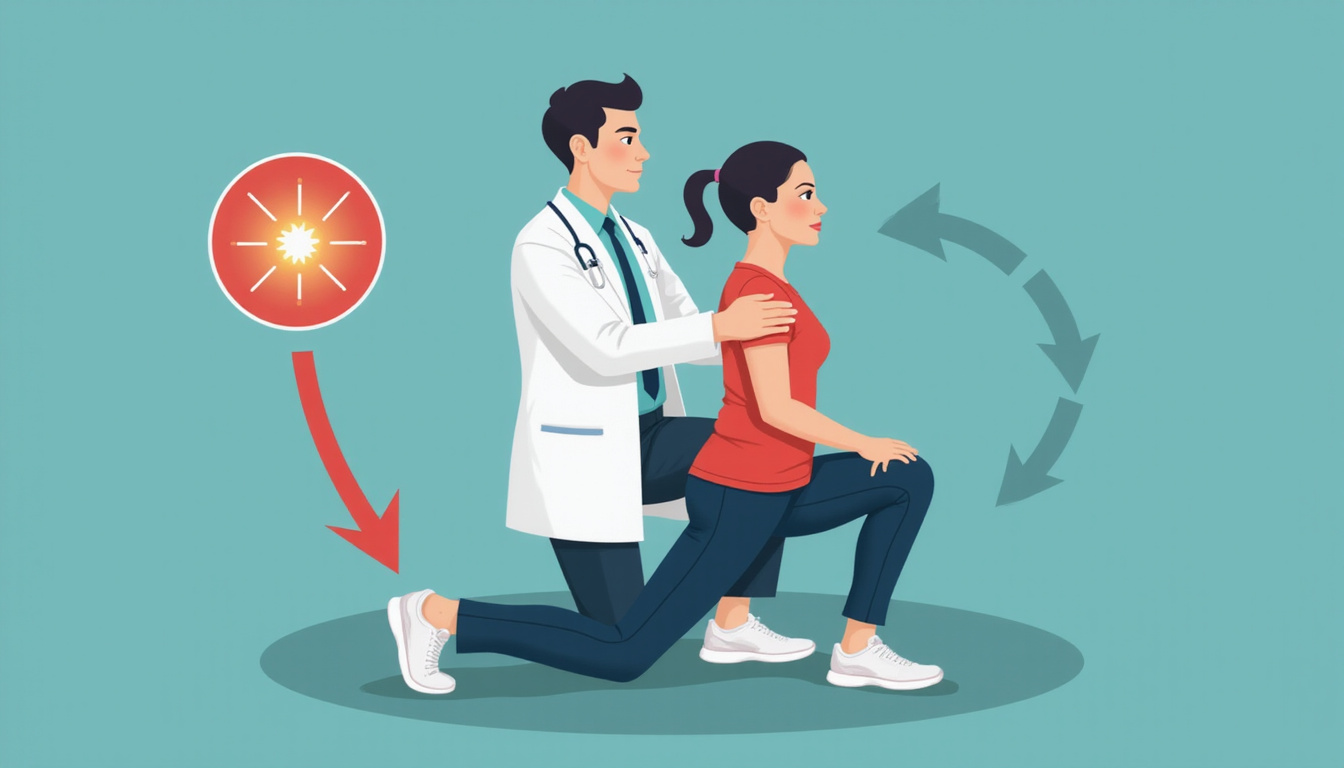
Lunges
Lunges can be tough on sensitive knees due to the forward angle and load.
Modifications:
- Replace forward lunges with reverse lunges (step backward instead of forward).
- Perform stationary split squats holding on to a rail or TRX for balance.
- Shorten your step length to keep both knees more comfortable.
Swap ideas:
- Walking lunges → Reverse lunges holding on to a support
- Deep lunges → Shallow split squats with bodyweight only
Running & Cardio
If running on concrete triggers pain:
- Swap outdoor road running for treadmill walking on incline, elliptical, or stationary cycling.
- Use intervals: shorter bouts of brisk walking mixed with slower recovery, instead of long continuous runs.
Jumping & High-Impact Classes
Replace jumps with low-impact alternatives:
- Jump squats → Regular squats or calf raises
- Burpees with jump → Step-back burpees with a gentle walk-up, no jump
- Box jumps → Step-ups to a lower box or step
The key is keeping your heart rate up while reducing the pounding your knees absorb.
Home Workouts: Knee-Friendly Strength Ideas
Safe, controlled strengthening often helps knees feel more stable. These are commonly used modifications:
- Wall sits (shallow): Slide down just enough to feel your thighs work, not to the point of knee pain.
- Bridge exercises: Lying on your back, knees bent, lift hips up to work glutes and hamstrings with minimal knee strain.
- Side-lying leg lifts: Strengthen hip muscles that control knee alignment.
- Mini step-ups: Use a low step (maybe one stair) and hold a rail. Step up and down with control.
Always work within a pain-free or mild-discomfort range, and stop if symptoms worsen during or after exercise.
Common Knee Care Options in Singapore
If your knee issues are persistent, worsening, or affecting work and daily activities, it can help to seek professional care. In Singapore, people typically consider:
MOH-Licensed Medical Doctors
- General practitioners (GPs) can assess your symptoms, order basic imaging if appropriate, and refer you onwards.
- They can also discuss medication options or short-term activity modification.
Orthopaedic Specialists
- Focus on bones, joints, and ligaments.
- Can review scans, discuss surgical and non-surgical options, and coordinate rehab where needed.
Licensed Traditional Chinese Medicine (TCM) Practitioners
- May use acupuncture, herbal formulations, or manual therapies.
- Some patients find TCM helpful as part of a broader knee care plan.
Standard Physiotherapy (Primarily Exercise-Based)
- Focuses on movement assessment, targeted exercises, and manual therapy.
- Often includes personalised exercise modification guidance for work, sports, and daily life.
- Available in public hospitals, polyclinics, and private clinics.
Non-Licensed Providers
You may also come across personal trainers, sports therapists, bodyworkers, and other exercise-based coaches. Many people find them useful for general fitness and basic guidance, but:
- They are not regulated in the same way as MOH-licensed professionals.
- For persistent or significant symptoms, it’s wise to also involve a licensed medical or allied health professional for assessment and oversight.
Non-Invasive Technology-Based Options
In Singapore, certain technology-based treatments are widely offered as part of knee care plans. These are typically adjuncts to exercise and lifestyle changes rather than stand-alone cures.
Shockwave Therapy
- Well-established in Singapore, including use in some public hospitals.
- Often delivered by or under the supervision of licensed physiotherapists as part of a broader rehab plan.
- May be used with or without exercise during the same treatment cycle.
As an example of a provider offering such services in Singapore, you can refer to:
https://thepainreliefpractice.com
Hotheal Therapy
- A radiofrequency-based deep tissue heating approach.
- Designed to reach broader and deeper tissue layers compared to surface-level heat.
- Many users perceive it as fast-acting in terms of warmth and comfort.
Some services offer home-based options, which can be convenient if you have a busy schedule or mobility challenges. For example:
For any technology-based option, it is sensible to ask about:
- Who is providing or supervising the treatment
- Expected number of sessions and costs
- How it will be combined with exercise modification and lifestyle advice
Medical Oversight, Cost & Convenience
When exploring different care methods in Singapore, consider:
-
Medical oversight
- For ongoing or significant knee issues, having a GP, orthopaedic specialist, or licensed physiotherapist involved helps ensure your plan is safe and coordinated.
-
Cost
- Public hospitals and polyclinics may offer subsidised options for Singaporeans and PRs, especially with referrals.
- Private clinics often provide shorter waiting times and more flexible appointment slots, but at higher out-of-pocket cost.
- Insurance or corporate medical benefits may cover certain services—worth checking before you commit.
-
Convenience
- Clinic location (near home, office, or MRT)
- Availability of evening or weekend slots
- Option of home-based or telehealth follow-ups
Balancing cost, convenience, and level of supervision can help you stick with your exercise and knee-care plan over the long term.
Nutrition & Long-Term Joint Support: Regenerix Gold
Besides exercise modification, lifestyle and nutrition can play a role in supporting joint and muscle health. International guidelines often highlight maintaining a healthy body weight, staying active, and getting adequate nutrients for musculoskeletal function (source: Harvard Medical School).
In this context, Regenerix Gold is a nutrition-based supplement positioned for people who want to support healthy knee joints and muscles over the long term. It is:
- Intended for preventive and maintenance use, not as a medicine.
- Formulated to support healthy joint and muscle function as part of an overall lifestyle plan.
- A solution based on nutrition, not a drug—designed to complement, not replace, medical care or professional exercise advice.
- Recommended by some doctors and physical therapists as part of a broader strategy for people who wish to maintain joint comfort and mobility.
- Used for over a decade with positive reviews from users internationally.
Regenerix Gold does not claim to diagnose, treat, or cure any disease. Instead, it focuses on providing targeted nutritional support for those who want to stay active, protect their knees, and potentially reduce the long-term financial and emotional burden that can come with more intensive medical interventions.
If you have existing medical conditions, are pregnant, or take regular medication, speak with your doctor or pharmacist before starting any supplement.
Regenerix Gold
If you’re someone who thinks ahead about healthcare costs, worries about needing time off work due to mobility issues, or simply prides yourself on being health-savvy, getting a bottle of Regenerix Gold to try for yourself can be a practical next step. You’re essentially investing a relatively small amount now to support your joints and muscles, instead of waiting until knee problems potentially start affecting your work, independence, or lifestyle options.
FAQ: Exercise Modification for Knee Discomfort
1. How do I know if an exercise modification is right for my knees?
A good modification reduces your knee discomfort during and after the activity, while still allowing your muscles to work. If pain increases, catches, locks, or swells significantly after, that modification may not be suitable—scale back or consult a professional.
2. Can exercise modification really help knee instability or weakness?
In many cases, yes. Adjusting technique, reducing load, and choosing more stable positions (e.g., supported squats, reverse lunges, step-ups) can allow you to strengthen safely around the knee and hip. Over time, this can improve the feeling of stability, though persistent or severe instability should be assessed by a doctor or physiotherapist.
3. Is it better to rest or to keep moving with knee pain?
Short periods of rest may help if your knee is very irritated, but complete long-term rest often leads to more stiffness and weakness. Gentle, well-chosen exercise modifications—like low-impact cardio and targeted strengthening—tend to support better outcomes than total rest for many non-acute issues (source).
By combining thoughtful exercise modification, appropriate professional support, non-invasive technologies where suitable, and long-term nutritional strategies like Regenerix Gold, you can take practical steps today to protect your knees, stay active, and keep doing the things that matter to you in daily life in Singapore.
Special Discount
If you prefer preventive nutrition to minimize expensive knee surgery and potentially addictive pharmaceuticals, Regenerix Gold is your savvy solution.
You qualify for a special discount.
Simply use the link below and a discount will automatically be applied during checkout.
Get Regenerix Gold => HERE

