

If you’re a dedicated yogi who feels stiffness or pain in your lower back, you are not alone. Yoga for back pain sits close in your daily toolkit. This sequence unites asana, mindful breath, and close alignment cues. You use mula bandha, keep your pelvis neutral, and add small micro-movements so you move safely without forcing through sharp pain.
Why yoga can help with musculoskeletal back discomfort
Yoga does more than build flexibility. It restores balanced movement and builds strong tissue. Controlled loading and neuromuscular re-education work together. Gentle asana that keeps the pelvis neutral, supports the core, and improves thoracic mobility can reduce stress. You sequence transitions on the mat with care. Clinical guidelines now back nonpharmacologic exercise, including yoga, as part of care for low back issues (source).
How to practice safely (quick principles before you begin)
- Move with intention: use ujjayi breath and slow, steady counts.
- Stop when you feel sharp, radiating, or new nerve pain. Tell apart “edge” from “injury.”
- Use props—blocks, a folded blanket, or a strap—to keep alignment.
- Keep your pelvis neutral; think small posterior tilt for lower-back ease.
- If your signs worsen or feel severe, talk to a licensed healthcare provider.
7 proven stretches (numbered sequence)
Practice these moves in a slow flow or as a standalone 15–25 minute routine. Hold each stretch 30–60 seconds unless noted. Breathe and repeat 2–3 rounds if you find it helpful.
-
Cat-Cow (Marjaryasana–Bitilasana) — spinal articulation starter
- Start on hands and knees (tabletop). Keep your wrists below shoulders and knees below hips.
- Inhale as you arch your back (Cow): lift your chest and tailbone and let the upper back extend. Draw your shoulder blades to the spine.
- Exhale as you round your back (Cat): tuck your tailbone slightly and draw your navel to your spine. Let each lumbar segment soften.
- Cue: move from your upper back down to your lower back. Flow for 8–12 breaths to lubricate your spine.
-
Child’s Pose with Side Stretch (Balasana variation) — decompress and lengthen
- From tabletop, sink your hips back to your heels. Rest your forehead on the mat or a block.
- Walk your hands to the right. Inhale to create space along the left flank and lower back; exhale back to center, then walk your hands to the left.
- Use a bolster under your torso if your hips do not reach your heels. Breathe in long, deep inhales to engage the diaphragm.
-
Sphinx to Cobra (gentle backbend progressive)
- Lie on your stomach. Place your forearms under your shoulders as in sphinx pose. Keep your elbows close to your shoulders and reach upward through your crown.
- Hold for 3–5 breaths. Then move to a low cobra: place your hands under your shoulders and lift gently with length rather than compression.
- Cue: press your pubic bone lightly into the mat. Protect your lower back by lifting the chest, not the pelvis.
-
Knees-to-Chest (Apanasana) with rock
- Lie on your back and hug your knees to your chest. Rock gently side-to-side. This action massages the back and sacrum.
- Add single-leg variations if one side feels tighter. Breathe lightly and avoid pulling too hard.
-
Supine Twist (Supta Matsyendrasana) — rotational release
- Lying on your back, spread your arms out to form a T shape. Bring your knees into your chest and let both drop to one side. Gaze to the opposite side.
- Keep your lower ribs soft and your knees stacked; this helps protect your lumbar tissues. Place a block between your knees if you need extra support.
-
Bridge Pose (Setu Bandha Sarvangasana) with block support — hip and lumbar integration
- With your feet hip-width apart, lift your hips into a bridge while engaging your glutes. Draw your tailbone toward your heels without overarching.
- Place a block under your sacrum if you need to hold the pose longer for passive opening. Focus on keeping your shoulders steady and engaging your inner thighs.
-
Reclined Hamstring Release with Strap — unload posterior chain
- Lie on your back. Loop a strap around one foot and extend that leg toward the ceiling. Keep the opposite knee bent or straight depending on your comfort.
- Use a small dorsiflexion and a gentle pull. Never force the leg completely straight. Tight hamstrings can tug on the sacrotuberous ligament and change lumbar mechanics. Softening this tension can help with overall comfort.
Sequencing tips for your vinyasa or restorative days
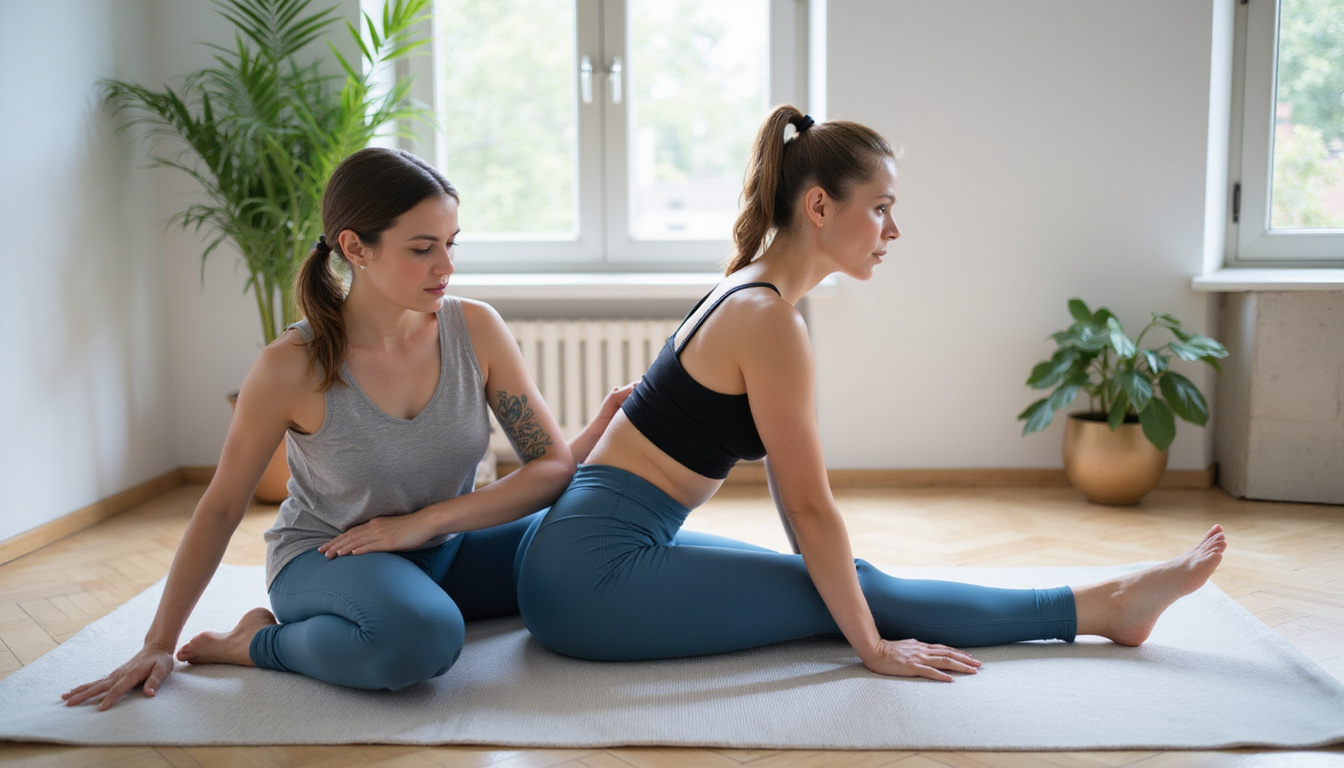
- Begin with spinal articulation (Cat-Cow) and deep breathing to calm your nervous system.
- Alternate active moves (Bridge, Cobra) with restorative stretches (Child’s, Supported Bridge).
- Integrate pranayama: take 4–6 rounds of ujjayi or diaphragmatic breaths before you start your practice.
- End with a supported Savasana. Use a blanket or bolster under your knees for 5–10 minutes to let your nervous system absorb the changes.
Props and modifications every yogi should keep on hand
- Keep a yoga block, strap, blanket/bolster, and a folded towel for extra lumbar support.
- If you need to adjust the pose, use a block under your hand in triangle poses or keep your knees bent in forward folds.
- When you teach or practice often, take short breaks between sequences to check your pelvic neutrality and bandha engagement.
How often to practice and progress safely
Focus on consistency, not intensity. Aim for 3–5 short sessions a week (15–30 minutes) that focus on mobility and breath. When you have a pain-free range for 2–4 weeks, slowly add active strength work (like longer bridges or plank holds). Always value quality of movement over quantity.
Supplementing recovery: nutrition and supportive supplements
Food comes first. Still, many practitioners add supplements for healthy joints and muscle comfort after long practice sessions. Choose reputable brands that label ingredients clearly and offer third-party testing. Remember, supplements support general wellness. They are not a direct treatment for specific conditions and do not replace medical care.
Watch this short demonstration
For a guided walk-through of these stretches, check the video below and practice along at your own pace:
https://youtu.be/lqUsGnM3tAU?si=lqyxSOU32bvlpWX2
Authoritative guidance
Clinical practice guidelines and reviews now back yoga and other structured exercise as a nonpharmacologic approach for low back issues (source).
FAQ — quick answers yoga practitioners ask
Q: Is yoga for back pain safe for people with sciatica-like symptoms?
A: Many people find that a tailored yoga routine for back pain—one that keeps pelvic neutrality, core support, and nerve-friendly moves—feels safe. Avoid deep forward folds and strong twists if you experience radiating sensations. Always consult a licensed provider if your symptoms change.
Q: How soon will yoga to relieve back pain show benefits?
A: Some practitioners notice improved mobility and reduced stiffness after a few sessions. More lasting changes typically need consistent practice over 6–8 weeks. Relief varies with frequency, movement quality, and overall lifestyle.
Q: Which yoga poses for back pain should I avoid?
A: Avoid forcing deep lumbar extension or extreme rotation when your back is very reactive. Skip jumping back during vinyasa and rapid spinal twists until you have strong, pain-free ranges. Substitute these with supported or gentler variations.
Note: These FAQs serve educational purposes only and are not medical advice.
Closing: a mindful recommendation for the savvy yogi
You read alignment tips, choose quality training, and enjoy sequencing with care. You know the difference between short-term fixes and long-term care. For yogis who want to support healthy joints and muscles while keeping the ability to teach, flow, and live fully, Regenerix Gold is a supplement option. It helps maintain mobility and tissue resilience as part of a balanced routine. This choice values prevention over reactive care, preventing costly treatments or missed work. If you take your mat time seriously and want a supportive product to complement your practice, consider Regenerix Gold in your daily routine.
Remember: Practice with clear alignment, breathe with intention, and seek professional guidance if your pain or symptoms grow. Keep moving—the mat is where you build strong, sustainable habits for life.
Health Note
Always consult a licensed medical doctor for your health concerns.
https://youtu.be/lqUsGnM3tAU?si=lqyxSOU32bvlpWX2


