

If you’re a former U.S. athlete with a hip labral tear, you know the drill.
A tear brings a sharp catch when you plant and pivot.
It brings a deep groin ache after sitting too long or a pinch at the squat’s bottom.
You are not chasing the pro level.
You simply want to run a few miles, play a pickup game, or spend time with your kids—without your hip protesting the next day.
This guide shows non-surgical options that work for ex‐athletes.
It is for those who still train, lift, and live like competitors.
What Is a Hip Labral Tear (In Athlete Language)?
The hip labrum acts as a rubber gasket around your hip socket.
It holds the femur’s ball in place and gives you a smooth glide when you cut, sprint, or explode during a squat.
A hip labral tear usually shows as:
• Pain in the groin or deep hip, especially with rotation or bending
• A click, a lock, or a catch during movement
• Stiffness after sitting or long drives
• Pain when you cut, pivot, or externally rotate your hip
Former athletes face this tear because years of activity can overload the labrum.
Think of the repeated cutting and planting (soccer, basketball, football, lacrosse);
rotational moves (baseball, tennis, hockey, golf);
or heavy squats, Olympic lifts, and intense hip flexion.
Many athletes jump to surgery in their mind.
Yet many recover well with a strict non-surgical plan.
When You Can Avoid Surgery (And When You Probably Shouldn’t)
Always work with a qualified healthcare professional.
As a former athlete, you can use this simple decision guide.
Non-surgical recovery is realistic when:
• Pain is moderate and occurs with certain moves, not all the time
• You can walk normally through most of the day
• Leg strength remains steady
• You can modify your training and lifestyle for several months
• Imaging shows a tear but not severe joint damage
Speak urgently with a specialist if:
• Weight-bearing causes major pain
• Your hip feels unstable or gives out often
• Pain frequently wakes you at night
• You lose hip motion quickly
For many ex‐athletes, conservative treatment is the smart first move.
It preserves options, avoids surgical risk, and often returns you to a strong, steady baseline.
The Foundation: Dialed-In Physical Therapy for Former Athletes
Standard physical therapy may not be enough for a hip labral tear.
You need a program that respects your competitive history and mindset.
A strong non-surgical plan usually includes:
1. Deep Core and Hip Stabilizer Work
You have powerful “big engine” muscles like the glutes, quads, and hamstrings.
Yet years of sport can leave the small stabilizers behind.
Focus on these targets:
• Strengthen the glute medius and minimus for better side control
• Work the deep rotators to manage external rotation
• Engage the transverse abdominis and obliques for core support and pelvis alignment
Examples include side-lying hip abduction, banded lateral walks, single-leg RDLs with light loads, dead bugs, side planks, and Pallof presses.
2. Controlled Range of Motion, Not Yoga Heroics
Aim for a clean, pain-free range of motion.
Avoid forcing deep stretches.
Keep these principles in mind:
• Do not push into deep, painful ranges early on
• Focus on the quality of the move, not how far you can go
• Ease into hip flexion and both internal and external rotation in a controlled way
Think of it as mobility drills that “grease the groove” rather than max-effort stretching.
3. Gradual Strength Rebuild in Athlete Patterns
You must rebuild your hip to handle force.
Don’t shield it forever.
Progress slowly:
• Start with double-leg, bodyweight moves
• Move to assisted single-leg exercises
• Advance to loaded single-leg work
• Progress from split squats, step-ups to lateral lunges, skaters, and finally controlled hops
Build a high-performance structure step by step instead of just ticking off rehab tasks.
Movement Tweaks That Take Load Off the Labrum
Ex‐athletes tend to play through pain.
But smart tweaks can reduce labrum load without sinking your training vibe.
Rethink Your Squat
Deep squats may worsen a hip labral tear, especially if you hit a deep bottom.
Try these modifications:
• Reduce squat depth to a pain-free range
• Use a slightly wider stance or a subtle toe-out
• Do a box squat to control your bottom position
• Focus on tempo and control rather than heavy loads
Adjust Conditioning Work
If running triggers groin pain, consider switching tools:
• Swap some runs for the bike, elliptical, or rower
• Emphasize low-impact interval work
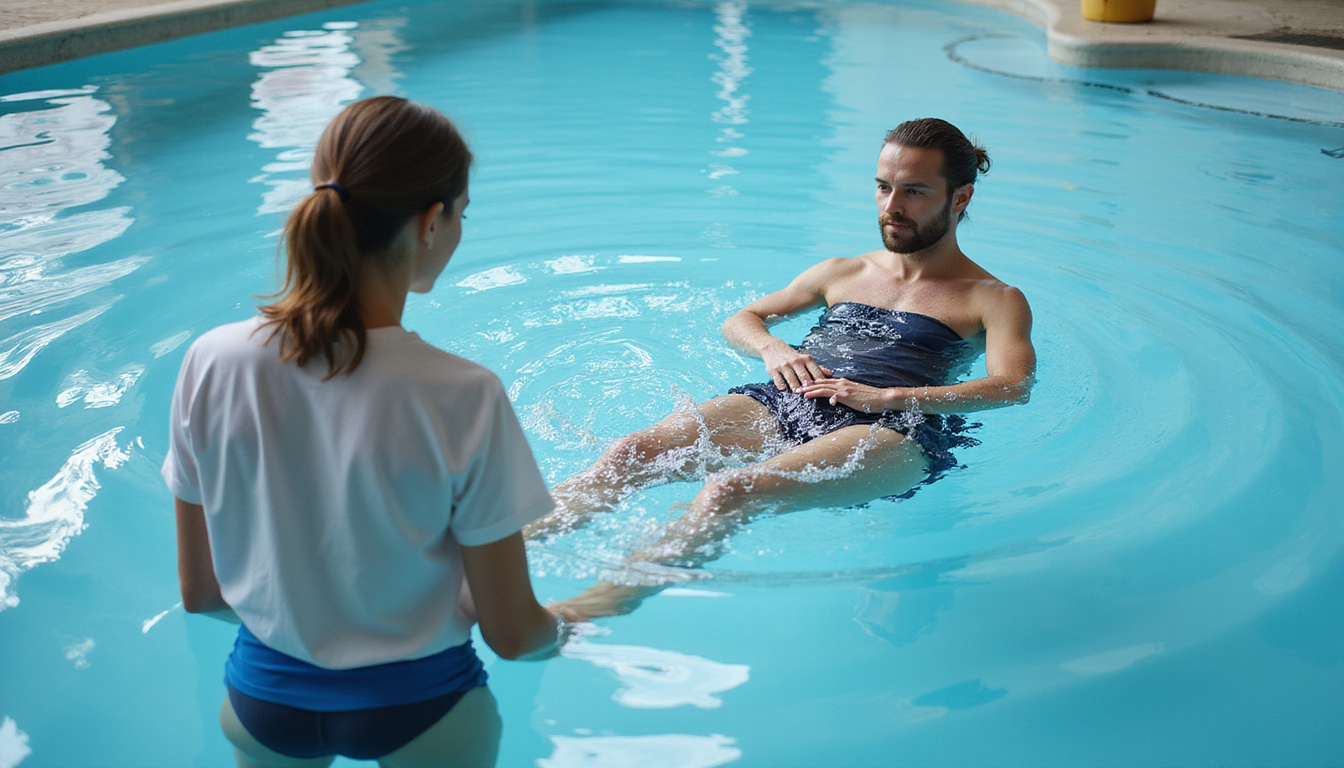
• Try pool running or swimming during recovery phases
You are not quitting.
You are simply swapping tools to protect your joint while keeping your competitive drive.
Clean Up Your Daily Habits
Daily habits add up:
• Avoid sitting cross-legged for long periods
• Break up long sitting with short walks and simple hip resets
• Use an ergonomic setup to prevent twisted or rotated postures
Such habits reduce irritation, giving your labrum space to settle so that your strengthening work can be effective.
Recovery Fundamentals: Sleep, Load Management & Patience
Recovery is both your strength and your challenge.
Respect Load Management Like It’s a Training Cycle
Treat your hip as part of a periodized training plan:
• Phase 1: Calm symptoms and reset movement
• Phase 2: Build strength and stability
• Phase 3: Reintroduce impact and sport-specific actions
Track your progress:
• Note how your hip feels during, after, and the next day
• Mark each movement as a green light, yellow, or red
Sleep: The Overlooked Recovery Weapon
Good sleep supports tissue repair, hormone balance, and pain control.
Elite athletes know: quality sleep matters every day.
Aim for:
• 7–9 hours each night
• Consistent sleep and wake times
• No screens for 30–60 minutes before bed
Patience With an Athlete’s Edge
You are wired to push hard.
Yet recovery from a hip labral tear can take 3–6 months or more—even without surgery.
Think of it as a long off-season, not an end to your athletic life.
Nutrition & Supplement Support for Joint and Muscle Health
You understand macros and fueling.
Yet joint and soft tissue support can be overlooked.
Stick to these nutrition basics:
• Eat enough protein to repair muscles
• Enjoy colorful fruits and vegetables for antioxidants
• Include healthy fats like those from fish, nuts, and seeds
Some choose to add supplements for joint comfort, flexibility, and musculoskeletal health.
These products do not diagnose, treat, cure, or prevent disease.
They may support:
• Smooth joint movement
• Muscle comfort after physical activity
• The body’s normal response to physical stress
When choosing a supplement, look for these:
• A clear list of ingredients and amounts on the label
• Compliance with Good Manufacturing Practices (cGMP)
• Research backing its joint and muscle support benefits (see https://ods.od.nih.gov)
Always discuss new supplements with your healthcare provider.
Regenerix Gold
For former athletes who still move like competitors, a joint and muscle-support supplement can be another smart tool.
Regenerix Gold supports:
• Smooth, comfortable joints during daily and leisure activities
• Muscles that stay strong through regular training
• An active lifestyle long after your competitive days are behind you
Regenerix Gold is a dietary supplement, not a drug.
It is not meant to diagnose, treat, cure, or prevent disease.
Instead, it complements a solid training, recovery, and nutrition plan.
As a former athlete, you know about periodization, progressive overload, and investing in your body.
Adding a targeted supplement like Regenerix Gold is a smart strategy if you want to keep playing hard while protecting your joints for the long haul.
Talk with your healthcare provider about whether Regenerix Gold is right for your plan.
Keep treating your body like the high-performance machine it is.
Frequently Asked Questions About Hip Labral Tear Recovery
1. Can a hip labral tear heal without surgery?
A hip labral tear does not usually return to a pristine state.
Yet many former athletes reduce symptoms and return to an active life with non-surgical methods.
Strengthening, movement changes, and lifestyle tweaks can lower discomfort.
Work with a clinician to choose the best path.
2. How long does non-surgical hip labral tear recovery take?
Recovery may take several months.
Many active adults see real improvement within 8–12 weeks of focused work.
Full recovery, especially if returning to running, lifting, or sports, can take 3–6 months or more.
Think in training phases, not as a quick fix.
3. What exercises should I avoid when I have a hip labrum issue?
Avoid moves that trigger sharp groin pain:
• Steer clear of deep squats or lunges if they cause pain
• Avoid aggressive twisting or fast pivots
• Skip high-impact running on hard surfaces during flare-ups
Work with your PT or coach to modify moves and slowly reintroduce harder efforts.
Your Next Play: Own Your Recovery and Invest Like a Pro
You built your identity around performance, and that does not end because of a hip labral tear.
You can:
• Train smarter with an athlete-level rehab plan
• Adjust your movements without giving up what you love
• Support your joints and muscles with smart nutrition and supplements
If you are the type who avoids wasting time, money, or potential, consider adding Regenerix Gold as part of your long-term strategy.
It fits those who think like pros: deliberate, selective, and always looking for a competitive edge in health and life.
Talk with your healthcare provider to see if Regenerix Gold fits your plan.
Keep treating your body as the high-performance machine it was built to be.
Health Note
Always consult a licensed medical doctor for your health issues.
Special Discount
If you prefer preventive nutrition to minimize expensive knee surgery and potentially addictive pharmaceuticals, Regenerix Gold is your savvy solution.
You qualify for a special discount.
Simply use the link below and a discount will automatically be applied during checkout.
Get Regenerix Gold => HERE


